
Margit Rosen, et al. (eds.): A Little-Known Story About a Movement, a Magazine, and The Computer’s Arrival in Art: New Tendencies and Bit International, 1961-1973 (2011)
Filed under book, catalogue | Tags: · 1960s, 1970s, art and science, art history, artistic research, computer art, computing, conceptual art, concrete art, constructivism, cybernetics, design, kinetic art, media art, new tendencies, op art, yugoslavia
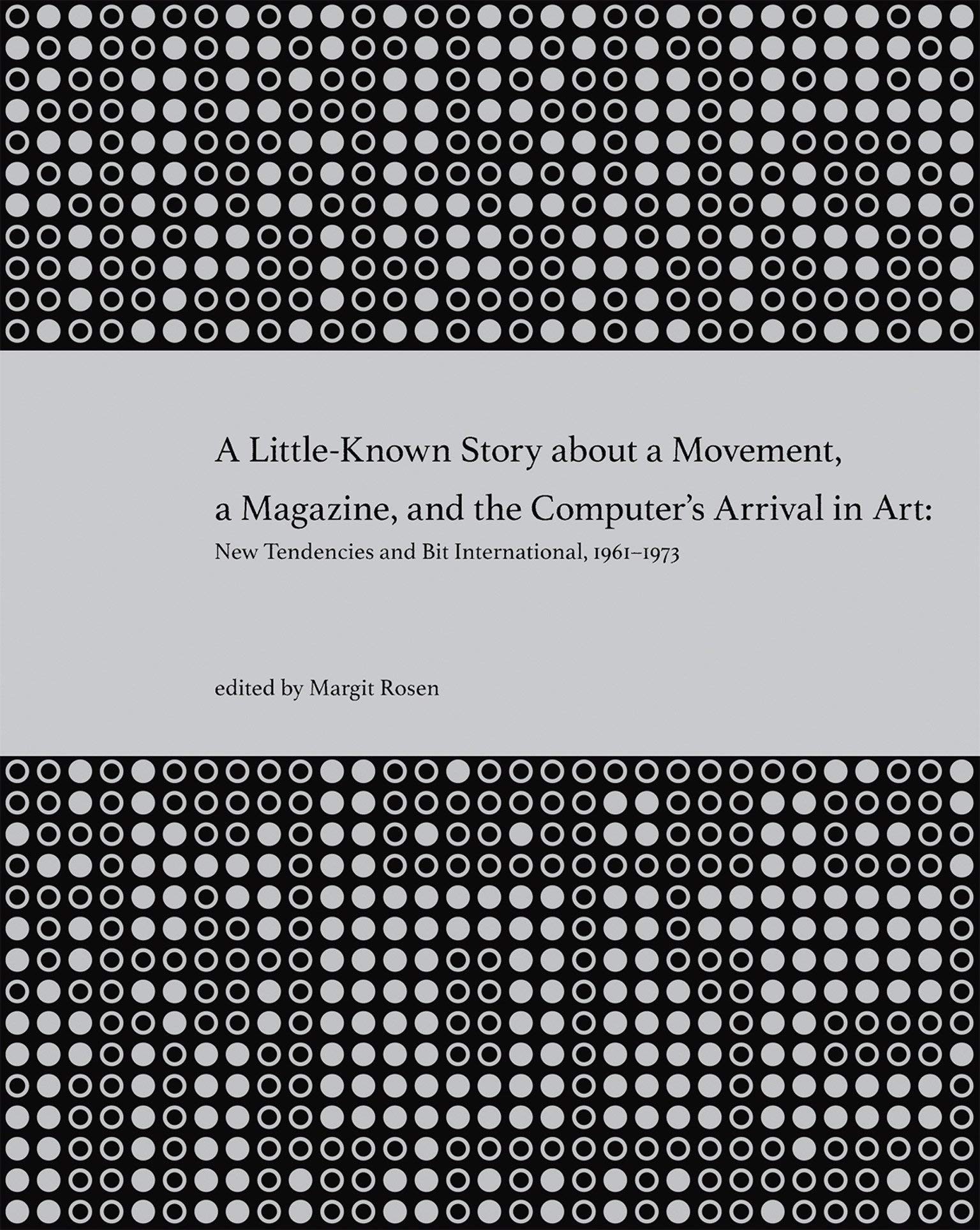
“When Zagreb was the epicenter of explorations into the aesthetic potential of the new “thinking machines.”
This book documents a short but intense artistic experiment that took place in Yugoslavia in the 1960s and 1970s but has been influential far beyond that time and place: the “little-known story” of the advent of computers in art. It was through the activities of the New Tendencies movement, begun in Zagreb in 1961, and its supporting institution the Galerija suvremene umjetnosti that the “thinking machine” was adopted as an artistic tool and medium. Pursuing the idea of “art as visual research,” the New Tendencies movement proceeded along a path that led from Concrete and Constructivist art, Op art, and Kinetic art to computer-generated graphics, film, and sculpture.
With their exhibitions and conferences and the 1968 launch of the multilingual, groundbreaking magazine Bit International, the New Tendencies transformed Zagreb—already one of the most vibrant artistic centers in Yugoslavia—into an international meeting place where artists, engineers, and scientists from both sides of the Iron Curtain gathered around the then-new technology. For a brief moment in time, Zagreb was the epicenter of explorations of the aesthetic, scientific, and political potential of the computer.
This volume documents that exhilarating period. It includes new essays by Jerko Denegri, Darko Fritz, Margit Rosen, and Peter Weibel; many texts that were first published in New Tendencies exhibition catalogs and Bit International magazine; and historic documents. More than 650 black-and-white and color illustrations testify to the astonishing diversity of the exhibited artworks and introduce the movement’s protagonists. Many of the historic photographs, translations, and documents are published here for the first time. Taken together, the images and texts offer the long overdue history of the New Tendencies experiment and its impact on the art of the twentieth century.”
Edited by Margit Rosen in collaboration with Peter Weibel, Darko Fritz, and Marija Gattin
Publisher ZKM Center for Art and Media, Karlsruhe, and MIT Press, Cambridge, MA, 2011
ISBN 9780262515818, 0262515814
576 pages
Reviews: Brian Reffin Smith (Leonardo, 2012), Joanna Inglot (Slavic Review, 2012), Greg Borman (ARLIS/NA, 2011).
Book website
Exhibition (ZKM, 2008)
Publisher
Publisher
WorldCat
PDF (102 MB)
See also New Tendencies and Bit International on Monoskop wiki.
Comment (1)Klara Kemp-Welch: Networking the Bloc: Experimental Art in Eastern Europe 1965-1981 (2019)
Filed under book | Tags: · 1960s, 1970s, art history, avant-garde, central europe, cold war, collaboration, community, conceptual art, documentation, east-central europe, eastern europe, experimental art, language, mail art, neo-avant-garde, networks, performance art
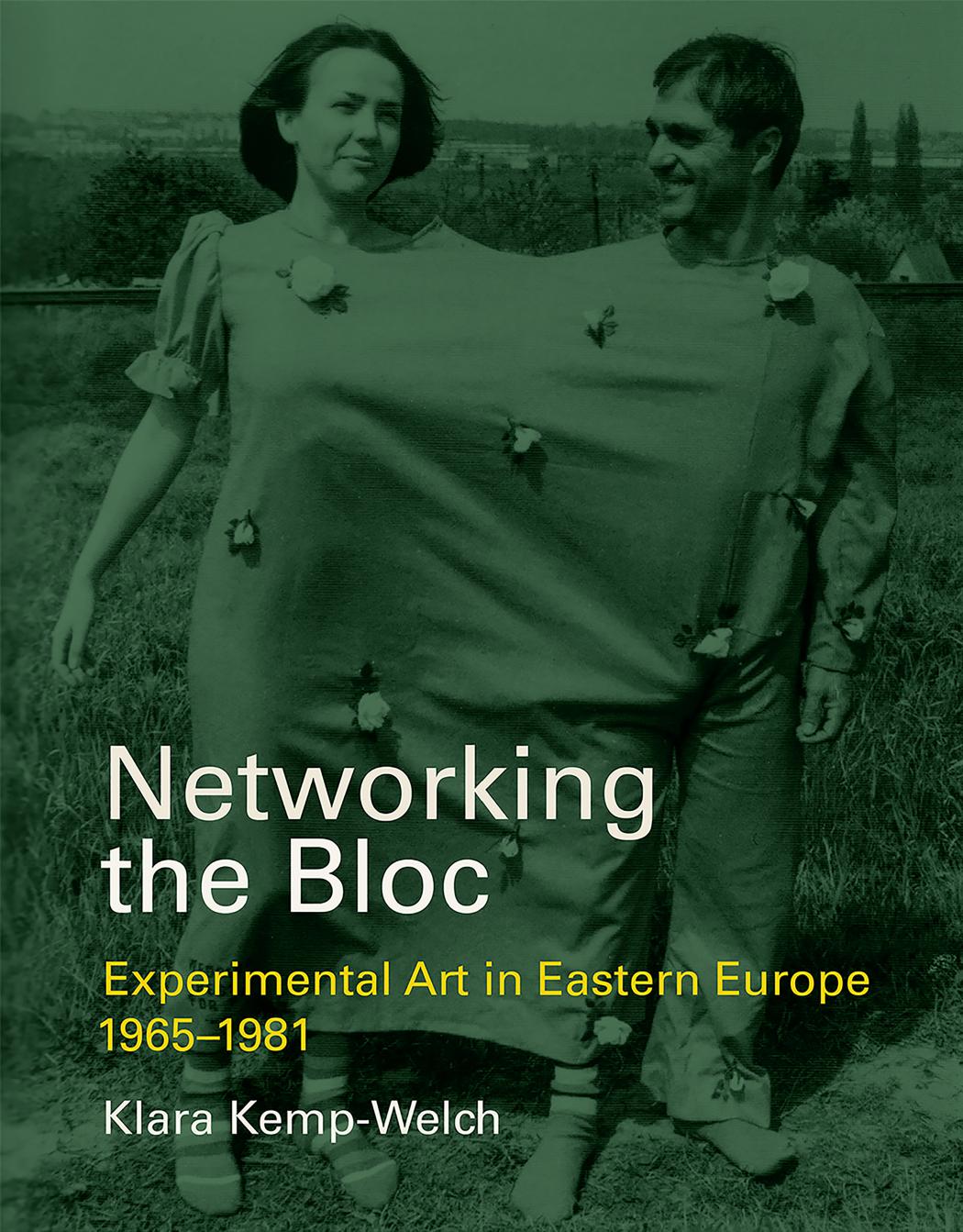
“Throughout the 1970s, a network of artists emerged to bridge the East-West divide, and the no less rigid divides between the countries of the Eastern bloc. Originating with a series of creative initiatives by artists, art historians, and critics and centered in places like Budapest, Poznań, and Prague, this experimental dialogue involved Western participation but is today largely forgotten in the West. In Networking the Bloc, Klara Kemp-Welch vividly recaptures this lost chapter of art history, documenting an elaborate web of artistic connectivity that came about through a series of personal encounters, pioneering dialogues, collaborative projects, and cultural exchanges. Countering the conventional Cold War narrative of Eastern bloc isolation, Kemp-Welch shows how artistic ideas were relayed among like-minded artists across ideological boundaries and national frontiers.
Much of the work created was collaborative, and personal encounters were at its heart. Drawing on archival documents and interviews with participants, Kemp-Welch focuses on the exchanges and projects themselves rather than the personalities involved. Each of the projects she examines relied for its realization on a network of contributors. She looks first at the mobilization of the network, from 1964 to 1972, exploring five pioneering cases: a friendship between a Slovak artist and a French critic, an artistic credo, an exhibition, a conceptual proposition, and a book. She then charts a series of way stations for experimental art from the Soviet bloc between 1972 and 1976—points of distribution between studios, private homes, galleries, and certain cities. Finally, she investigates convergences—a succession of shared exhibitions and events in the second half of the 1970s in locations ranging from Prague to Milan to Moscow. Networking the Bloc, Kemp-Welch invites us to rethink the art of the late Cold War period from Eastern European perspectives.”
Publisher MIT Press, 2019
ISBN 9780262038300, 0262038307
xi+468 pages
Reviews: Cristian Nae (ARTMargins, 2019), Denisa Tomkova (H-Net, 2020), Henry Meyric Hughes (Critique d’art, 2020).
PDF (17 MB)
Comment (0)Lost, Loose and Loved: Foreign Artists in Paris 1944-1968 (2018) [EN, ES]
Filed under catalogue | Tags: · 1940s, 1950s, 1960s, art history, paris

“This broad collective exhibition reflects the vitality and vivacity of the art scene in all its complexity, displaying the different creative trends which took hold in the city inside and outside the School of Paris at a time of fervent political debate, held to the backdrop of the new global stage opened by the Cold War. From a broad array of artistic fields — from painting and sculpture to jazz, literature and film — foreign artists dealt with mounting tension by bringing their approaches and hopes to the Parisian milieu in an attempt to connect with the tradition of international modernism but without losing a grip on their own cultural identity.”
With essays by Serge Guilbaut, Amanda Herold-Marme,Tom McDonough, Maureen Murphy, Isabel Plante, and Kaira M. Cabañas.
Publisher Museo Nacional Centro de Arte Reina Sofía, Madrid, 2018
ISBN 9788480265805, 8480265809
264 pages
English: PDF, PDF (10 MB)
Spanish: PDF, PDF (11 MB)