

Jonas Staal: Propaganda Art in the 21st Century (2019)
Filed under book | Tags: · art history, artistic research, avant-garde, democracy, modernism, performance, politics, power, propaganda, totalitarianism, war on terror

“Propaganda art—whether a depiction of joyous workers in the style of socialist realism or a film directed by Steve Bannon—delivers a message. But, as Jonas Staal argues, propaganda does not merely make a political point; it aims to construct reality itself. Political regimes have shaped our world according to their interests and ideology; today, popular mass movements push back by constructing other worlds with their own propagandas.
Staal shows that propaganda is not a relic of a totalitarian past but occurs today even in liberal democracies. He considers different historical forms of propaganda art, from avant-garde to totalitarian and modernist, and he investigates the us versus them dichotomy promoted in War on Terror propaganda art—describing, among other things, a fictional scenario from the Department of Homeland Security, acted out in real time, and military training via videogame. He discusses artistic and cultural productions developed by such popular mass movements of the twenty-first century as the Occupy, activism by and in support of undocumented migrants and refugees, and struggles for liberation in such countries as Mali and Syria.
Staal proposes a new model of emancipatory propaganda art—one that acknowledges the relation between art and power and takes both an aesthetic and a political position in the practice of world-making.”
Publisher MIT Press, September 2019
ISBN 9780262042802, 0262042800
230 pages
Interview with author: Pierre d’Alancaisez (New Books Network, 2021, podcast).
Reviews: Christoph Chwatal (Third Text, 2020), Hailey Maxwell (The Drouth, 2020), Joerg Bader (Critique d’art, 2019, FR).
PDF, PDF (12 MB, updated on 2024-4-23)
Comment (0)Martin Hägglund: This Life: Secular Faith and Spiritual Freedom (2019)
Filed under book | Tags: · capitalism, critique, democracy, democratic socialism, faith, freedom, god, labour, liberalism, life, love, marxism, philosophy, politics, production, religion, secularism, socialism, society, spirituality, theory of value, time, value
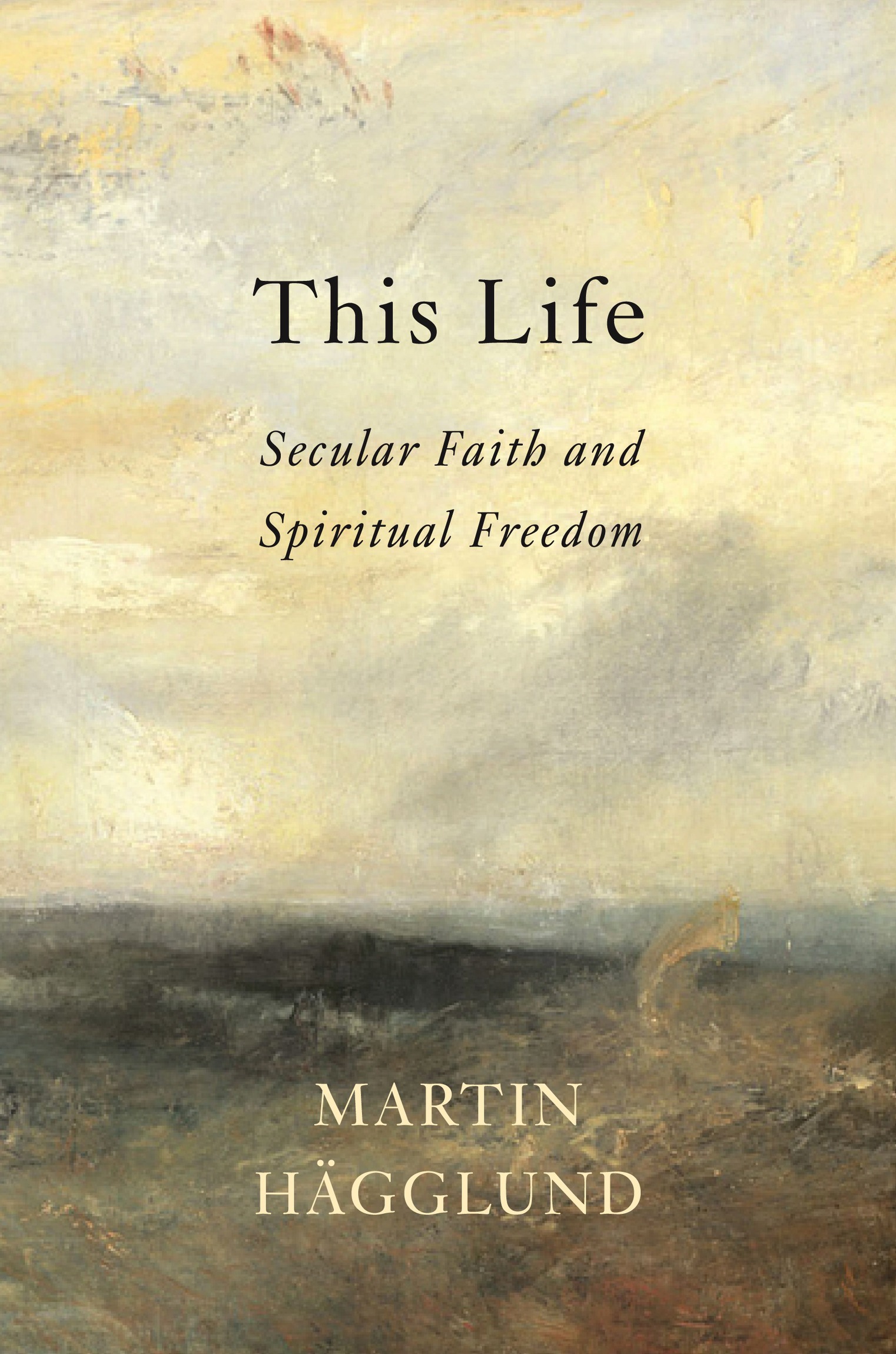
“This Life offers a profoundly inspiring basis for transforming our lives, demonstrating that our commitment to freedom and democracy should lead us beyond both religion and capitalism. Philosopher Martin Hägglund argues that we need to cultivate not a religious faith in eternity but a secular faith devoted to our finite life together. He shows that all spiritual questions of freedom are inseparable from economic and material conditions: what matters is how we treat one another in this life and what we do with our time.
Engaging with great philosophers from Aristotle to Hegel and Marx, literary writers from Dante to Proust and Knausgaard, political economists from Mill to Keynes and Hayek, and religious thinkers from Augustine to Kierkegaard and Martin Luther King, Jr., Hägglund points the way to an emancipated life.”
Publisher Pantheon Books, New York, 2019
ISBN 9781101870402, 1101870400
450 pages
Interviews with author: Meagan Day (Jacobin, 2019), Adam Kelly (University of York, 2019, video).
Debates: Frederick Neuhouser, Lea Ypi, Jensen Suther (The Philosopher, 2019, with Hägglund’s introductory essay), Brandon M. Terry, Walter Benn Michaels, Benjamin Kunkel, Michael W. Clune, Jodi Dean, William Clare Roberts (Los Angeles Review of Books, 2020, with Hägglund’s response), Robert Pippin (The Point, 2019, Hägglund’s response).
Reviews: Samuel Moyn (Jacobin, 2019), Michael A. McCarthy (Jacobin, 2019), Nathan Brown (Radical Philosophy, 2019), Tyler M. Williams (Critical Inquiry, 2020), Jedediah Britton-Purdy (The New Republic, 2019), Mathew Abbott (Marx & Philosophy, 2020), Martin Rayburn (Parrhesia, 2020), Conall Cash (boundary2, 2019), Oliver Burkeman (The Guardian, 2019), James Wood (New Yorker, 2019), Adam Kirsch (Wall Street Journal, 2019), Matt McManus (Areo, 2020), Daniel Steinmetz-Jenkins and Daniel Zamora (Dissent, 2019), William Egginton (Believer, 2020), Anton Jansson (Ord & Bild, 2020, SW), Matthew Engelke (Public Books, 2019), Kevin Schilbrack (Sophia, 2020), Knox Peden (Sydney Review of Books, 2020), Johan Andreas Trovik (Vinduet, 2022, NO).
Author
Wikipedia
Publisher
WorldCat
James Mark, Bogdan C. Iacob, Tobias Rupprecht, Ljubica Spaskovska: 1989: A Global History of Eastern Europe (2019)
Filed under book | Tags: · 1989, authoritarianism, capitalism, central europe, communism, democracy, eastern europe, europe, european union, globalisation, history, human rights, illiberalism, internationalism, liberalism, market, migration, nationalism, neoliberalism, politics, post-communism, refugees, socialism, southeastern europe, soviet union, transition
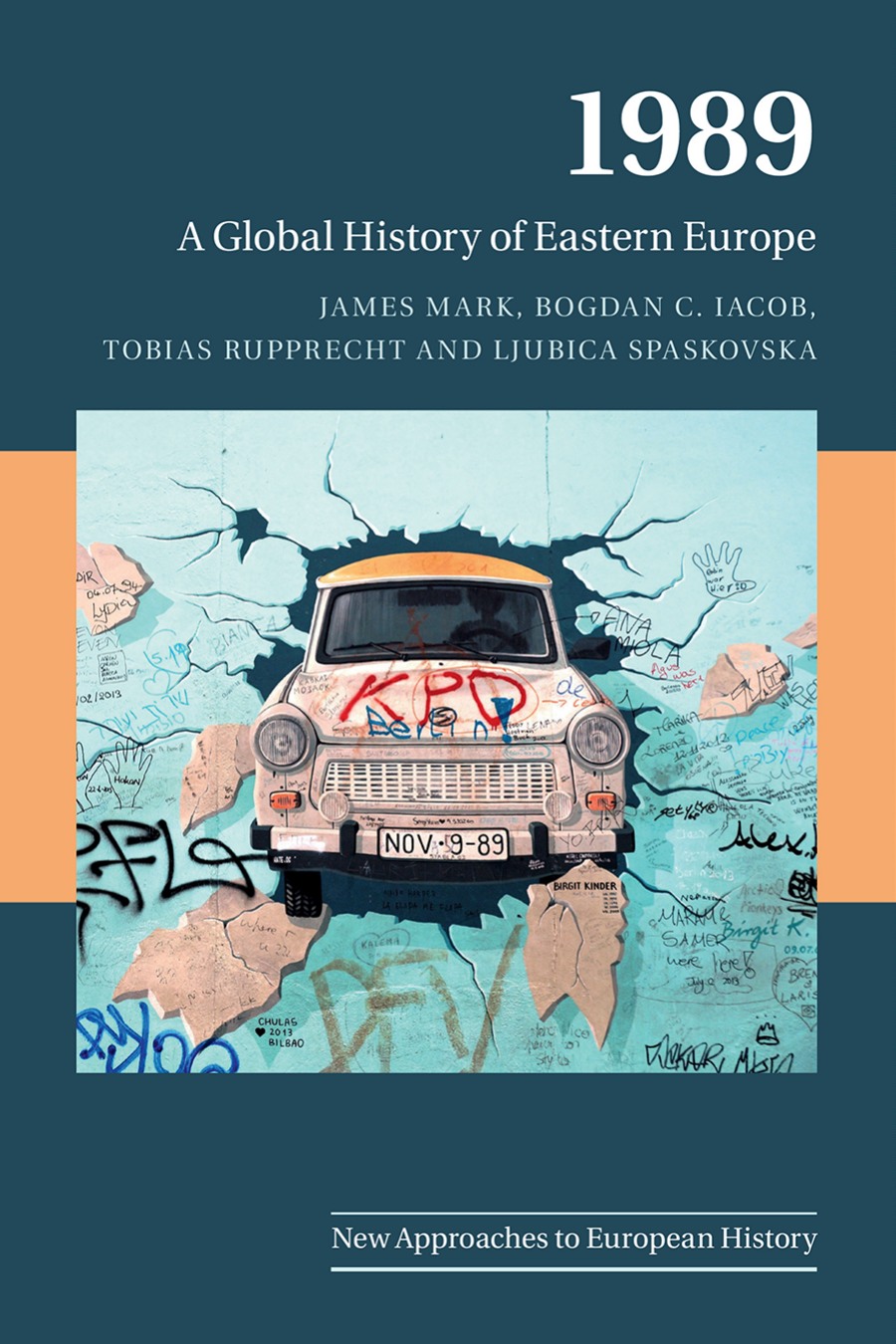
“The collapse of the Berlin Wall has come to represent the entry of an isolated region onto the global stage. On the contrary, this study argues that communist states had in fact long been shapers of an interconnecting world, with ‘1989’ instead marking a choice by local elites about the form that globalisation should take. Published to coincide with the thirtieth anniversary of the 1989 revolutions, this work draws on material from local archives to international institutions to explore the place of Eastern Europe in the emergence, since the 1970s, of a new world order that combined neoliberal economics and liberal democracy with increasingly bordered civilisational, racial and religious identities. An original and wide-ranging history, it explores the importance of the region’s links to the West, East Asia, Africa, and Latin America in this global transformation, reclaiming the era’s other visions such as socialist democracy or authoritarian modernisation which had been lost in triumphalist histories of market liberalism.”
Publisher Cambridge University Press, Cambridge, UK, 2019
New Approaches to European History series, 59
ISBN 9781108427005, 1108427006
vii+372 pages
Reviews: Árpád von Klimo (H-Diplo, 2020), Tilmann Siebeneichner (German History, 2020), Nick Ostrum (Europe Now, 2020),
Interviews with co-author (James Mark): Ondřej Bělíček (A2larm, CZ, 2019), Ondřej Bělíček (Jacobin, 2020), Ronaldas Galinis (LRT.lt, 2020), Rūta Miškinytė (15min.lt, 2020, LT), Zoltán Ginelli (LeftEast, 2020, Part 2, Part 3).
Book summary (Eurozine, 2019).
Project website
Publisher
WorldCat