

CENSE Almanac: Central European Network for Sonic Ecologies (2021)
Filed under book | Tags: · central europe, ecology, environment, field recording, sound, sound art
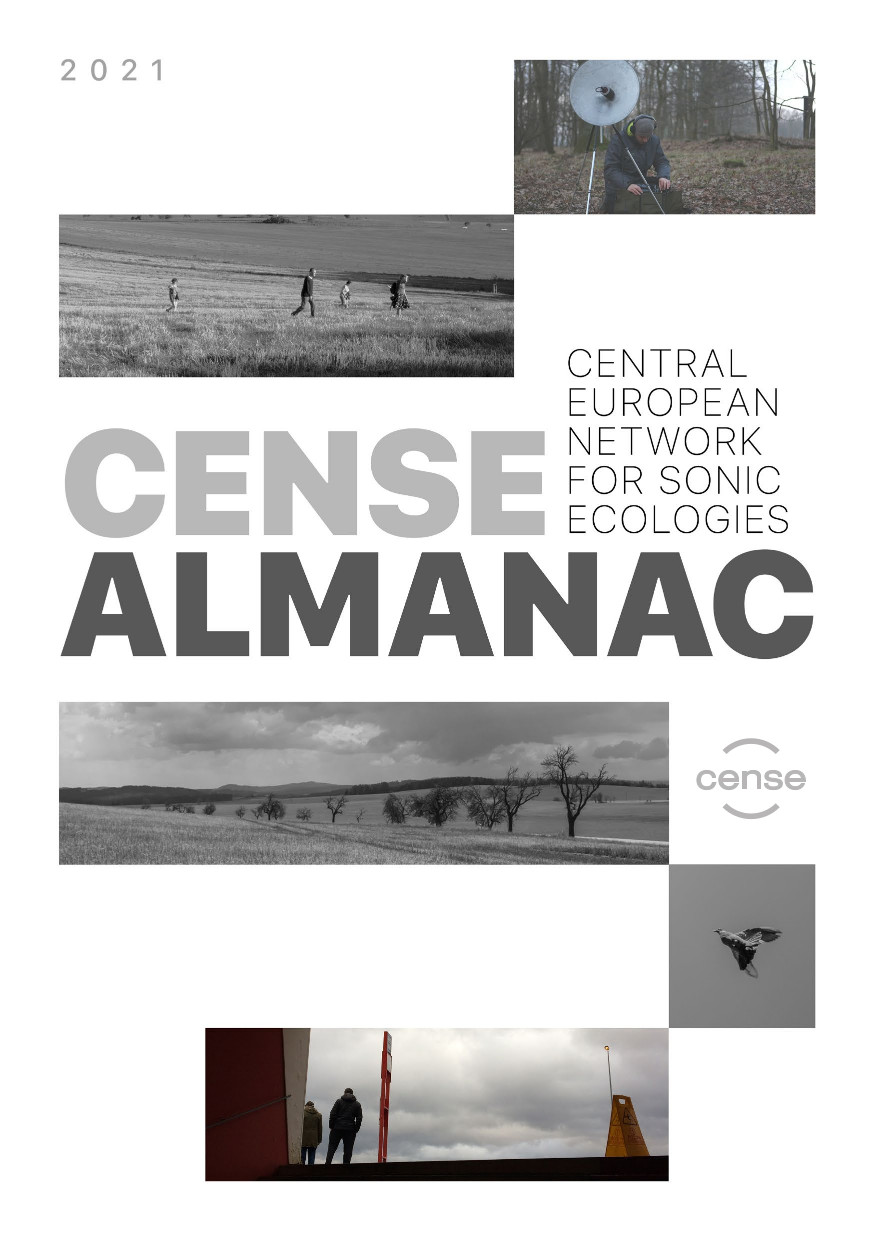
“The Central European Network for Sonic Ecologies (CENSE) is an informal network of individual voices coming from various backgrounds. We propose this emerging network to fill the need of fostering more perceptive and conscious thinking and solutions, addressing developments in the social and cultural fields of Central Europe (and beyond) related not only to sound art, ecomusicology, and sound per se, while keeping a central focus on deep environmental and social changes.”
Its first publication features a survey of CENSE members and friends about sonic ecology, offering a springboard for the formation of a framework; a mind map composed of the various ideas, statements, positions, and attitudes of around thirty people. In addition, three essays on the story of environmental sound in Czechoslovakia, Poland and Hungary are included.”
Editor: Miloš Vojtěchovský and Lloyd Dunn
Publisher CENSE, November 2021
Creative Commons Attribution NonCommercial ShareAlike 4.0 Unported License
80 pages
Paul DeMarinis: Buried in Noise (2010) [English/German]
Filed under book | Tags: · art, installation, media art, sound, sound art
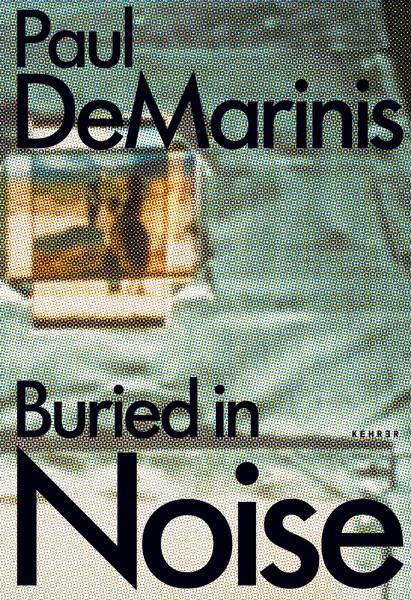
“This artist’s book is the first comprehensive monograph on sound and media artist Paul DeMarinis. DeMarinis has avidly followed the development of communication media, interested in discoveries being made in the realm of physical phenomena and the corresponding objects and devices that have been invented as well as in their cultural and social aspects. His works embody an aesthetic culture of invention permeated by a critical, yet humorous and poetic spirit. Buried in Noise is being published on the occasion of DeMarinis’s artist fellowship at the DAAD artists’ program in Berlin. The publication compiles documentation on Paul DeMarinis’s complete oeuvre since 1973 and the first published compendium of texts by the artist.”
Contributors include Gascia Ouzounian, Fred Turner, Erkki Huhtamo, Douglas Kahn, Bernd Schulz, Siegfried Zielinski, and Thomas Y. Levin.
Edited by Ingrid Beirer, Sabine Himmelsbach, and Carsten Seiffarth
Publisher Kehrer Verlag, Heidelberg/Berlin, 2010
ISBN 9783868281415, 386828141X
279 pages
PDF (77 MB)
Comment (0)Hugh Davies: Sounds Heard: A Potpourri of Environmental Projects and Documentation, Projects with Children, Simple Musical Instruments, Sound Installations, Verbal Scores, and Historical Perspectives (2002)
Filed under sound recording | Tags: · composition, electronic music, environment, experimental music, improvised music, music, music criticism, musical instruments, sound, sound art
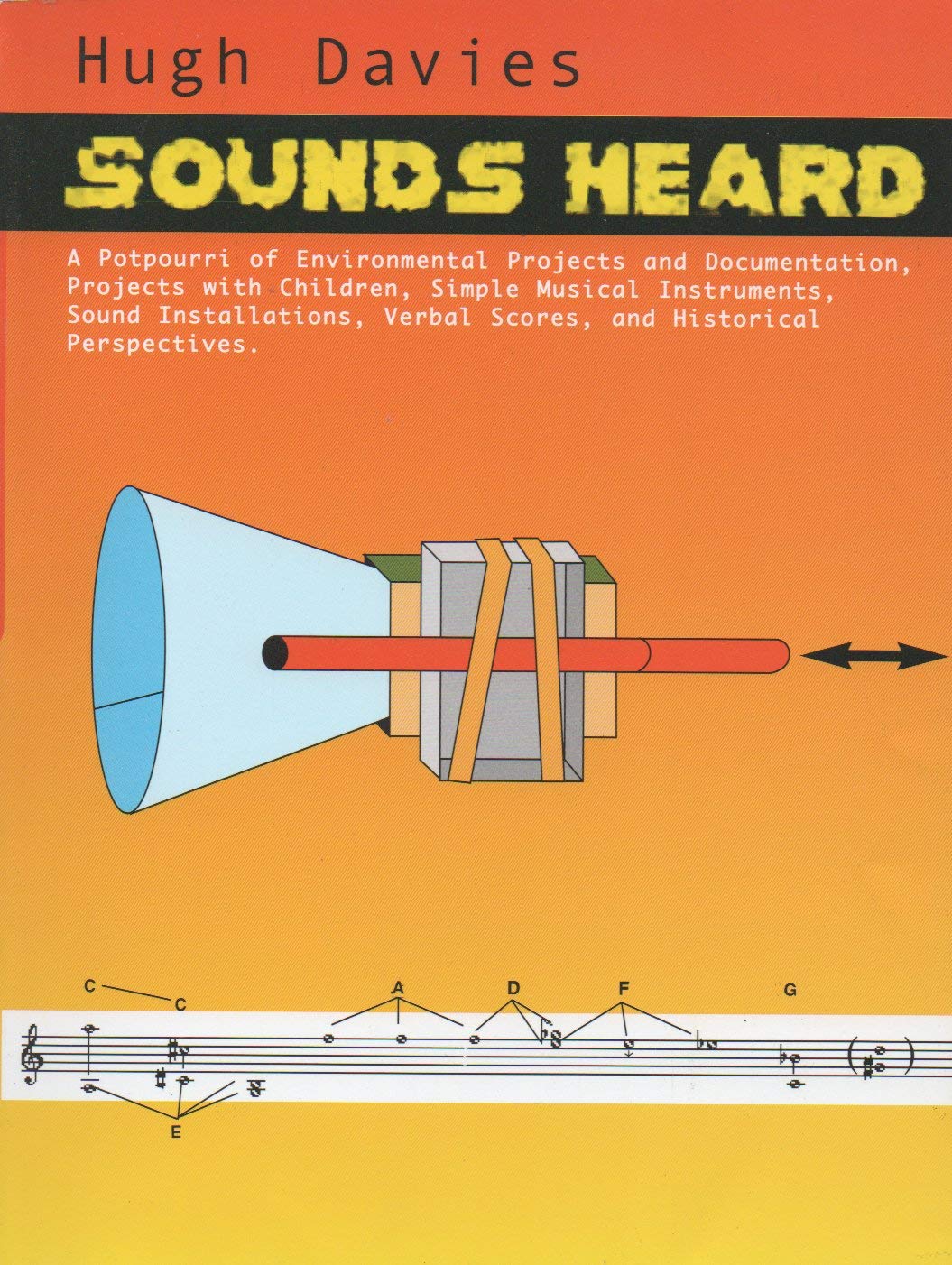
“Sounds Heard is not only a collection of writings intended for people who are interested or involved in contemporary music, especially those performers – including children – who lack a formal musical training. It also charts a wide cross-section of the activities of an intriguing musical personality. At different times in Hugh Davies’ nearly 40 year career he has been variously described as “the world’s leading electromusicologist”, “the most informed person around on the general subject of new instruments”, “unique English composer”, “one of the most interesting instrument inventors of recent decades”, “the remarkable live-electronics ‘freak”‘, an “electronic wizard”, “a humanist” and “I have never seen any music teacher who is as fond of children as he is”. Do these really refer to only one person? Who is the real Hugh Davies? Why has his modesty prevented him from being better known?
This book focuses on many of Davies’ insights about working as an artist, a musician, a composer, a performer, an instrument inventor, an educator and a researcher. He takes nothing for granted, and there are always wider implications than his own immediate involvement. Even his more avantgarde scenarios are tempered with his “very British sense of humour”. Many of the different areas of experimental music since the 1960s are touched on, including electronic music, live electronics, invented instruments, sound sculpture, sound installations and free improvisation, in all of which he was one of the British pioneers.
The CD illustrates a cross-section of the themes covered in the book. As with most of Hugh Davies’ solo performances and recordings, no conventional instruments were used on the entire album, with the exception of one short piece in which existing music has been manipulated with tape techniques.” (from back cover)
Publisher Soundworld Publishers, Chelmsford, 2002
ISBN 1902440056, 9781902440057
124 pages
PDF (29 MB)
Selections from accompanying CD