

El medio es el diseño audiovisual (2007) [Spanish]
Filed under book | Tags: · art history, audiovisual, cinema, film, media, media art, technology, theory, video
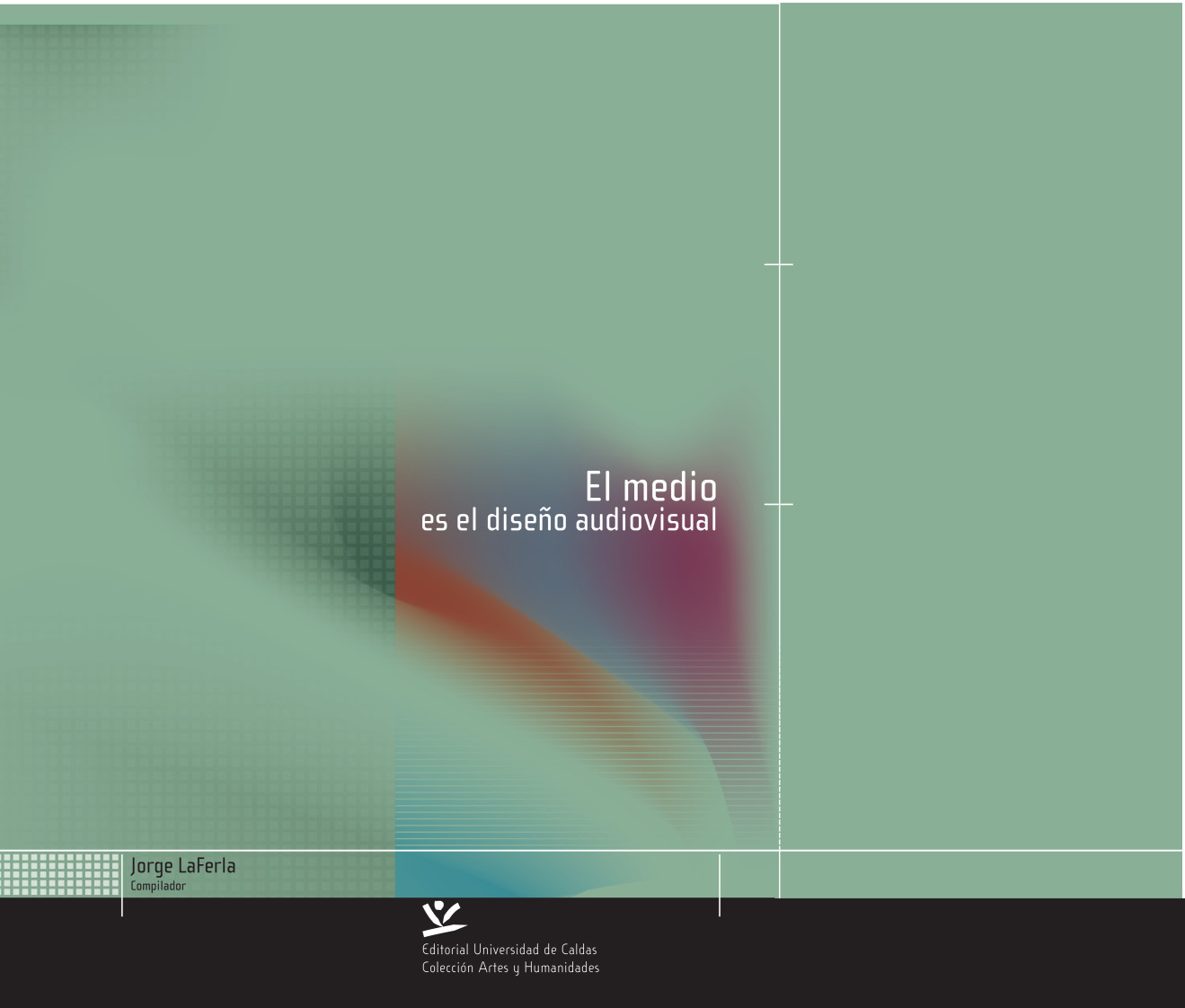
“La Colección Editorial en Diseño Visual de la Facultad de Artes y Humanidades, es un proyecto propuesto por la Cátedra La Feria de la Universidad de Buenos Aires y producido por la IMAGOTECA, Centro de Documentación Visual, de la Universidad de Caldas. Su objeto es difundir el conocimiento en torno a las relaciones entre imágenes técnicas y lenguajes audiovisuales, el entrecruzamiento de la historia de los medios, los soportes y las tecnologías, y, por último, las prácticas de la creación y el diseño con medios audiovisuales. El propósito final es la difusión democrática del conocimiento en diseño y nuevos medios, en el contexto colombiano, donde la producción editorial en este campo es limitada.”
Autores: Roy Ascott, Hernando Barragán, Xavier Berenguer, Pierre Bongiovanni, Norbert Bolz, Rejane Cantoni, Walter Castañeda, Ricardo Cedeño, Michel Chion, Jean-Louis Comolli, Myriam Luisa Díaz, Philippe Dubois, Anne-Marie Duguet, Mauricio Duran Castro, Umberto Eco, Jean-Paul Fargier, Priscila Farías, Claudia Giannetti, Carmen Gil Vrolik, Jean-Luc Godard, Adriana Gómez Alzate, Olier Grau, Iliana Hernández García, Eduardo Kac, Jorge La Ferla, Pierre Lévy, Felipe Cesar Londoño López, Arlindo Machado, Lev Manovich, Christine Melo, Martha Patricia Niño, Nam June Paik, José Ramón Pérez Ornia, Omar Rincón, Nils Roller, Eduardo Russo, Carmelo Saitta, Lucia Santaella, María Teresa Santoro, Paula Sibilia, Bill Viola, Paul Virilio, Peter Weibel, Gerardo Yoel, Gene Youngblood, Siegfried Zielinski.
Edited by Jorge La Ferla
Publisher Universidad de Caldas, Manizales, Colombia, and Universidad de Buenos Aires, Buenos Aires, 2007
ISBN 9789588319056, 9588319056
700 pages
via editor
PDF (12 MB)
Academia.edu
Chris Marker: Silent Movie (1995)
Filed under artist publishing, catalogue | Tags: · cinema, film, film history, silent cinema, silent film
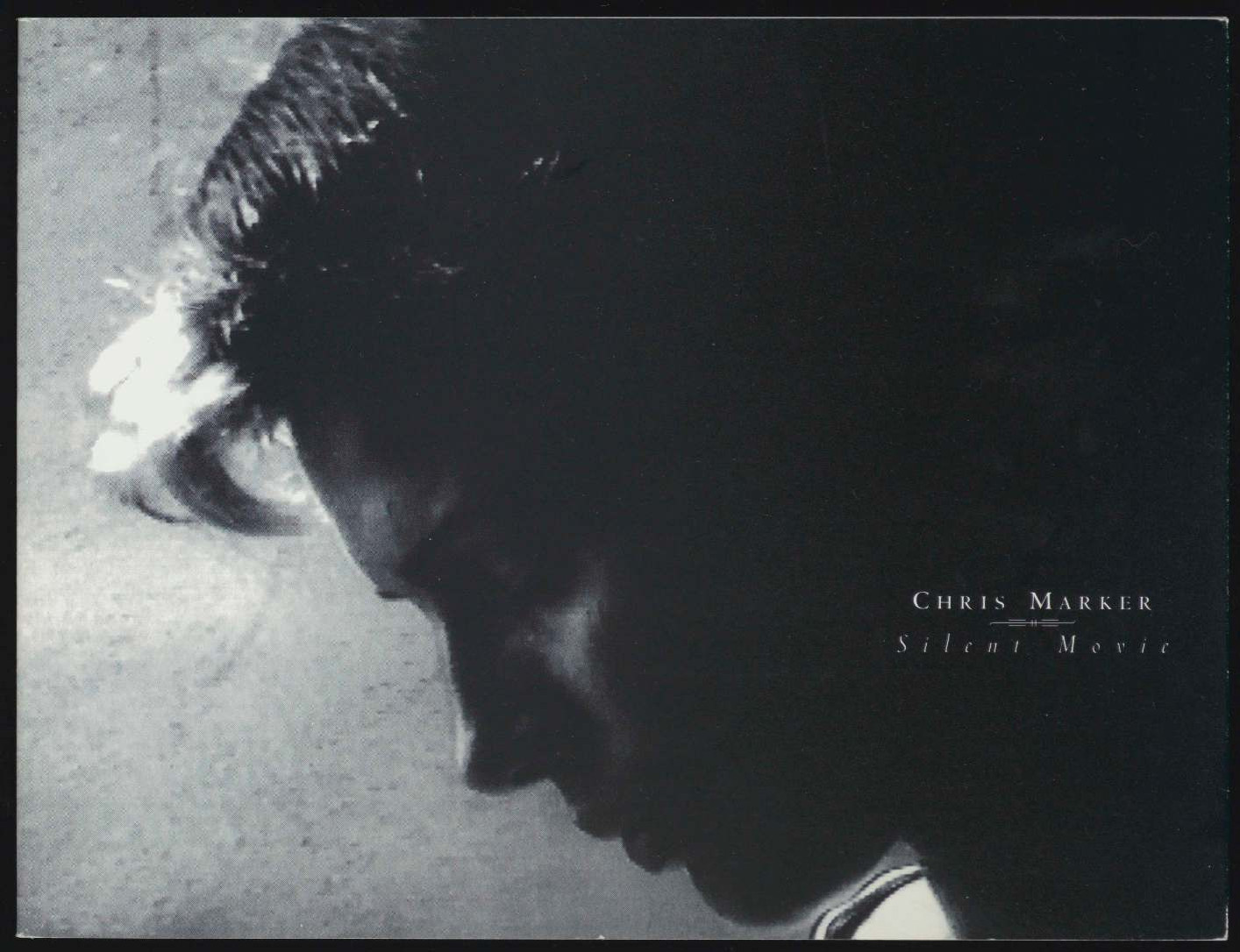
In Silent Movie, “Marker employs five-channels of video, each a thematic exploration of early cinema. Film images disclosing ‘The Journey,’ ‘The Face,’ ‘The Gesture,’ and ‘The Waltz’ occupy four of the monitors while on the fifth (and middle) monitor is a collection of ninety-four silent-era intertitles, ‘telling short, mysterious pieces of unknown stories.’ These moving images travel through a computer interface that assembles an ever-changing array of sequences. At any given moment, each passage is in unique juxtaposition with the other images passing across the surrounding monitors. Coloration, tone, and association are governed by chance contiguities; even the intertitles narrate across a field of fluid relationships.” (Source)
“Silent Movie. To give an installation the name of something that never existed is probably less innocent than the average cat may infer. There was never anything like silent cinema, except at the very beginning, or in film libraries, or when the pianist had caught a bad flu. There was at least a pianist, and soon an orchestra, next the Wurlitzer, and what contraptions did they use, in the day of my childhood, to play regularly the same tunes to accompany the same film? I’m probably one of the last earthlings–the ‘last,’ says the cat–to remember what themes came with what films: ‘A Midsummer Night’s Dream’ on Wings (the dogfights), Liszt’s ‘The Preludes’ on Ben Hur. A touch of humour noir here, to think that the saga of the young hebrew prince was adorned by Hitler’s favorite music, which in turn explains why you hear it more often than Wagner on the German war newsreels–but I get carried away. …”–Chris Marker (book page 15)
Edited by Ann Bremner
Publisher Wexner Center for the Arts, Ohio State University, Columbus/OH, 1995
ISBN 1881390101
40 pages
via MoMA
PDF
Video excerpt (8 min)
Lotte H. Eisner: Fritz Lang (1976)
Filed under book | Tags: · biography, cinema, film, film criticism, film history

“Fritz Lang, almost alone among his fellow continental refugees, was able to make outstanding films in both his native Germany and his adopted Hollywood. The director of Metropolis and M and Dr. Mabuse came to America in 1934 and began a long and distinguished career that included such films as You Only Live Once, The Woman in the Window, Scarlet Street, Ministry of Fear, Rancho Notorious, and The Big Heat. He is a key figure in the history of film noir, bringing to the screen a fatalist’s vision of a menacing world of criminals, misfits, and helpless victims, and providing a distinctive visual look to every film he directed. This film-by-film study of Lang’s oeuvre by one of the great film historians combines personal insight—Eisner and Lang had a long standing friendship—with deep historical understanding of Lang’s roots in German culture and cinema. Both true modernists, Eisner and Lang are perfectly matched, as this book clearly demonstrates.” (back cover)
Publisher Secker and Warburg, London, 1976
Reprint, Da Capo Press, New York, 1986
ISBN 0306802716
416 pages
via dreyer
PDF (158 MB)
Comment (0)