

Eric Michaels: Bad Aboriginal Art: Tradition, Media, and Technological Horizons (1994)
Filed under book | Tags: · aboriginal art, anthropology, art, australia, ethnography, film, photography, postmodernism, television

“Bad Aboriginal Art is the extraordinary account of Eric Michaels’ period of residence and work with the Warlpiri Aborigines of western Central Australia, where he studied the impact of television on remote Aboriginal communities.
Sharp, exact, and unrelentingly honest, Michaels records with an extraordinary combination of distance and immersion the intervention of technology into a remote Aboriginal community and that community’s forays into the technology of broadcasting. Michaels’s analyses in Bad Aboriginal Art will disrupt and redirect current debates surrounding the theory and practice of anthropology, ethnography, film and video making, communications policy, and media studies—no less than his work has already disrupted and redirected the cultural technologies of both the Warlpiri and Australian technocrats.”
Publisher University of Minnesota Press, 1994
ISBN 0816623414, 9780816623419
203 pages
PDF (updated on 2013-8-26)
Comment (1)Richard Burt (ed.): The Administration of Aesthetics. Censorship, Political Criticism, and the Public Sphere (1994)
Filed under book | Tags: · aesthetics, censorship, cyberpunk, degenerate art, discourse, literary criticism, postmodernism

The “new” censorship of the arts, some cultural critics say, is just one more item on the “new” Right’s agenda, and is part and parcel of attempts to regulate sexuality, curtail female reproductive rights, deny civil rights to gays and lesbians, and privatize public institutions. Although they do not contest this assessment, the writers gathered here expose crucial difficulties in using censorship, old and new, as a tool for cultural criticism.
Focusing on historical moments ranging from early modern Europe to the postmodern United States, and covering a variety of media from books and paintings to film and photography, their essays seek a deeper understanding of what “censorship,” “criticism,” and the “public sphere” really mean.
Getting rid of the censor, the contributors suggest, does not eliminate the problem of censorship. In varied but complementary ways, they view censorship as something more than a negative, unified institutional practice used to repress certain discourses. Instead, the authors contend that censorship actually legitimates discourses-not only by allowing them to circulate but by staging their circulation as performances through which “good” and “bad” discourses are differentiated and opposed.
These essays move discussions of censorship out of the present discourse of diversity into what might be called a discourse of legitimation. In doing so, they open up the possibility of realignments between those who are disenchanted with both stereotypical right-wing criticisms of political critics and aesthetics and stereotypical left-wing defenses.
Publisher U of Minnesota Press, 1994
ISBN 0816623678, 9780816623679
Length 381 pages
More info (publisher)
More info (google books)
PDF (no OCR; some pages missing)
Comment (0)Nicholas Mirzoeff: An Introduction to Visual Culture (1999)
Filed under book | Tags: · art history, mass media, postmodernism, visual culture, visual studies
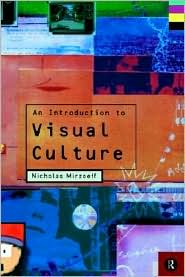
“The emerging field of visual culture poses rough terrain for beginners with its nuanced distinctions and reliance on postmodern theory. Not untilAn Introduction to Visual Culturehas any book attempted to present a comprehensive and accessible approach to this exciting new subject. Nicholas Mirzoeff begins by defining what visual culture is, and explores how and why visual media–fine art, cinema, the Internet, advertising, performance, photography, television–have become so central to contemporary everyday life. He argues that the visual is replacing the linguistic as our primary means of communicating with each other and of understanding our postmodern world, demonstrating this through powerful examples, from Diana’s funeral to the Latina singer Selena, and from the X-Files to Independence Day. Mirzoeff then examines the importance of race and ethnicity, gender and sexuality, and the body in visual culture. These various forms of social discourse provide essential tools for readingimages and thus define the study of visual culture as an inherently political project. Mirzoeff tackles the difficult subject of the gaze and the “other” and offers the reader a clear synthesis of these concepts. Lively and provocative,An Introduction to Visual Cultureoffers an accessible entry to this new way of understanding images.”
Keywords: Art and society, Visual communication, Visual perception, Mass media, Communication and culture, Postmodernism, Visual sociology, Popular culture, Media
Publisher Routledge, 1999
ISBN 0415158761, 9780415158763
274 pages
EPUB (updated on 2012-7-18)
Comment (1)