

Nahui Olin: una mujer de los tiempos modernos, 2nd ed (1993) [Spanish]
Filed under book, catalogue | Tags: · activism, art, art history, literature, mexico, painting, poetry
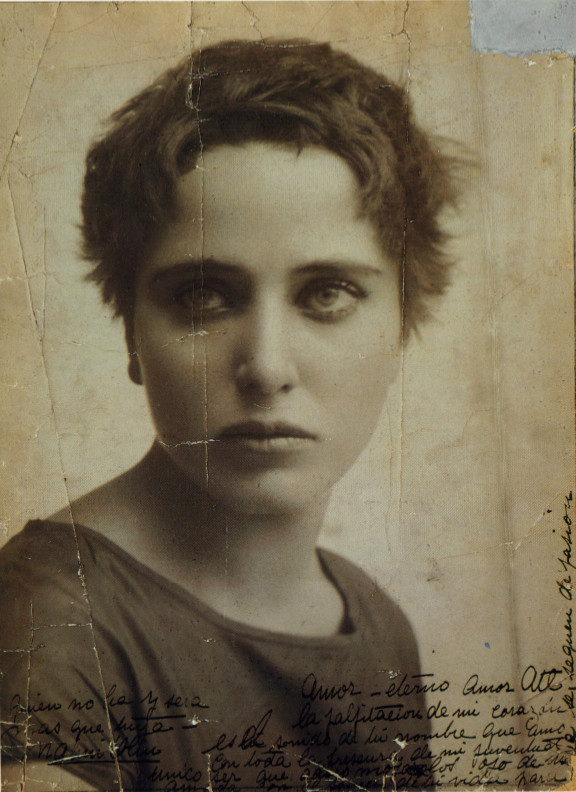
Extensive catalogue of an exhibition of Mexican artist’s model, painter and poet Carmen Mondragón, also known as Nahui Olin (1893-1978). She is considered one of the talented and revolutionary women who formed the 1920s and 1930s in Mexico by activism and creativity, like Guadalupe Marín, Antonieta Rivas Mercado, Frida Kahlo, Tina Modotti, Lupe Vélez and María Izquierdo.
Publisher Museo Estudio Diego Rivera, Mexico, 1993
ISBN 9682946697
173 pages
FIT: Festival intermediálnej tvorby, catalogue (1991) [Slovak]
Filed under catalogue | Tags: · art, computer animation, film, intermedia, intermedia art, music, performance, performance art, poetry, slovakia, theatre
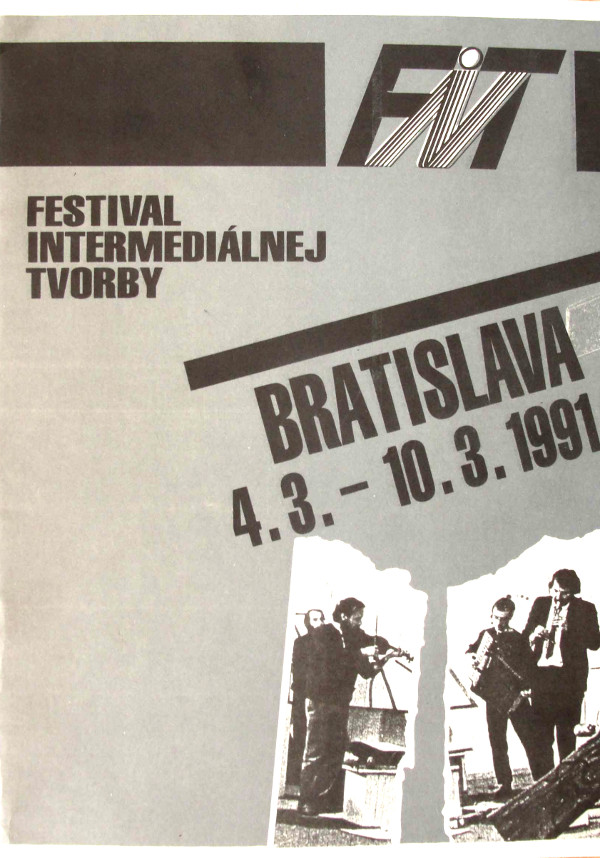
A catalogue for an intermedia art festival organised by The Society for Non-conventional Music (SNEH) in Bratislava on 4-10 March 1991.
Featured artists: Milan Adamčiak, László Cselényi, Balvan Theatre, Daniel Aschwanden, Dada Soiré, Dama Dama, Stano Filko, Dušan Hanák, Viktor Hulík, Milan Knížák, Werner Kodytek, Ladislav Novák, Štěpán Pala, Nová vážnosť, Michal Kern, Dezider Tóth, Juraj Bartusz, Jozef Juhász, Čenkovej deti, Jozef Juhász, Blaho Uhlár Theatre, Transmusic comp. Tibor Szemző, Vitebsk Broken, Alan Vitouš, A Dato
Editor Milan Adamčiak
via muzika-komunika.blogspot.com
PDF (no OCR)
Comment (0)Charles D. Blend: André Malraux: Tragic Humanist (1963)
Filed under book | Tags: · art, biography, communism, humanism, poetry, politics
“The dominant question arising from the unparalleled inhumanity of the mid-twentieth century, André Malraux has suggested “Is man dead?” Yet, for him, to pose the question is to answer it, for man proves his greatness, not by affirming it, but by questioning. It is by a mise en question of the universe that man rises above it.
This interpretation, long central to Malraux’s thinking, brings with it a number of difficulties. Previous concepts of man have produced an image, an ideal, toward which man could orient himself, and have presupposed a culture that had a role in the scheme of things. With a vision of man based on questioning rather than affirmation, it becomes impossible to preconceive an image of him or to visualize a form for human culture, and traditional humanism passes from the picture.
For Malraux, however, man has something that is greater than a preconceived image of himself: consciousness or awareness. To replace the images of man that have been destroyed or invalidated, Malraux calls for the will to grasp the greatest possible consciousness of what it is to be a man, coupled with the will to absolutely free discovery. Combining these values, Malraux suggests, produces a culture that is a human adventure, an advehture in freedom. Humanism is still possible, but it is a tragic humanism—humanism, because man knows his will and his starting point; tragic, because he can never know where he is going. Man can lead a dignified and fruitful existence given the will to struggle endlessly with the unknown.”
Publisher Ohio State University Press, 1963
255 pages