

Cindy Sherman: The Complete Untitled Film Stills (2003)
Filed under book | Tags: · art, film, photography
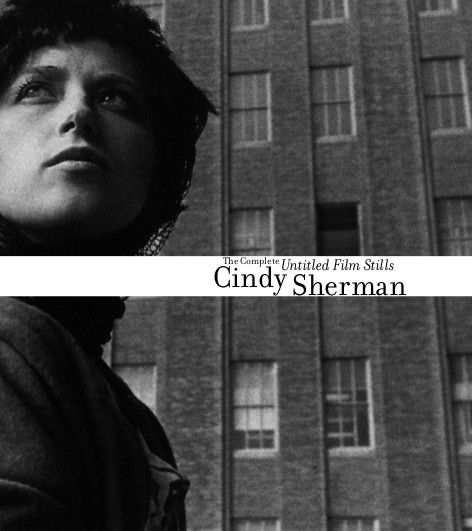
“Cindy Sherman’s Untitled Film Stills is a series of black-and-white photographs created between 1977 and 1980. Witty, provocative, and searching, this lively catalogue of female roles inspired by the movies touches a vital nerve in our culture. This book marks the first time that the entire series has been published as a unified work. Sherman has arranged the sequence of the pictures, and has written a personal essay about their making. To the original sixty-nine Film Stills she has also added a seventieth, from a roll of film that for some years was lost. Includes 70 duotone images.”
Edited by David Frankel
Publisher The Museum of Modern Art, New York
164 pages
via f-f-t-t.com
Commentary: Judith Williamson (Screen, 1983).
Exhibition (1997)
Publisher
PDF (133 MB)
Zipped JPEGs
Friedrich Kittler: Optical Media: Berlin Lectures 1999 (2002–)
Filed under book | Tags: · art, art history, computer art, computing, film, film history, history of photography, image, media archeology, painting, philosophy, photography, technology

“This major new book provides a concise history of optical media from Renaissance linear perspective to late twentieth-century computer graphics. Kittler begins by looking at European painting since the Renaissance in order to discern the principles according to which modern optical perception was organized. He also discusses the development of various mechanical devices, such as the camera obscura and the laterna magica, which were closely connected to the printing press and which played a pivotal role in the media war between the Reformation and the Counter-Reformation.
After examining this history, Kittler then addresses the ways in which images were first stored and made to move, through the development of photography and film. He discusses the competitive relationship between photography and painting as well as between film and theater, as innovations like the Baroque proscenium or “picture-frame” stage evolved from elements that would later constitute cinema. The central question, however, is the impact of film on the ancient monopoly of writing, as it not only provoked new forms of competition for novelists but also fundamentally altered the status of books. In the final section, Kittler examines the development of electrical telecommunications and electronic image processing from television to computer simulations.
In short, this book provides a comprehensive introduction to the history of image production that is indispensable for anyone wishing to understand the prevailing audiovisual conditions of contemporary culture.”
Publisher Merve, Berlin, 2002
Internationaler Merve Diskurs series, 250
ISBN 3883961833, 9783883961835
331 pages
English edition
Translated by Anthony Enns
With an introduction by John Durham Peters
Publisher Polity, 2009
ISBN 0745640915, 9780745640914
vi+250 pages
Reviews: Anthony Enns (Electronic Book Review 2004), Nicholas Gane and Hannes Hansen-Magnusson (Theory Culture Society 2006), Kiss (2006, HU), Bohár (HU), Jussi Parikka (2011).
Publisher (DE)
Publisher (EN)
Worldcat (DE)
Worldcat (EN)
Optische Medien. Berliner Vorlesung 1999 (German, 2002, added on 2016-8-13, removed on 2017-8-10 upon request from publisher – read first two chapters)
Optical Media: Berlin Lectures 1999 (English, trans. Anthony Enns, 2009)
Luis Buñuel: My Last Breath (1982-) [Spanish/English]
Filed under book | Tags: · art, biography, film, memory, politics, surrealism
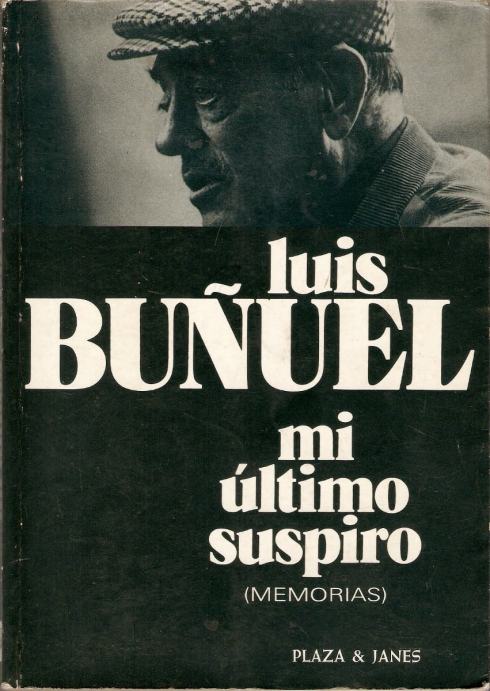
A provocative memoir from Luis Buñuel, the Academy Award winning creator of some of modern cinema’s most important films, from Un Chien Andalou to The Discreet Charm of the Bourgeoisie.
Luis Buñuel’s films have the power to shock, inspire, and reinvent our world. Now, in a memoir that carries all the surrealism and subversion of his cinema, Buñuel turns his artistic gaze inward. In swift and generous prose, Buñuel traces the surprising contours of his life, from the Good Friday drumbeats of his childhood to the dreams that inspired his most famous films to his turbulent friendships with Federico García Lorca and Salvador Dalí. His personal narratives also encompass the pressing political issues of his time, many of which still haunt us today—the specter of fascism, the culture wars, the nuclear bomb. Filled with film trivia, framed by Buñuel’s intellect and wit, this is essential reading for fans of cinema and for anyone who has ever wanted to see the world through a surrealist’s eyes.
Originally published in French as Mon dernier soupir, Editions Robert Laffont, 1982
English edition
Translated by Abigail Israel
This translation first published by Alfred A. Knopf, 1983
Publisher Fontana Paperbacks, a division of Collins Publishing Group, London, 1985
266 pages
Mi último suspiro (Spanish, trans. Ana M. de la Fuente, 1982)
My Last Breath (English, trans. Abigail Israel, 1985)