
Jean-Hugues Barthélémy: Life and Technology: An Inquiry Into and Beyond Simondon (2015)
Filed under book | Tags: · biology, cybernetics, philosophy, philosophy of technology, technology
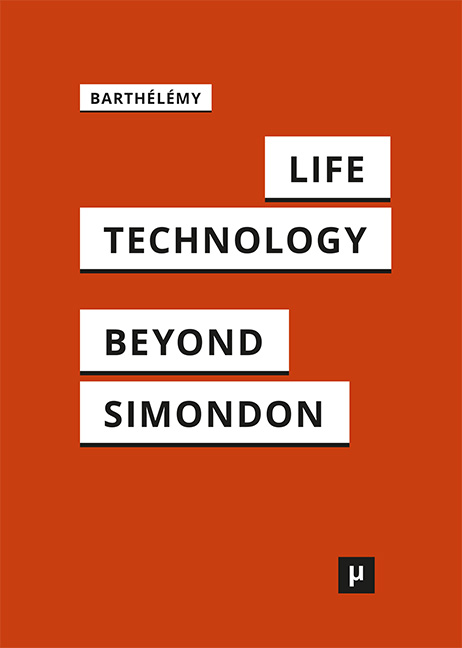
“The philosophy of Gilbert Simondon has reinvigorated contemporary thinking about biological and technological beings. In this book, Jean-Hugues Barthélémy takes up Simondon’s thought and shows how life and technology are connected by a transversal theme: individuation. In the first essay, Barthélémy delivers a contemporary interpretation of Simondon’s concept of ontogenesis against the backdrop of biology and cybernetics. In the second essay, he extends his reflections to propose a non-anthropological understanding of technology, and so sets up a confrontation with the work of Martin Heidegger.”
Translated by Barnaby Norman
Publisher meson.press, Lüneburg, Dec 2015
After Simondon series
Creative Commons Attribution-ShareAlike 4.0 International (Part 1 under CC-BY-NC-ND 4.0)
ISBN 9783957960702 (Print), 9783957960719 (PDF)
71 pages
For more on Simondon see Monoskop wiki.
Comment (0)Matteo Pasquinelli (ed.): Alleys of Your Mind: Augmented Intelligence and Its Traumas (2015)
Filed under book | Tags: · algorithm, artificial intelligence, brain, cognition, computation, cybernetics, technology, thinking
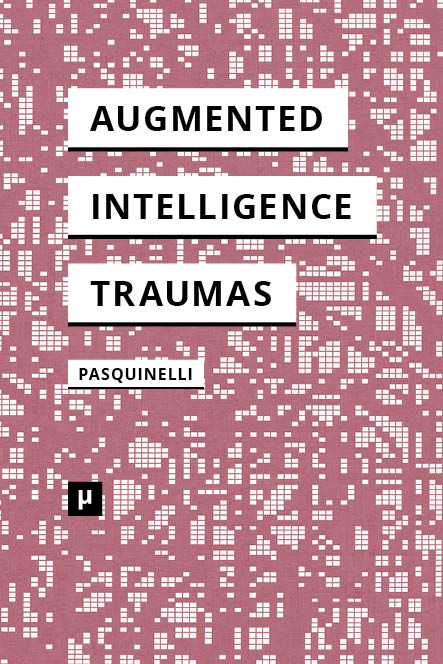
“One day, it will not be arbitrary to reframe twentieth century thought and its intelligent machines as a quest for the positive definition of error, abnormality, trauma, and catastrophe—a set of concepts that need to be understood in their cognitive, technological and political composition. It may be surprising for some to find out that Foucault’s history of biopower and technologies of the self share common roots with cybernetics and its early error friendly universal machines. Or to learn that the desiring machines, which “continually break down as they run, and in fact run only when they are not functioning properly” (Deleuze and Guattari), were in fact echoing research on war traumas and brain plasticity from the First World War. Across the history of computation (from early cybernetics to artificial intelligence and current algorithmic capitalism) both mainstream technology and critical responses to it have shared a common belief in the determinism and positivism of the instrumental or technological rationality, to use the formulations of the Frankfurt School. Conversely, the aim of this anthology is to rediscover the role of error, trauma and catastrophe in the design of intelligent machines and the theory of augmented cognition. These are timely and urgent issues: the media hype of singularity occurring for artificial intelligence appears just to fodder a pedestrian catastrophism without providing a basic epistemic model to frame such an “intelligence explosion”.”
With texts by Benjamin Bratton, Orit Halpern, Adrian Lahoud, Jon Lindblom, Catherine Malabou, Reza Negarestani, Luciana Parisi, Matteo Pasquinelli, Ana Teixeira Pinto, Michael Wheeler, Charles Wolfe, and Ben Woodard.
Publisher meson.press, Lüneburg, November 2015
Creative Commons BY-SA 4.0 License
ISBN 9783957960658 (print) 9783957960665 (PDF)
212 pages
Richard Barbrook with Andy Cameron: The Internet Revolution: From Dot-com Capitalism to Cybernetic Communism (2015)
Filed under book | Tags: · californian ideology, capitalism, communism, cybernetics, cyberspace, internet, libertarianism, neoliberalism, net criticism, silicon valley, technology, virtual reality
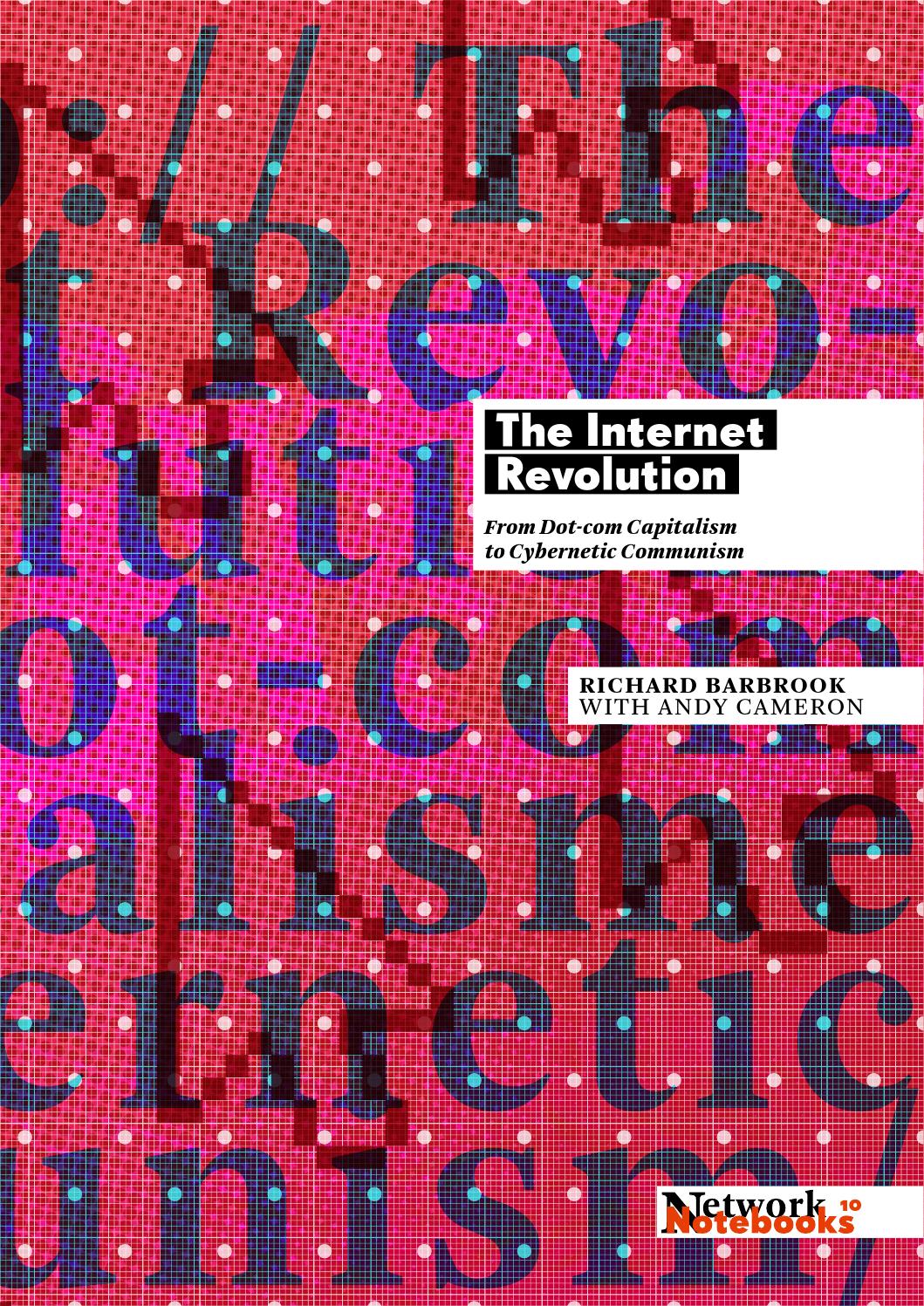
“Richard Barbrook and Andy Cameron’s The Californian Ideology, originally published in 1995 by Mute magazine and the nettime mailinglist, is the iconic text of the first wave of Net criticism. The internet might have fundamentally changed in the last two decades, but their demolition of the neoliberal orthodoxies of Silicon Valley remains shocking and provocative. They question the cult of the dot-com entrepreneur, challenging the theory of technological determinism and refuting the myths of American history. Denounced as the work of ‘looney lefties’ by Silicon Valley’s boosters when it first appeared, The Californian Ideology has since been vindicated by the corporate take-over of the Net and the exposure of the NSA’s mass surveillance programmes.
Published in 1999 at the peak of the dot-com bubble, Richard Barbrook’s Cyber-Communism offers an alternative vision of the shape of things to come, inspired by Marshall McLuhan’s paradoxical ‘thought probes’. With the Californian Ideology growing stronger, the Net was celebrated as the mechanical perfection of neoliberal economics. Barbrook shows how this futurist prophecy is borrowed from America’s defunct Cold War enemy: Stalinist Russia. Technological progress was the catalyst of social transformation. With copyright weakening, intellectual commodities were mutating into gifts. Invented in capitalist America, the Net in the late-1990s had become the first working model of communism in human history.
In an introduction written specially for this 20th anniversary edition, Richard Barbrook takes a fresh look at the hippie capitalists who shaped Silicon Valley and explains how their influence continues to this day. These thought probes are still relevant in understanding the contradictory impact of ubiquitous social media within the modern world. As McLuhan had insisted, theoretical provocation creates political understanding.”
Publisher Institute of Network Cultures, Amsterdam, Oct 2015
Network Notebooks series, 10
Creative Commons Attribution-NonCommercial-ShareAlike 4.0 International License
ISBN 9789492302014
51 pages
Replies to ‘The Californian Ideology’ published in Mute 4 (Spring 1996): Introduction, Louis Rossetto (Wired’s editor-in-chief), Franco (Bifo) Berardi, Celia Pearce.
PDF, PDF (4 MB)
EPUB, EPUB (3 MB)
Issuu