
Branko Vučićević: Paper Movies (1998–) [Serbo-Croatian, English]
Filed under book | Tags: · antifilm, art, art history, avant-garde, collage, dada, film, literature, yugoslavia
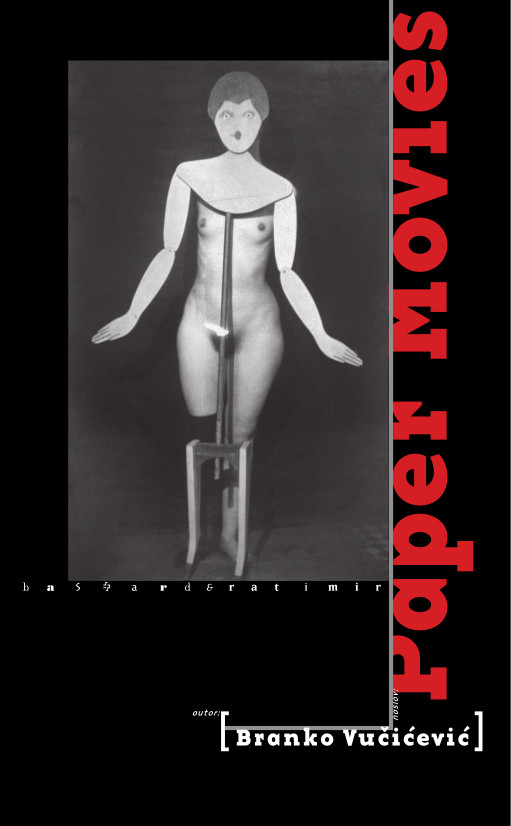
“Paper Movies predstavlja prvo domače srečanje z igrivo in lucidno mislijo vsestranskega erudita, cinefila, zlasti pa tudi poznavalca zgodovine avantgardnih gibanj: slikovita knjižica z metodo filmsko-literarnega kolaža zariše obrise svojevrstnega »kina z drugimi sredstvi«, ki se zaključuje in nadaljuje v mediju tiskane besede.”
Publisher Arkzin, Zagreb, and B 92, Belgrade, 1998
Anti-copyright
ISBN 867963090X (Bgd), 9536542056 (Zgb)
79 pages
via MemoryoftheWorld, via Dejan Kršić
PDF, PDF (Serbo-Croatian, 1998)
Excerpts (English, trans. Greg de Cuir, Jr., 2014)
See also Pavle Levi’s Cinema by Other Means, 2012.
More on Vučićević.
The Record as Artwork: From Futurism to Conceptual Art (1977) [EN, FR]
Filed under catalogue | Tags: · art, avant-garde, conceptual art, dada, fluxus, futurism, music, sound art

Exhibition catalogue published in conjunction with show held at Fort Worth Art Museum, Texas, 4 December 1977 – 15 January 1978; Moore College of Art Gallery, Philadelphia, 3 February – 8 March 1978; Musée d’Art Contemporain, Montreal, 7 September – 22 October 1978; and Museum of Contemporary Art, Chicago, no dates listed.
Text by Anne Livet and Germano Celant. Artists include Kurt Schwitters, Marcel Duchamp, Hugo Ball, Jean Dubuffet, Yves Klein, Raoul Hausmann, Jean Tinguely, Allan Kaprow, Billy Kluver, Lawrence Weiner, Eliane Radigue, Jan Dibbets, Joseph Beuys, Dick Raaijmakers, Braco Dimitrijević, Antonio Dias, Sarkis, Michael Snow, Topor, Jack Goldstein, Art & Language, and others. Includes discography, index of record producers, and list of works.
Edited by Germano Celant
Publisher Museum of Contemporary Art, Chicago, 1977
121 pages
PDF (27 MB)
Comments (2)Maud Lavin: Cut With the Kitchen Knife: The Weimar Photomontages of Hannah Höch (1993)
Filed under book | Tags: · art, art history, avant-garde, collage, dada, gender, mass media, montage, photomontage, weimar republic, women
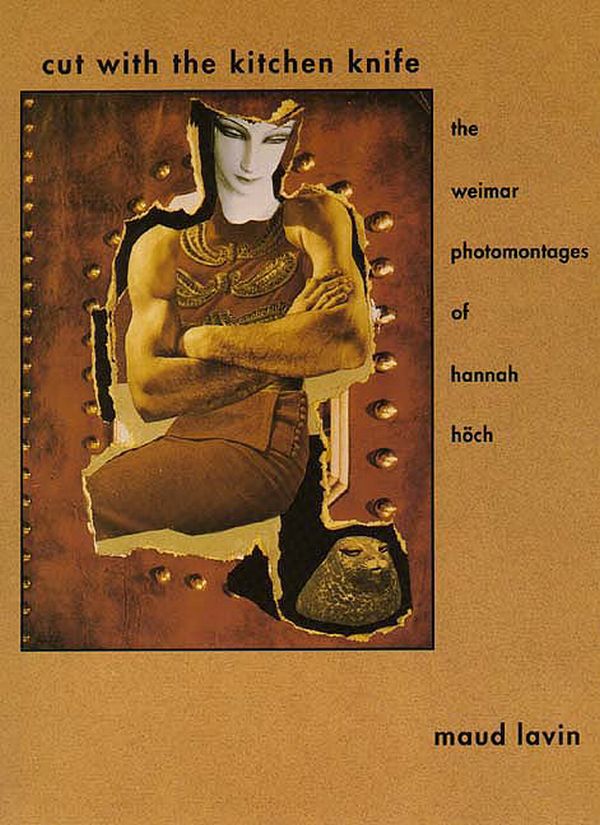
“The women of Weimar Germany had an uneasy alliance with modernity: while they experienced cultural liberation after World War I, these “New Women” still faced restrictions in their earning power, political participation, and reproductive freedom. Images of women in newspapers, films, magazines, and fine art of the 1920s reflected their ambiguous social role, for the women who were pictured working in factories, wearing androgynous fashions, or enjoying urban nightlife seemed to be at once empowered and ornamental, both consumers and products of the new culture. In this book Maud Lavin investigates the multi-layered social construction of femininity in the mass culture of Weimar Germany, focusing on the intriguing photomontages of the avant-garde artist Hannah Höch.
Höch, a member of the Berlin Dada group, was recognized as one of the most innovative practitioners of photomontage. In such works as Dada-Ernst and Cut with the Kitchen Knife, she reconstructed the wonderfully seductive mass media images of the New Woman with their appeal intact but with their contours fractured in order to expose the contradictions of the new female stereotypes. Her photomontages exhibit a disturbing tension between pleasure and anger, confidence and anxiety. In Weimar—as today—says Lavin, the representation of women in the mass media took on a political meaning when it challenged the distribution of power in society. Höch’s work provides important evidence of the necessity for women to shape the production and reception of the images that redefine their role.”
Publisher Yale University Press, 1993
ISBN 0300047665, 9780300047660
xvii+260 pages
Reviews: Johanna Drucker (Art Journal 1993), Susan Sensemann (Design Issues 1994), Greil Marcus (2014).
PDF (assembled from scans on author’s Academia.edu page, 24 MB, no OCR)
Comment (0)