
Inke Arns, Marie Lechner (eds.): Computer Grrrls (2021) [German/English]
Filed under catalogue | Tags: · algorithm, artificial intelligence, big data, cyberfeminism, hacking, internet, technofeminism, technology, women
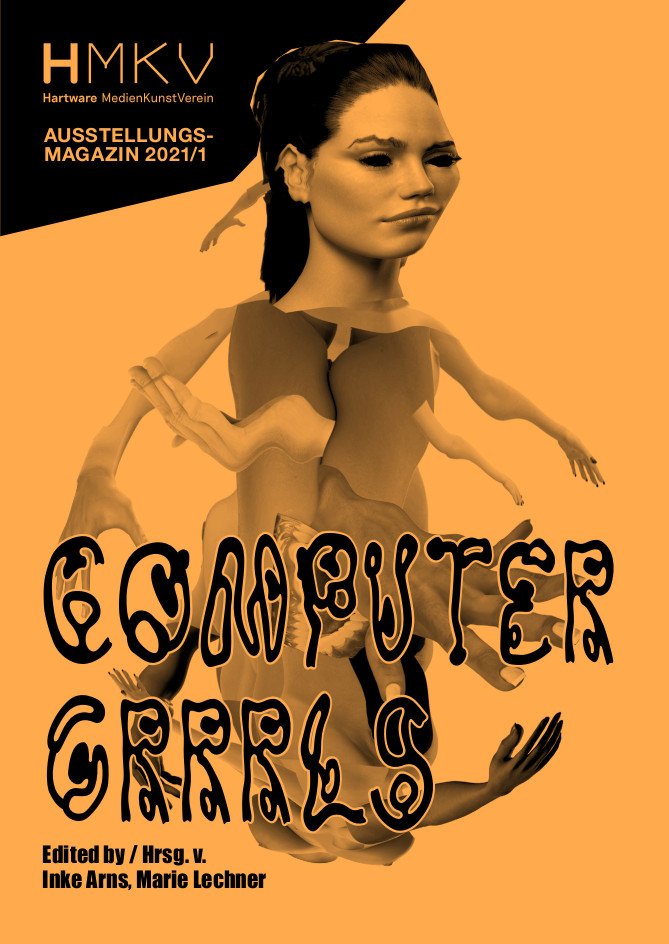
“Computer Grrrls brings together 23 international artistic positions that negotiate the complex relationship between gender and technology in past and present. The book deals with the link between women and technology from the first human computers to the current revival of technofeminist movements. An illustrated timeline with over 200 entries covers these developments from the 18th century to the present day.
The publication presents artists, hackers, makers and researchers who are working on how to think differently about technology: by questioning the gender bias in big data and artificial intelligence, promoting an open and diversified Internet, and designing utopian technologies.
The perspectives presented here address a broad range of topics: electronic colonialism, the place of minorities on the Internet, the sexist bias of algorithms, the dangerous dominance of white men in the development of artificial intelligence and digital surveillance, but also ideas on how we can change our traditional ways of thinking.
Artists included: Morehshin Allahyari, Manetta Berends, Zach Blas & Jemima Wyman, Nadja Buttendorf, Elisabeth Caravella, Jennifer Chan, Aleksandra Domanović, Louise Drulhe, Elisa Giardina Papa, Darsha Hewitt, Lauren Huret, Hyphen-Labs, Dasha Ilina, Roberte la Rousse, Mary Maggic, Caroline Martel, Lauren Moffatt, Simone C. Niquille, Jenny Odell, Tabita Rezaire, Erica Scourti, Suzanne Treister, Lu Yang.”
Publisher Kettler, Dortmund, and HMKV, Dortmund, May 2021
Open access
ISSN 2629-2629
ISBN 9783862069071
191 pages
HT coco
Publisher
Publisher
Exhibition (HMKV, 2018-2019)
PDF (59 MB)
Comment (0)Volume, 49: In Loving Support (2016)
Filed under magazine | Tags: · algorithm, artificial intelligence, design, digital culture, machine, technology

“This publication shows the outcome of a four-day retreat organised by Het Nieuwe Instituut and Volume in June 2016. During this meeting, designers, artists and scientists researched the meaning of artificial intelligence on the practice of cultural research.”
Contributors: Marina Otero Verzier, Klaas Kuitenbrouwer, Luis Rodil-Fernández, Matthew Plummer-Fernandez, Ben Schouten, Nick Axel, Katía Truijen, Lilet Breddels, Merel Noorman, Tamar Shafrir, Füsun Türetken, Femke Snelting, Simone C. Niquille, Dorien Zandbergen.
An insert in Volume #49: Hello World!
Edited by Nick Axel
Publisher Archis Foundation, and Het Nieuwe Instituut, Rotterdam, September 2016
ISSN 1574-9401
32 pages
oneacre.online (2017–)
Filed under artist publishing | Tags: · aesthetics, artificial intelligence, information, internet, radio, technology
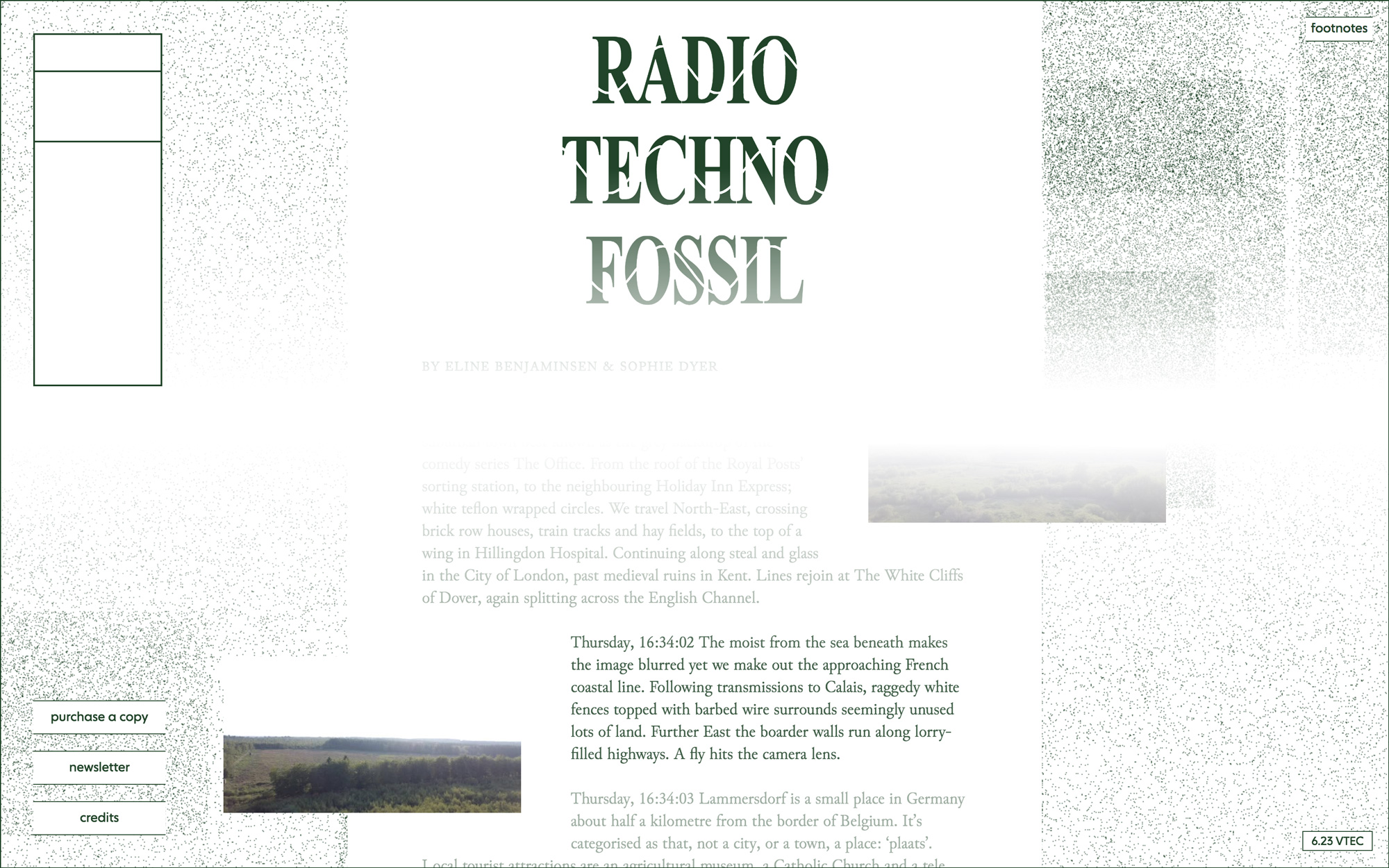
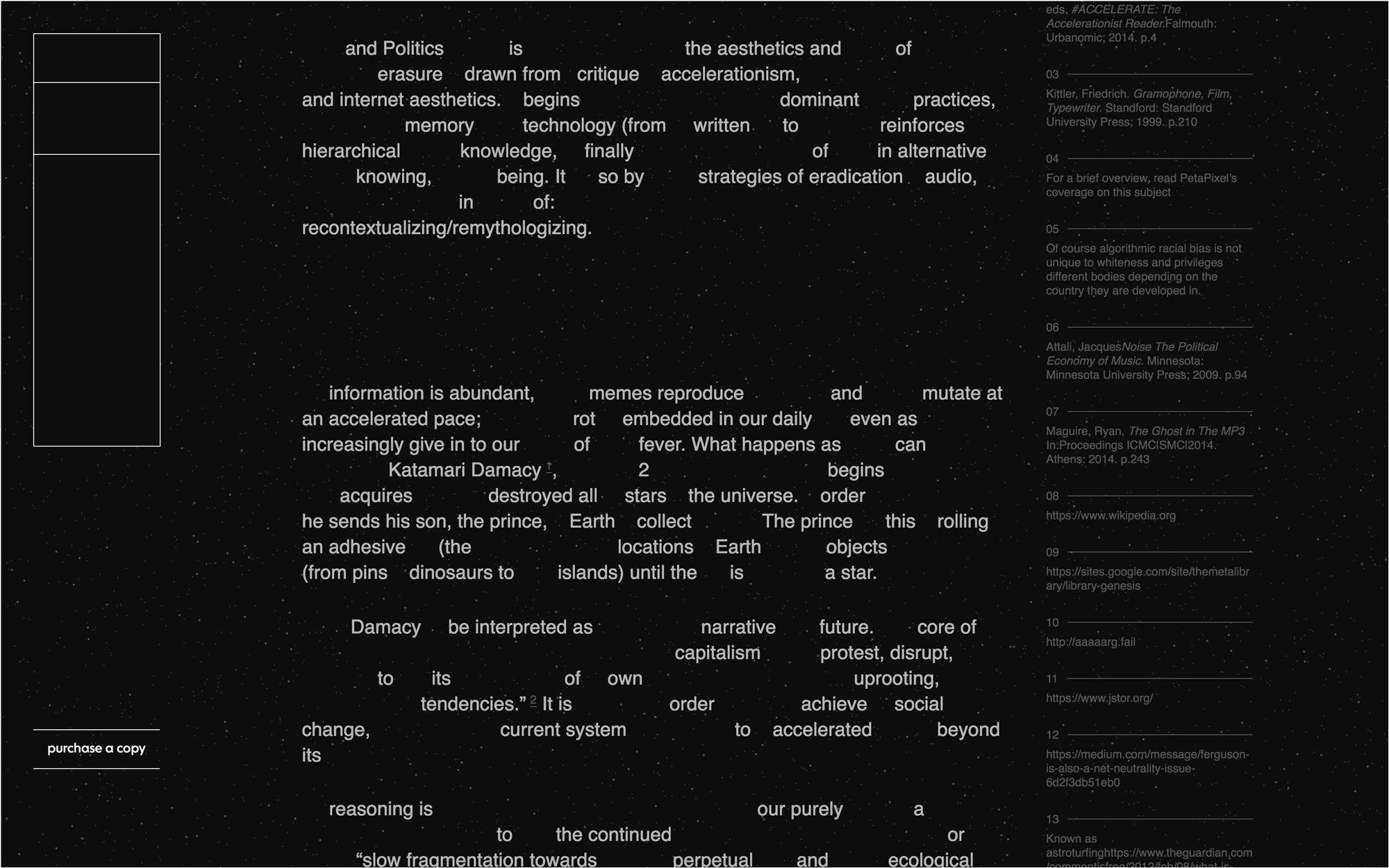
“oneacre.online is an experimental publishing and distribution project that utilises an online platform to seed unprintable text-based works by emerging artists. The project explores the possibilities of hyper-publishing in a series of commissioned publications. Thematically the first four place themselves in the online world of constant updates and refresh buttons that, as theorist Wendy Chun observes, “exist at the bleeding edge of obsolescence. We thus forever try to catch up, updating to remain the same”. The publications use the omnidirectional online terrain and actions that are native to it — such as refreshing, instantly available to edit, easily erasable, highlighting, copy-pasting and non linear navigation — to explore and critically evaluate visions and versions of power systems by tracing the politics of technological infrastructures. Hidden in places as traditional as archives, as often used as smart phone applications, omnipresent and inescapable as the financial market and as quiet and evasive as the transfer of information in narrative structures.
The series showcased in December 2017 Poetics and Politics of Erasure by Yun Ingrid Eel, a multidisciplinary research paper on the aesthetics and politics of erasure. In March 2018, Artificial Intelligence Never Has a Headache by Karina Zavidova, a long-form about the fear of AI spread by the media, and the market of productivity-enhancing tools it has fuelled. In July 2018 Radio, Techno, Fossil by Eline Benjaminsen & Sophie Dyer, the story of a radio-image as it traverses the bounds of the Earth’s surfaces, atmospheres and techno-geographies. And in September 2018, Meaning Seeking Animals by Lisa van Casand, a subjective collection of a wide range of perspectives on the transfer of information.”
Made by Stef Kors, Titus Knegtel, Victoria Douka-Doukopoulou
Published 2017-2018
HTML (limited preview; use the direct links above to access publications)
Comment (0)