

Cybernetics: The Macy Conferences 1946-1953: The Complete Transactions (2016)
Filed under book, proceedings | Tags: · cybernetics, information, information theory, mathematics
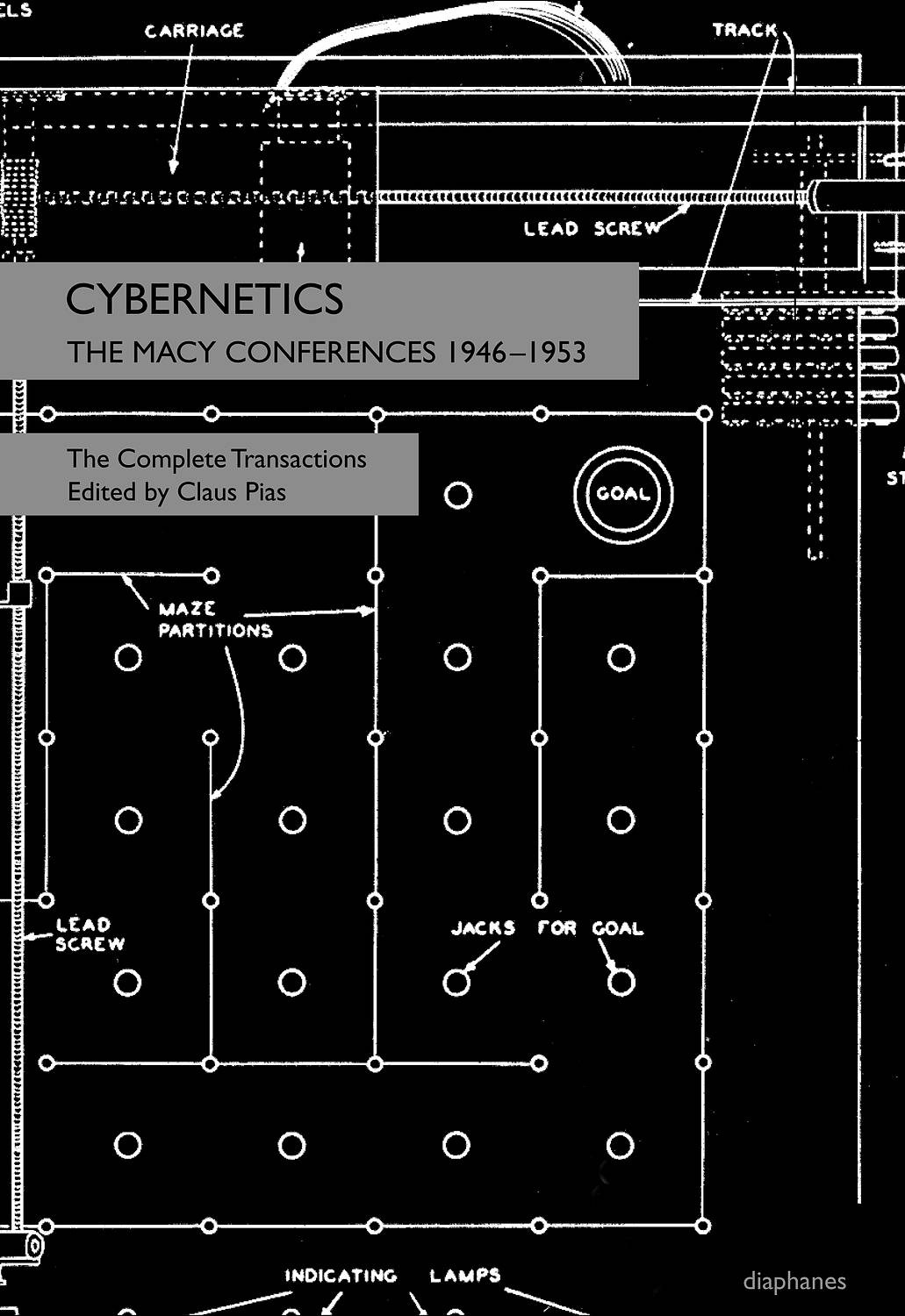
“Between 1946 and 1953, the Josiah Macy, Jr. Foundation sponsored a series of conferences aiming to bring together a diverse, interdisciplinary community of scholars and researchers who would join forces to lay the groundwork for the new science of cybernetics. These conferences, known as the Macy conferences, constituted a landmark for the field. They were the first to grapple with new terms such as information and feedback and to develop a cohesive and broadly applicable theory of systems that would become equally applicable to living beings and machines, economic and cognitive processes, and many scholarly disciplines. The concepts that emerged from the conferences come to permeate thinking in many fields, including biology, neurology, sociology, ecology, economics, politics, psychoanalysis, linguistics, and computer science.
This book contains the complete transcripts of all ten Macy conferences and the guidelines for the conference proceedings. These transcripts are supplemented with an introduction by Claus Pias that charts the significance of the Macy conferences to the history of science.”
Edited and with a Foreword by Claus Pias
Publisher Diaphanes, Zürich, 2016
ISBN 9783037345986, 3037345985
734 pages
Publisher
Distributor
WorldCat
PDF (5 MB, updated on 2020-8-24)
Comment (0)Adrian Mackenzie: Machine Learners: Archaeology of a Data Practice (2017)
Filed under book | Tags: · abstraction, algorithm, archaeology, artificial intelligence, code, data, diagram, error, information science, information theory, knowledge, machine learning, mathematics, neural networks, programming, theory
“If machine learning transforms the nature of knowledge, does it also transform the practice of critical thought?
Machine learning—programming computers to learn from data—has spread across scientific disciplines, media, entertainment, and government. Medical research, autonomous vehicles, credit transaction processing, computer gaming, recommendation systems, finance, surveillance, and robotics use machine learning. Machine learning devices (sometimes understood as scientific models, sometimes as operational algorithms) anchor the field of data science. They have also become mundane mechanisms deeply embedded in a variety of systems and gadgets. In contexts from the everyday to the esoteric, machine learning is said to transform the nature of knowledge. In this book, Adrian Mackenzie investigates whether machine learning also transforms the practice of critical thinking.
Mackenzie focuses on machine learners—either humans and machines or human-machine relations—situated among settings, data, and devices. The settings range from fMRI to Facebook; the data anything from cat images to DNA sequences; the devices include neural networks, support vector machines, and decision trees. He examines specific learning algorithms—writing code and writing about code—and develops an archaeology of operations that, following Foucault, views machine learning as a form of knowledge production and a strategy of power. Exploring layers of abstraction, data infrastructures, coding practices, diagrams, mathematical formalisms, and the social organization of machine learning, Mackenzie traces the mostly invisible architecture of one of the central zones of contemporary technological cultures.
Mackenzie’s account of machine learning locates places in which a sense of agency can take root. His archaeology of the operational formation of machine learning does not unearth the footprint of a strategic monolith but reveals the local tributaries of force that feed into the generalization and plurality of the field.”
Publisher MIT Press, November 2017
ISBN 9780262036825, 0262036827
272 pages
via A.B.
Review: Graham White (Computational Culture, 2021)
PDF (removed on 2018-8-20 upon request from publisher)
Draft and code samples on GIT
Ryszard Winiarski: Event, Information, Image (2017)
Filed under catalogue | Tags: · conceptual art, mathematics, painting
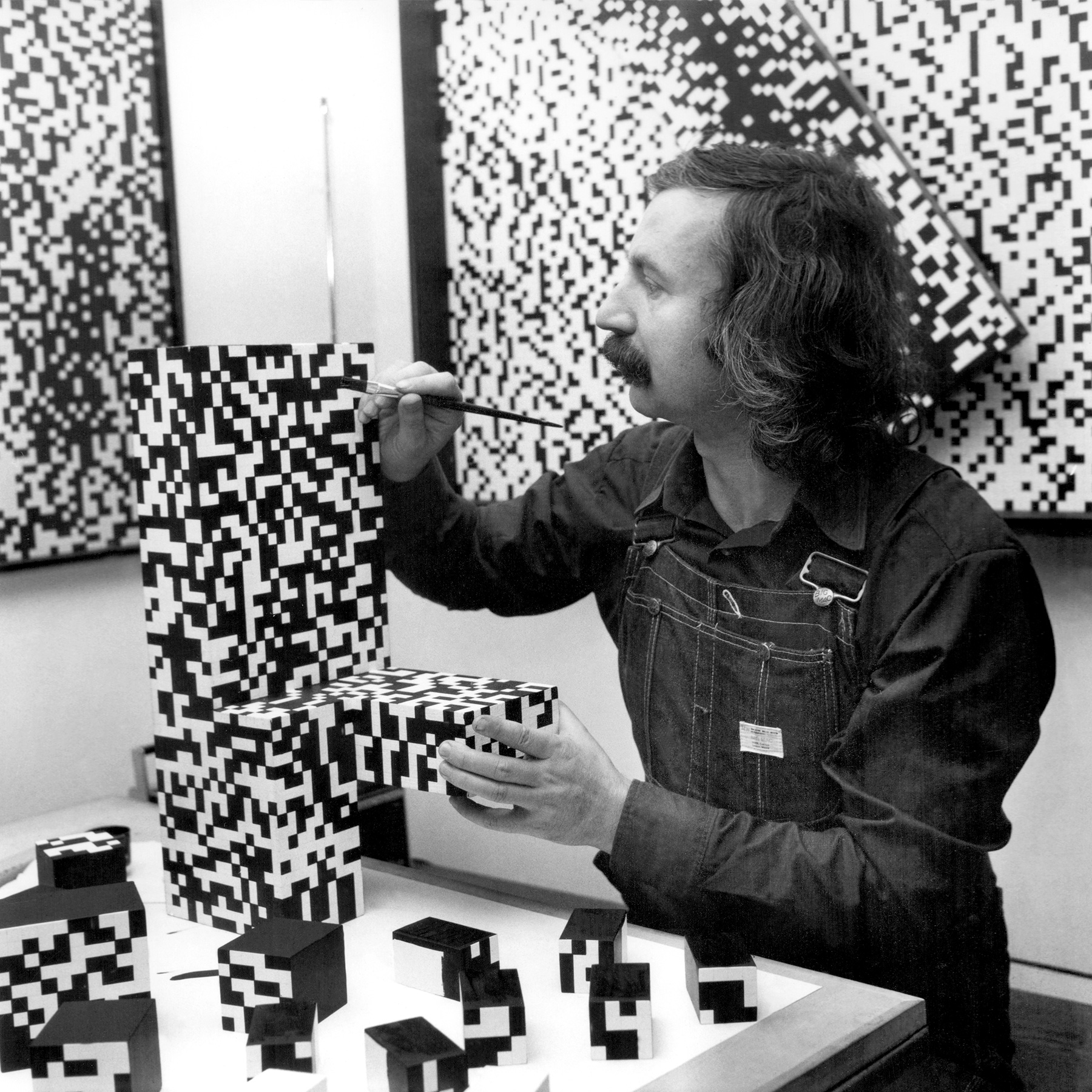
Ryszard Winiarski (1936-2006) was an artist, painter, stage designer and teacher. He was precursor of conceptual art and leading representative of indeterminism in Polish art.
Catalogue for an official collateral event of Venice Biennial, 2017.
Edited by Ania Muszyńska and Magdalena Marczak-Cerońska
Publisher Fundacja Rodziny Staraków, Warsaw, 2017
Open access
ISBN 9788364381089
156 pages