

Series of Monographs on Cinema, 10 vols. (1931–33) [NL]
Filed under book | Tags: · abstract cinema, avant-garde, cinema, experimental film, film, film history, film sound, film theory, graphic design, montage, silent cinema

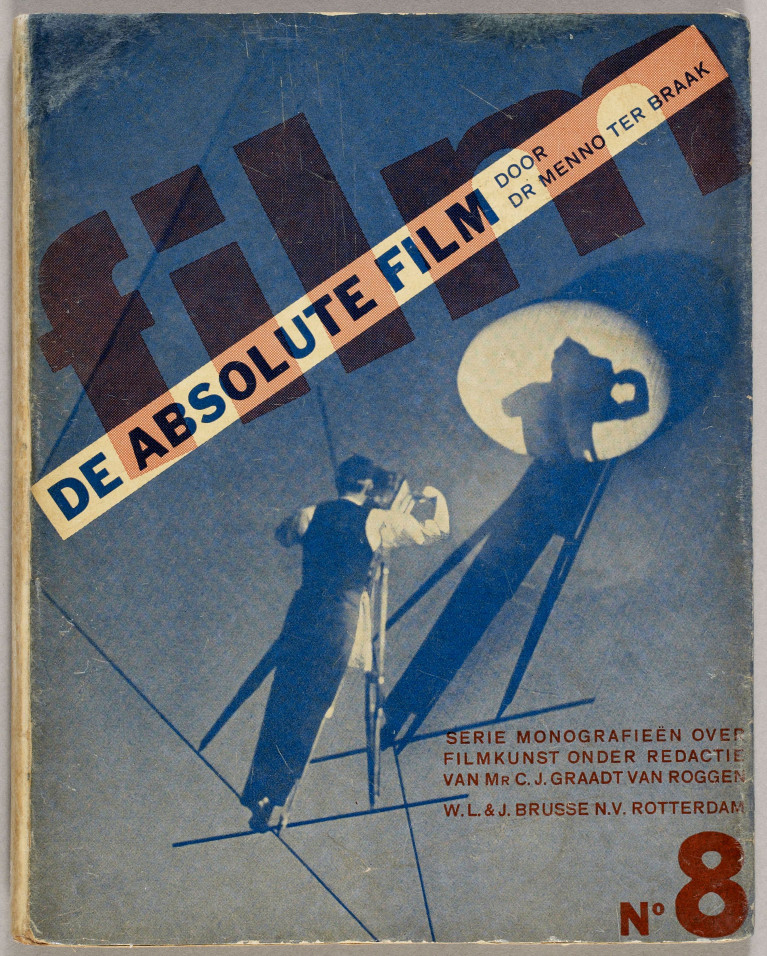
This set of monographs on early twentieth-century film is as important for the discourses on cinema, as it is for the graphic design.
Each volume has a cover created by the Dutch “typotekt” Piet Zwart, who had multiple careers as an interior designer, industrial design, commercial typographer, photographer, critic and lecturer. At the close of the twentieth century, Zwart was named ‘Designer of the Century’ by the Association of Dutch Designers.
Originally planned in twelve volumes, the last two in the series were not published: De techniek van de kunstfilm by M.T.H. Franken and Joris Ivens and Filmreclame by Piet Zwart.
Film: die serie monografieën over filmkunst
Series edited by C.J. Graadt van Roggen
Cover design Piet Zwart
Publisher W.L. & J. Brusse’s Uitgeversmaatschappij, Rotterdam, 1931-33
via Bibliothèque Kandinsky
Wikipedia (NL)
1 Het linnen venster, by C.J. Graadt van Roggen (1931, 72 pp, 71 MB)
2 Dertig jaar film [Thirty Years of Film], by L.J. Jordan (1932, 79 pp, 73 MB)
3 Nederlandsche filmkunst, by Henrik Scholte (1933, 64 pp, 63 MB)
4 Russische filmkunst, by Th. B.F. Hoyer (1932, 84 pp, 85 MB)
5 Duitsche filmkunst [German Cinema], by Simon Koster (1931, 75 pp, 71 MB)
6 Fransche filmkunst, by Elisabeth de Roos (1931, 59 pp, 61 MB)
7 Amerikaansche filmkunst, by Jo Otten (1931, 70 pp, 71 MB)
8 De absolute film, by Menno ter Braak (1931, 50 pp, 50 MB), HTML (at DBNL)
9 De komische film, by Constant van Wessem (1931, 56 pp, 49 MB)
10 De geluidsfilm [Sound Film], by Lou Lichtveld (1933, 79 pp, 76 MB), HTML (at DBNL)
Sophie Calle: Ma’s-tu vue / Did You See Me? (2003)
Filed under book, catalogue | Tags: · art, conceptual art, film, identity, photography, voyeurism

“The work of conceptual artist Sophie Calle embraces photography, storytelling, film, memoir as well as other media. Often controversial, Calle’s projects explore issues of voyeurism, intimacy, and identity as she secretly investigates, reconstructs and documents the lives of strangers–whether she’s inviting them to sleep in her bed, trailing them through a hotel, or following them through the city. Taking on multiple roles–detective, documentarian, behavioural scientist and diarist–Sophie Calle turns the interplay between life and art on its head.
The book presents Calle’s best-known works, including The Blind, No Sex Last Night, The Hotel, The Address Book and A Woman Vanishes, as well as lesser known and earlier projects that have largely escaped the public eye. This compendium of Calle’s photographs, diary excerpts and video stills also includes three critical essays and two interviews with the artist.”
First published in French by Centre Pompidou, Paris, 2003.
English edition
Publisher Prestel, 2003; Second edition, 2008
ISBN 3791330357, 9783791330358
443 pages
via Chloe
Review: Pescador (The Art Book Review, 2012).
Comment (0)B. Ruby Rich: Chick Flicks: Theories and Memories of the Feminist Film Movement (1998)
Filed under book | Tags: · 1970s, 1980s, cinema, feminism, film, film criticism, film history, film theory, queer, women
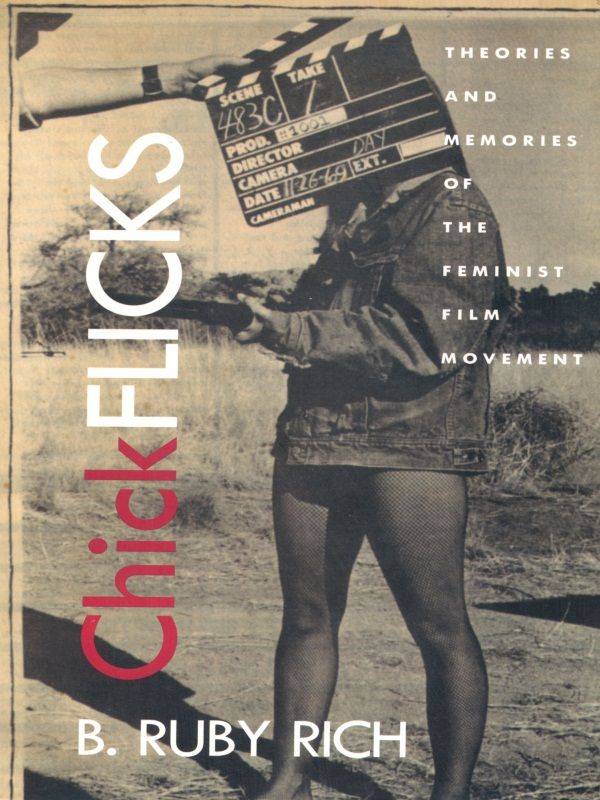
“If there was a moment during the sixties, seventies, or eighties that changed the history of the women’s film movement, B. Ruby Rich was there. Part journalistic chronicle, part memoir, Chick Flicks—with its definitive, the-way-it-was collection of essays—captures the birth and growth of feminist film.
For over three decades Rich has been one of the most important voices in feminist film criticism. Her presence at film festivals, her film reviews in the Village Voice, Elle, Out, and the Advocate, and her commentaries on the public radio program “The World” have secured her a place as a central figure in the history of what she deems “cinefeminism.” In the hope that a new generation of feminist film culture might be revitalized by reclaiming its own history, Rich introduces each essay with an autobiographical prologue that describes the intellectual, political, and personal moments from which the work arose. Travel, softball, sex, and voodoo all somehow fit into a book that includes classic Rich articles covering such topics as the antiporn movement, the films of Yvonne Rainer, a Julie Christie visit to Washington, and the historically evocative film Mädchen in Uniform.”
Publisher Duke University Press, Durham and London, 1998
ISBN 0822321211, 9780822321217
448 pages
Review (Linda Mizejewski, Women’s Review of Books, c1998)
Review (Susan Lord, Film Studies, c1999)
Review (Felicity Collins, 1999)
See also Women and Film Project initiated in 2013 by Clarissa Jacob and Kate Wieteska.
Comment (0)