

Fredy Perlman: The Reproduction of Daily Life (1969-) [EN, CR, PT, FR]
Filed under book | Tags: · alienation, capitalism, economy, everyday, labour, life, production, reproduction, society, value
What sustains Capitalism? Our acceptance of everyday activities. The text offers a clear introduction to basic Marxist concepts like commodity fetishism, and surplus value; it also traces the transformation of human activity into capital. It opens with the observation “that everyday practical activity of tribesmen reproduces, or perpetuates, a tribe.”
Publisher: Black & Red, Detroit, 1969, 24 pages. Reprinted in Anything Can Happen, October 1992, Phoenix Press, PO Box 824 London N1 9DL.
Croatian edition: Reprodukcija svakodnevnog života. Translated by Aleksa Golijanin, 2003. Anti-copyright.
Portuguese edition: A Reprodução do Quotidiano. Translated from Treason Press edition (2004), in February 2009, Edições Versus Capitalismus. Anti-copyright.
French edition: La Reproduction de la Vie Quotidienne. Published by Ravage Éditions, Paris, September 2011. Anti-copyright.
about the author (wikipedia)
publisher
google books
PDF (English, multiple formats)
PDF (Croatian, multiple formats)
PDF (Portuguese, PDF)
PDF (French, multiple formats)
Tiqqun: Grundbausteine einer Theorie des Jungen-Mädchens (1999/2009) [German]
Filed under book | Tags: · biopolitics, biopower, body, capitalism, consumerism, desire, feminism, labour, metaphysics, philosophy, reification, seduction, sexuality, theory

“Das Junge-Mädchen (la Jeune-Fille) ist die Gestalt, die Ewig-Weibliches und ewige Jugend in sich vereint. Seinen Ursprung hat es im Bankrott des von der totalen Kommerzialisierung überrannten Feminismus. Einzig fähig zu konsumieren (sowohl in der Freizeit wie bei der Arbeit), ist das Junge-Mädchen zugleich das luxuriöseste Konsumgut, das gegenwärtig in Umlauf ist: die Leit-Ware, die dazu dient, alle anderen zu verkaufen. Mit dem Junge-Mädchen wird Wirklichkeit, was sich nur die überdrehtesten Krämerseelen erträumten: die autonome Ware, die spricht und geht, die lebende Sache.
Doch woran erkennt man es? Zunächst daran, dass es ist, was es zu sein scheint, sonst nichts. Zum zweiten hat alles, was das Junge-Mädchen tut, etwas Professionelles an sich, da es seine gesamte Existenz als eine Frage des Managements betrachtet. Als Eigentümerin ihres Körpers, verkauft das Junge-Mädchen (»Sternchen«, Model, Reklame, Bild) seine »Verführungskraft« wie man einst seine »Arbeitskraft« verkaufte. Selbst seine Liebschaften sind Arbeit, und wie jede Arbeit prekär… Schließlich altert das Junge-Mädchen nicht, es verwest.”
„Julien Coupat und seine Freunde können nicht die Autoren der in TIQQUN veröffentlichten Texte sein, weil diese in einer Zone angesiedelt sind, in der es unmöglich ist, zwischen Subjekt und Dispositiv zu unterscheiden, d.h. in der der Begriff des Autors jegliche Bedeutung verloren hat.“
Der Text ist in seiner ersten Version in der Nummer 1 von Tiqqun im Januar 1999 erschienen. Die vorliegende Übersetzung folgt der überarbeiteten Fassung in: TIQQUN, Premiers matériaux pour une théorie de la Jeune-Fille, Rennes 2006.
Übersetzt von Deutsche Sektion der PI (Parti Imaginaire)
Merve Verlag, 2009
IMD 334
ISBN 3883962716, 9783883962719
120 Seiten
PDF
French edition (2001)
English edition (2010)
David Harvey: Rebel Cities: From the Right to the City to the Urban Revolution (2012–) [EN, ES]
Filed under book | Tags: · activism, capitalism, city, commons, culture, economy, labour, neoliberalism, occupy movement, politics, production, resistance, revolution, social movements, theory of value
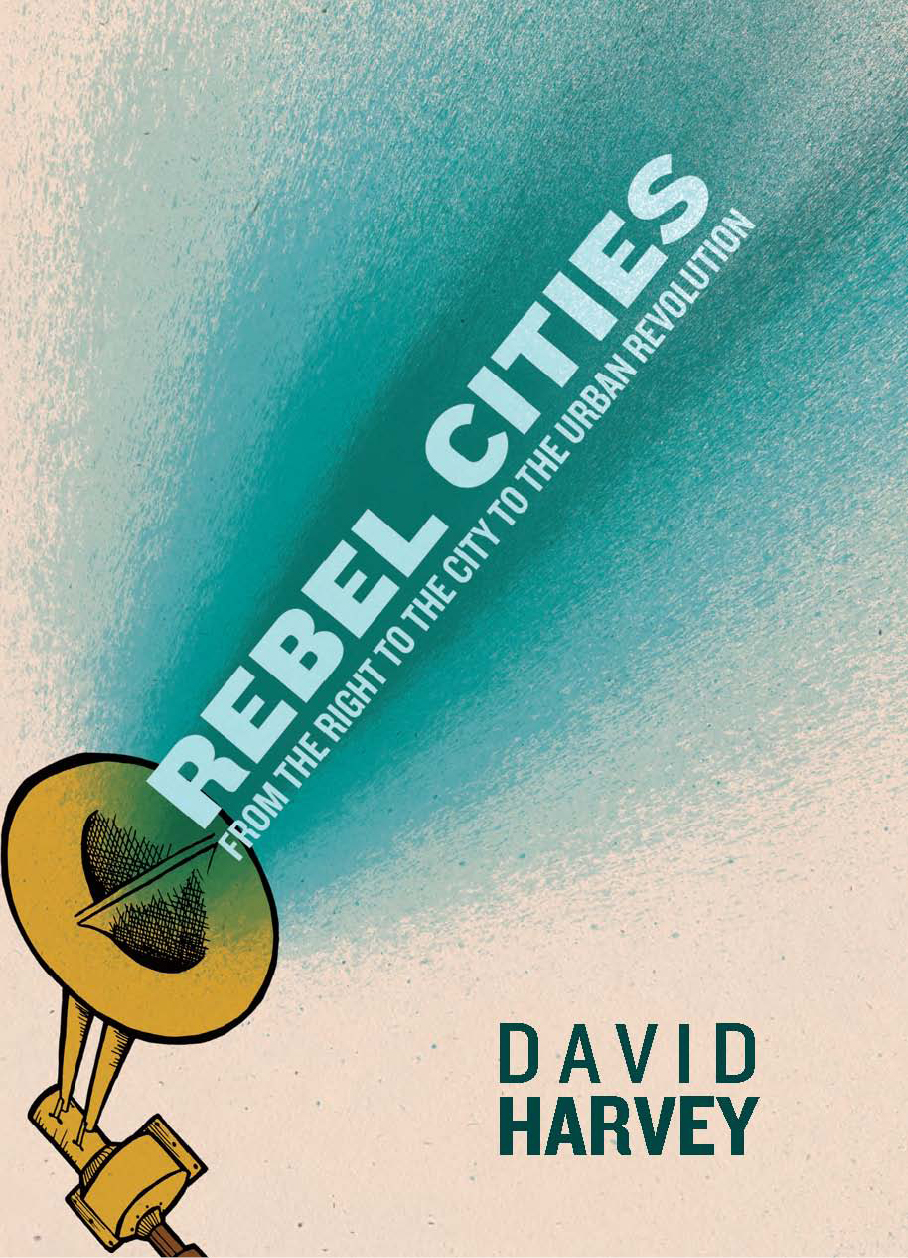
“Long before the Occupy movement, modern cities had already become the central sites of revolutionary politics, where the deeper currents of social and political change rise to the surface. Consequently, cities have been the subject of much utopian thinking. But at the same time they are also the centers of capital accumulation and the frontline for struggles over who controls access to urban resources and who dictates the quality and organization of daily life. Is it the financiers and developers, or the people?
Rebel Cities places the city at the heart of both capital and class struggles, looking at locations ranging from Johannesburg to Mumbai, and from New York City to São Paulo. Drawing on the Paris Commune as well as Occupy Wall Street and the London Riots, Harvey asks how cities might be reorganized in more socially just and ecologically sane ways—and how they can become the focus for anti-capitalist resistance.”
Publisher Verso Books, London, 2012
ISBN 1844679047, 9781844679041
216 pages
Reviews: Owen Hatherley (The Guardian, 2012), Ruth Lorimer (Socialist Review, 2012), Lewis Beardmore (Open Democracy, 2012), Justin McGuirk (Art Review, 2012), more.
Rebel Cities (English, updated on 2020-11-28)
Ciudades rebeldes (Spanish, trans. Juanmari Madariaga, 2013, added on 2020-11-28)