

David Harvey: Rebel Cities: From the Right to the City to the Urban Revolution (2012–) [EN, ES]
Filed under book | Tags: · activism, capitalism, city, commons, culture, economy, labour, neoliberalism, occupy movement, politics, production, resistance, revolution, social movements, theory of value
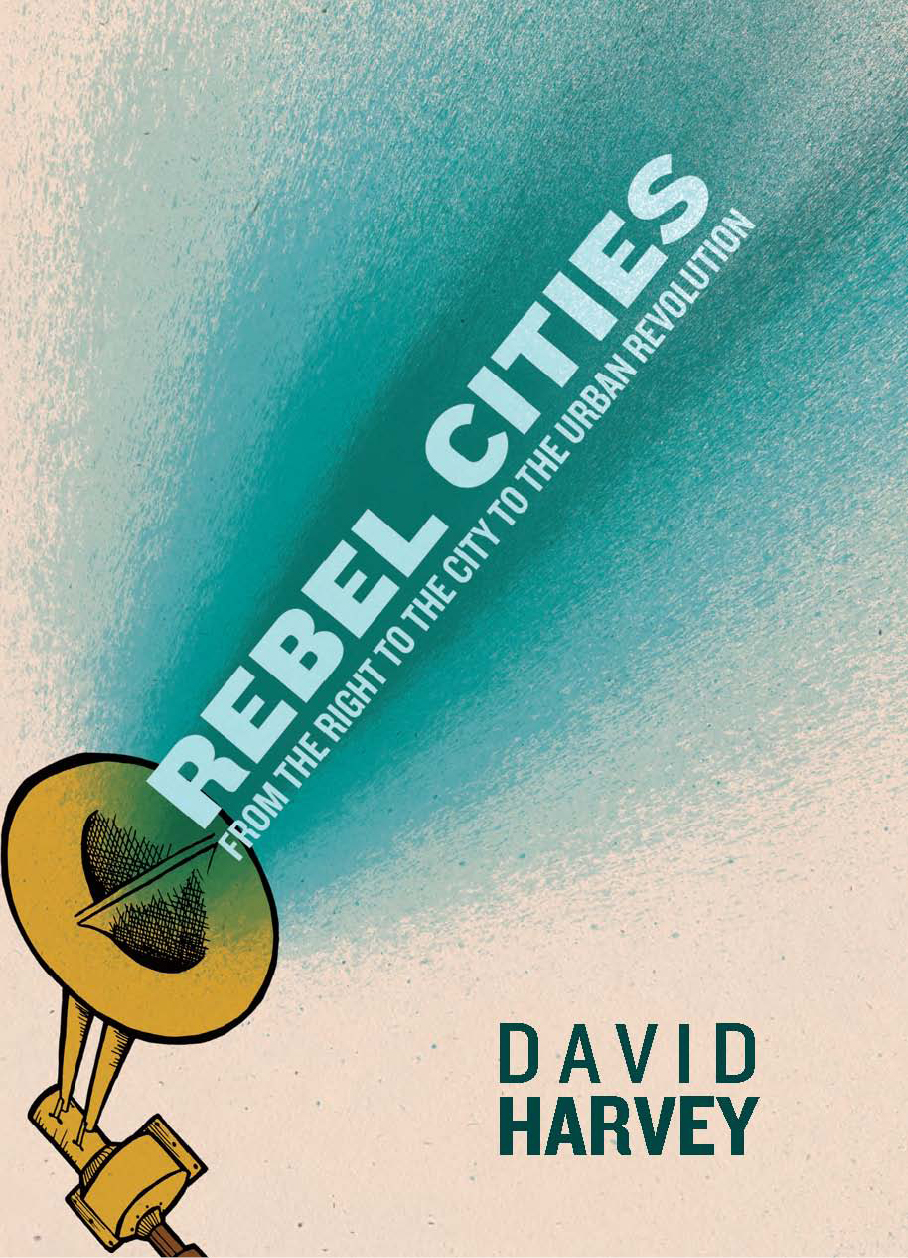
“Long before the Occupy movement, modern cities had already become the central sites of revolutionary politics, where the deeper currents of social and political change rise to the surface. Consequently, cities have been the subject of much utopian thinking. But at the same time they are also the centers of capital accumulation and the frontline for struggles over who controls access to urban resources and who dictates the quality and organization of daily life. Is it the financiers and developers, or the people?
Rebel Cities places the city at the heart of both capital and class struggles, looking at locations ranging from Johannesburg to Mumbai, and from New York City to São Paulo. Drawing on the Paris Commune as well as Occupy Wall Street and the London Riots, Harvey asks how cities might be reorganized in more socially just and ecologically sane ways—and how they can become the focus for anti-capitalist resistance.”
Publisher Verso Books, London, 2012
ISBN 1844679047, 9781844679041
216 pages
Reviews: Owen Hatherley (The Guardian, 2012), Ruth Lorimer (Socialist Review, 2012), Lewis Beardmore (Open Democracy, 2012), Justin McGuirk (Art Review, 2012), more.
Rebel Cities (English, updated on 2020-11-28)
Ciudades rebeldes (Spanish, trans. Juanmari Madariaga, 2013, added on 2020-11-28)
Peter Drahos, John Braithwaite: Information Feudalism: Who Owns the Knowledge Economy? (2002)
Filed under book | Tags: · activism, business, copyright, economics, intellectual property, knowledge economy, law, piracy, politics, TRIPS, wto

New intellectual property regimes are entrenching new inequalities. Access to information is fundamental to the exercise of human rights and marketplace competition, but patents are being used to lock up vital educational, software, genetic and other information, creating a global property order dominated by a multinational elite. How did intellectual property rules become part of the World Trade Organization’s free trade agreements? How have these rules changed the knowledge game for international business? What are the consequences for the ownership of biotechnology and digital technology, and for all those who have to pay for what was once shared information? Based on extensive interviews with key players, this book tells the story of these profound transformations in information ownership. The authors argue that in the globalized information society, the rich have found new ways to rob the poor, and shows how intellectual property rights can be more democratically defined.
Publisher Earthscan, 2002
ISBN 1853839175, 9781853839177
253 pages
PDF (updated on 2012-6-13)
Comment (0)Noam Chomsky: Occupy (2012)
Filed under pamphlet | Tags: · activism, money, occupy movement, politics, protest
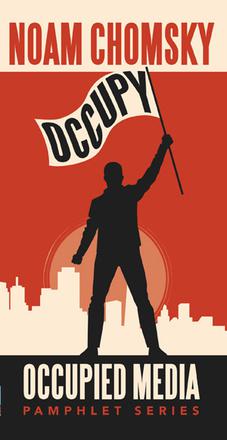
“Since its sudden appearance in September 2011, the Occupy movement has spread to thousands of towns and cities across the world. For some it’s the economy. For others, it’s something deeper. Through relentless organizing and ongoing civil disobedience, the movement now occupies the global conscience as its influence spreads from street assemblies and protests to op-ed pages and the corridors of power. From the movement’s onset, Noam Chomsky was there, offering his voice, his support, and his detailed analysis of what’s been going down and what might be done.
In Occupy, Chomsky presents his latest thinking on the core issues, questions and demands that are driving ordinary people to protest. How did we get to this point? How do the wealthiest 1% influence society? How can we separate money from politics? What would a genuine democracy look like? How can we create new institutions to increase freedom and equality for all? Following the old course, says Chomsky, isn’t going to work. If we continue to follow the model of growth set for us by the 1%, we’ll be “like lemmings walking off a cliff.” The only alternative is to get involved and fight for a better future. If not now, when? If not us, who?
Occupy also features graphics by R. Black, photography by Alex Fradkin and Stanley Rogouski, and a “What To Do If You Get Arrested” guide for protestors written by The National Lawyers Guild. Read this book if you want to do something to fight back against corporate influence and government control.”
Publisher Zuccotti Park Press, Brooklyn, New York, 2012
Occupied Media Pamphlet series
ISBN 9781884519017
128 pages
PDF (added on 2017-12-2)
MOBI (updated on 2017-12-2)