Fredric Jameson: The Modernist Papers (2007)
Filed under book | Tags: · aesthetics, history, ideology, literary criticism, literary theory, literature, modernism, narrative, postmodernism, resistance
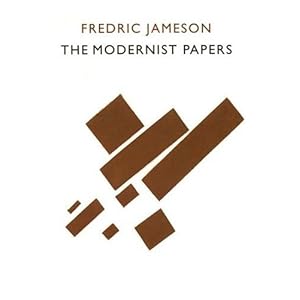
“A new perspective on Proust, Joyce, Kafka and others from master of literary theory.
Cultural critic Fredric Jameson, renowned for his incisive studies of the passage of modernism to postmodernism, for the first time since his acclaimed A Singular Modernity returns to the movement that dramatically broke with all tradition in search of progress.
The Modernist Papers is a tour de froce of anlysis and criticism, in which Jameson brings his dynamic and acute thought to bear on the modernist literature of the nineteenth and twentieth centuries. Jameson discusses modernist poetics, including intensive discussions of the work of Baudelaire, Rimbaud, Mallarmé, Wallace Stevens, Joyce, Proust, and Thomas Mann. He explores the peculiarties of the American literary field, taking in William Carlos Williams and the American epic, and examines the language theories of Gertrude Stein. Refusing to see modernism as simply a Western phenomenon he also pays close attention to its Japanese expression; while the complexities of a late modernist representation of twentieth-century politics are articulated in a concluding section on Peter Weiss’s novel The Aesthetics of Resistance.”
Publisher Verso, 2007
ISBN 1844670961, 9781844670963
426 pages
PDF (11 MB, updated on 2016-6-26)
Comments (5)W. J. Thomas Mitchell: Iconology: Image, Text, Ideology (1986)
Filed under book | Tags: · art, art criticism, ideology, image, literary criticism, media theory, visual culture
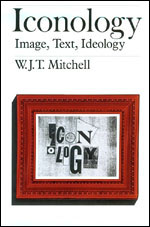
“Mitchell undertakes to explore the nature of images by comparing them with words, or, more precisely, by looking at them from the viewpoint of verbal language.”
Publisher University of Chicago Press, 1986
ISBN 0226532291, 9780226532295
x+226 pages
Reviews: Lee B. Brown (The Journal of Aesthetics and Art Criticism, 1986), Roger Seamon (Canadian Philosophical Reviews, 1986), Patrick Maynard (London Review of Books, 1988), Anna J. Smith (Philosophy and Literature, 1988), Stefan Beyst (2010).
PDF (updated on 2012-7-18)
Comment (0)Richard Burt (ed.): The Administration of Aesthetics. Censorship, Political Criticism, and the Public Sphere (1994)
Filed under book | Tags: · aesthetics, censorship, cyberpunk, degenerate art, discourse, literary criticism, postmodernism

The “new” censorship of the arts, some cultural critics say, is just one more item on the “new” Right’s agenda, and is part and parcel of attempts to regulate sexuality, curtail female reproductive rights, deny civil rights to gays and lesbians, and privatize public institutions. Although they do not contest this assessment, the writers gathered here expose crucial difficulties in using censorship, old and new, as a tool for cultural criticism.
Focusing on historical moments ranging from early modern Europe to the postmodern United States, and covering a variety of media from books and paintings to film and photography, their essays seek a deeper understanding of what “censorship,” “criticism,” and the “public sphere” really mean.
Getting rid of the censor, the contributors suggest, does not eliminate the problem of censorship. In varied but complementary ways, they view censorship as something more than a negative, unified institutional practice used to repress certain discourses. Instead, the authors contend that censorship actually legitimates discourses-not only by allowing them to circulate but by staging their circulation as performances through which “good” and “bad” discourses are differentiated and opposed.
These essays move discussions of censorship out of the present discourse of diversity into what might be called a discourse of legitimation. In doing so, they open up the possibility of realignments between those who are disenchanted with both stereotypical right-wing criticisms of political critics and aesthetics and stereotypical left-wing defenses.
Publisher U of Minnesota Press, 1994
ISBN 0816623678, 9780816623679
Length 381 pages
More info (publisher)
More info (google books)
PDF (no OCR; some pages missing)
Comment (0)