

Media-N, 11(1): The Aesthetics of Erasure (2015)
Filed under journal | Tags: · aesthetics, archive, art, art criticism, literary criticism, literature, memory, new media, poetry, preservation, storage

“Against the backdrop of a longstanding practice of erasure both in artistic and critical work, authors in this issue explore the aesthetics of erasure in the digital era, investigating new meanings and the relevance of erasure within contexts of digital production, preservation, and sharing.”
With texts and visual essays by Joshua Craze; Seth Ellis; Kaja Marczewska; Justin Berry; David Gyscek; Derek Beaulieu; Amaranth Borsuk, Jesper Juul, and Nick Montfort; Torsa Ghosal; William Basinski; Ella Klik and Diana Kamin; and Matthew Schilleman.
Guest editors: Paul Benzon and Sarah Sweeney
Publisher New Media Caucus, May 2015
Open Access
ISSN 1942-017X
Oskar Kokoschka: Die träumenden Knaben / The Dreaming Youths (1908/1917) [DE]
Filed under artist publishing, children's book | Tags: · art, dreams, jugendstil, poetry, psychoanalysis, sexuality
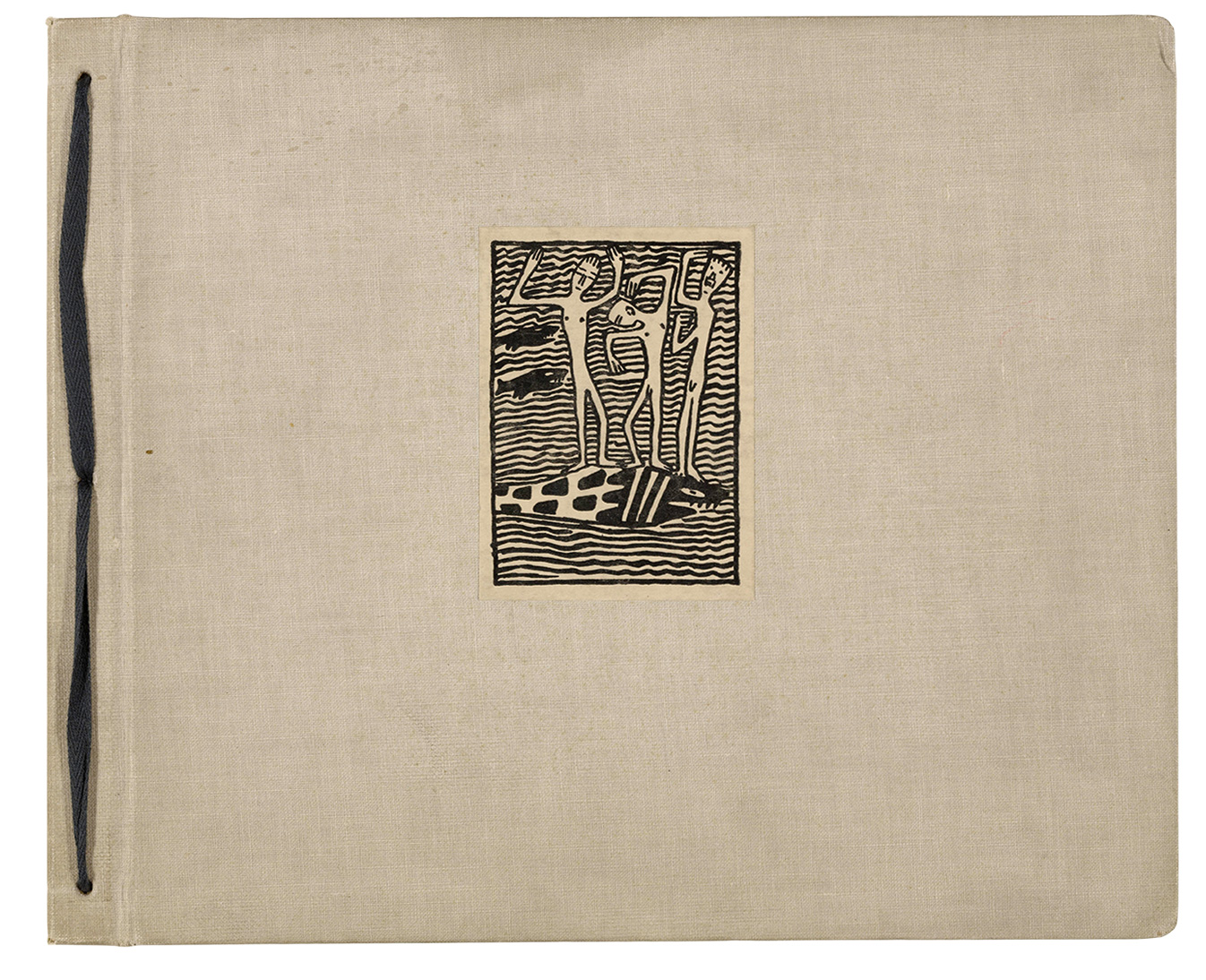
“In 1907, Fritz Waerndorfer, the financial backer of the Wiener Werkstätte, the leading design workshop in Vienna, commissioned Oskar Kokoschka, still a student at Vienna’s Kunstgewerbeschule (School of decorative arts), to make an illustrated fairy tale for his children. Kokoschka instead delivered a haunting poem about awakening adolescent sexuality set on far-off islands, away from the modern city and bourgeois life. His carefully composed text alluded to classical and contemporary literature by Johann Wolfgang von Goethe and Viennese writer Peter Altenberg. Kokoschka dedicated the volume to artist Gustav Klimt, from whom he borrowed the square format for the images, which push the text to the margins.
The book debuted at the monumental Kunstschau exhibition in Vienna in 1908. The original printer, who worked with another publisher of a famous series of children’s books, backed out upon seeing Kokoschka’s proofs. The Wiener Werkstätte published the book in 500 copies under its own imprint. As anticipated, the work sold poorly. In 1917, publisher Kurt Wolff, who had befriended the artist, reissued 275 remainder copies.” (Source)
Commentary: Rosa J.H. Berland (Source: Notes in the History of Art, 2008).
First published by Wiener Werkstätte, Vienna, 1908
New edition: Kurt Wolff, Leipzig, 1917
Printer of plates: Albert Berger, Vienna (lithographs)
Printer of plates: August Chwala, Vienna (line block reproductions)
Printer of text: August Chwala, Vienna
Typography: Antiqua (Ver Sacrum [1898], Imperial-Royal Court Foundry Poppelbaum)
10 unnumbered folios, 24 x 29.3 cm
via MOMA
PDF (1917 edition, 12 MB)
Comment (0)Wassily Kandinsky: Klänge / Sounds (1913–) [German, English]
Filed under artist publishing | Tags: · art, avant-garde, poetry, sound
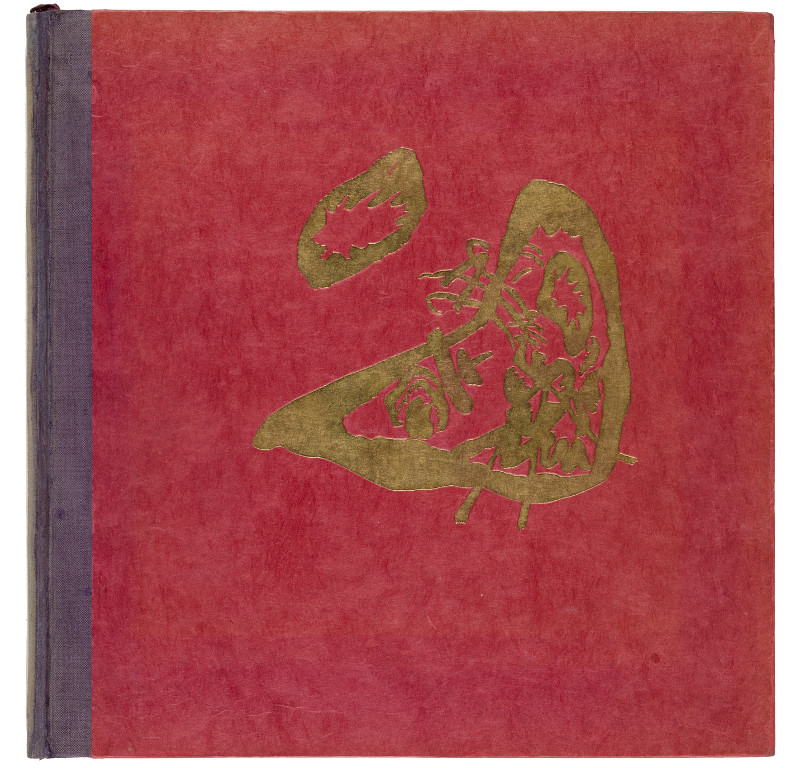
Kandinsky’s self-described “musical album,” Klänge (Sounds), consists of thirty-eight prose-poems he wrote between 1909 and 1911 and fifty-six woodcuts he began in 1907. In it, he emphasizes the physiological impact of the sonic quality of language, often repeating words until focus on meaning subsides and new focus on aural character of words emerges. These poems were instrumental in Kandinsky’s development of abstraction.
“Klänge is one of his three major publications that appeared shortly before World War I, alongside Über die Geistige in der Kunst (Concerning the Spiritual in Art) and the Blaue Reiter almanac, which he edited with one of the group’s cofounders, Franz Marc. Fearing poor sales, Munich-based Reinhard Piper only reluctantly published Klänge, and Kandinsky had to guarantee the production costs. More than two years after its release, Klänge had sold fewer than 120 copies. The planned Russian version never materialized. The publication was nevertheless influential on other avant-garde artists, and Futurists in Russia and Dadaists in Zürich recited and published some of the poems.” (Heather Hess, source)
Publisher R. Piper, Munich, [1913]
Printer of Plates in color: F. Bruckmann A.G., Munich
Printer of Plates in black: Poeschel & Trepte, Leipzig
Printer of Text: Poeschel & Trepte, Leipzig
Book designer: Kandinsky
Typography: Grotesque
Edition of 300; plus 45 hors commerce
59 unnumbered folios, 28.1 x 27.7 cm
via MOMA
English edition
Translated and with an Introduction by Elizabeth R. Napier
Publisher Yale University Press, New Haven and London, 1981
ISBN 0300025106
136 pages
Commentary (Christopher Short, Tate Papers, 2006)
Wikipedia (EN)
Klänge (German, 50 MB), View online (Flash viewer at Moma.org), Different scan from Bibliotheque Kandinsky (25 MB, added on 2016-3-14)
Sounds (English, 14 MB)