

Heather Davis, Etienne Turpin (eds.): Art in the Anthropocene: Encounters Among Aesthetics, Politics, Environments and Epistemologies (2015)
Filed under book | Tags: · aesthetics, anthropocene, art, climate crisis, earth, ecology, environment, human, nature, politics, theory
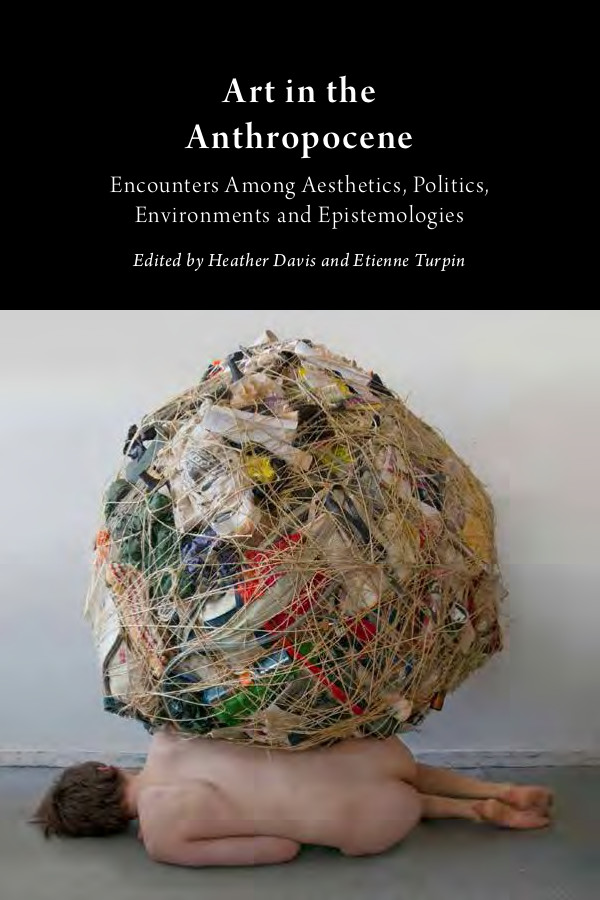
“Taking as its premise that the proposed geologic epoch of the Anthropocene is necessarily an aesthetic event, this book explores the relationship between contemporary art and knowledge production in an era of ecological crisis, with contributions from artists, curators, theorists and activists.”
Contributors include Amy Balkin, Ursula Biemann, Amanda Boetzkes, Lindsay Bremner, Joshua Clover & Juliana Spahr, Heather Davis, Sara Dean, Elizabeth Ellsworth & Jamie Kruse (smudge studio), Irmgard Emmelhainz, Anselm Franke, Peter Galison, Fabien Giraud & Ida Soulard, Laurent Gutierrez & Valérie Portefaix (MAP Office), Terike Haapoja & Laura Gustafsson, Laura Hall, Ilana Halperin, Donna Haraway & Martha Kenney, Ho Tzu Nyen, Bruno Latour, Jeffrey Malecki, Mary Mattingly, Mixrice (Cho Jieun & Yang Chulmo), Natasha Myers, Jean-Luc Nancy & John Paul Ricco, Vincent Normand, Richard Pell & Emily Kutil, Tomás Saraceno, Sasha Engelmann & Bronislaw Szerszynski, Ada Smailbegovic, Karolina Sobecka, Zoe Todd, Richard Streitmatter-Tran & Vi Le, Anna-Sophie Springer, Sylvère Lotringer, Peter Sloterdijk, Etienne Turpin, Pinar Yoldas, and Una Chaudhuri, Fritz Ertl, Oliver Kellhammer & Marina Zurkow.
Publisher Open Humanities Press, 2015
Critical Climate Change series
Creative Commons BY-NC-ND 3.0 license
ISBN 1785420054, 9781785420054
402 pages
Review: Scott Volz (CAA Reviews, 2018).
PDF, PDF, PDF, PDF (12 MB)
More formats (Archive.org)
McKenzie Wark: Molecular Red: Theory for the Anthropocene (2015)
Filed under book | Tags: · agriculture, anthropocene, climate, climate crisis, communism, cyborg, environment, knowledge, labour, literary criticism, marxism, nature, philosophy, production, proletariat, proletkult, revolution, science, science fiction, technoscience, tektology, theory, utopia
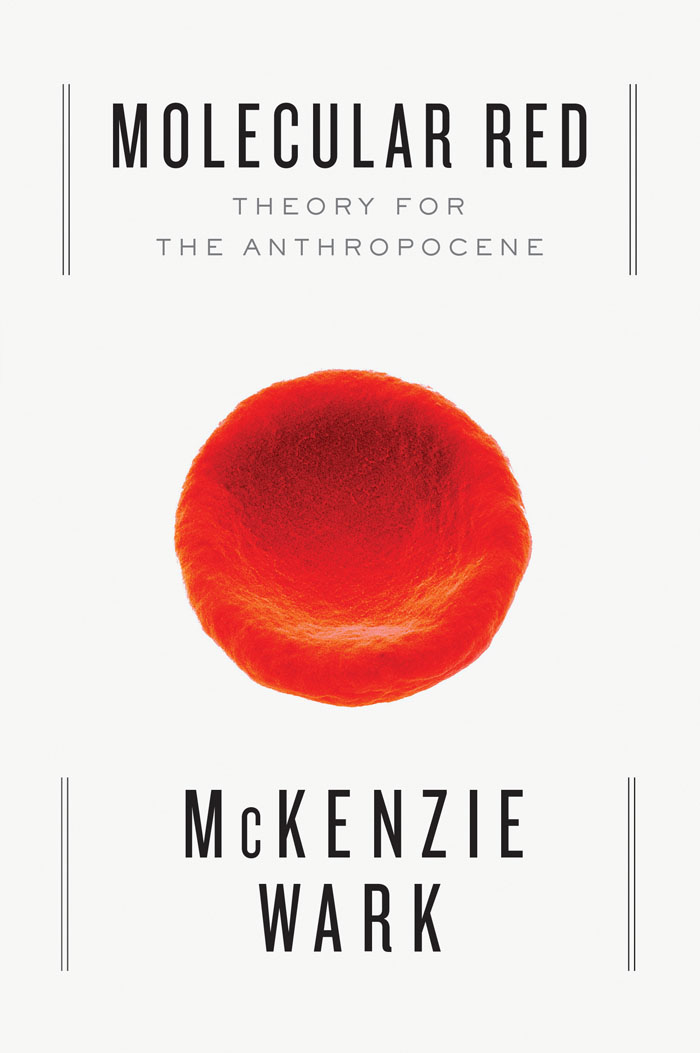
“In Molecular Red, McKenzie Wark creates philosophical tools for the Anthropocene, our new planetary epoch, in which human and natural forces are so entwined that the future of one determines that of the other.
Wark explores the implications of Anthropocene through the story of two empires, the Soviet and then the American. The fall of the former prefigures that of the latter. From the ruins of these mighty histories, Wark salvages ideas to help us picture what kind of worlds collective labor might yet build. From the Russian revolution, Wark unearths the work of Alexander Bogdanov—Lenin’s rival—as well as the great Proletkult writer and engineer Andrey Platonov.
The Soviet experiment emerges from the past as an allegory for the new organizational challenges of our time. From deep within the Californian military-entertainment complex, Wark retrieves Donna Haraway‘s cyborg critique and science fiction writer Kim Stanley Robinson’s Martian utopia as powerful resources for rethinking and remaking the world that climate change has wrought. Molecular Red proposes an alternative realism, where hope is found in what remains and endures.”
Publisher Verso, London and New York, March 2015
ISBN 1781688273, 9781781688274
xxiv+280 pages
Reviews: Slavoj Žižek (Verso 2015, Wark’s response), John Beck (Radical Philosophy 2015), Mark Rappolt (ArtReview 2015), Maria Chehonadskih (Mute 2015, Wark’s response), Two Grenadiers (2015), Pieter Vermeulen & Tom Chadwick (nY 2016), Jim Harper (LSE Review of Books 2016).
Commentary: Joe Guinan (Renewal 2015), Jernej Kaluža (Radio Student 2019, SL).
Video lecture (Concordia U, Apr 2015)
Publisher
WorldCat
See also Molecular Red Reader compiled by Wark (PDF).
Comment (0)nul = 0: The Dutch Nul Group in an International Context (2011)
Filed under catalogue | Tags: · art, art history, avant-garde, environment, gutai, kinetic art, nouveau realisme, sculpture, zero
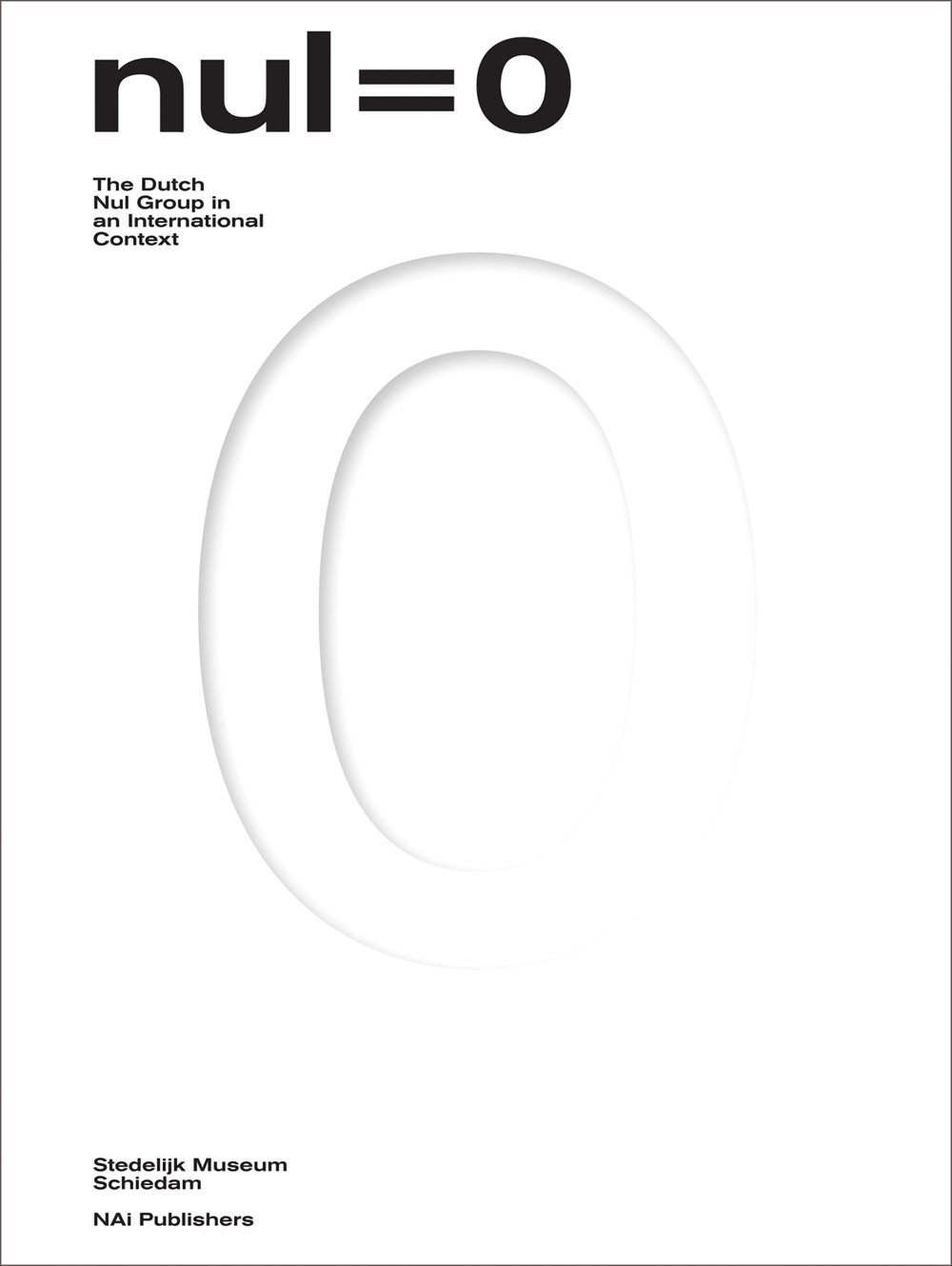
“The legendary art collective Nul was founded in Amsterdam in 1961. Its members–Armando, Jan Henderikse, Henk Peeters, Jan Schoonhoven and (briefly) herman de vries–revolutionized Dutch art, allying themselves with the German Zero group, the French Nouveau Réalistes and the Japanese Gutai group, as well as with artists such as Yves Klein and Lucio Fontana. Alongside these groups, Nul set the tone for the climate of the European avant-garde in the 1960s. The group collaborated on manifestos, happenings and publications, and individually produced serial, minimalist sculptures, installations and assemblages, which they exhibited collectively. Nul = 0 accompanies the Stedelijk Museum’s 2011 survey of the movement, offering extensive historical analysis through interviews, essays, archival photographs and an illustrated chronology. Featuring a die-cut cover (with two concentric zeroes), it constitutes a definitive overview of Nul’s activities, its kindred spirits and its legacy.”
With contributions by Colin Huizing, Antoon Melissen, Tijs Visser, Pietje Tegenbosch, Caroline de Westenholz, Renate Wiehager, Midori Yamamura, and Atsuo Yamamoto.
Edited by Colin Huizing and Tijs Visser
Publisher Stedelijk Museum, Schiedam, and NAi Publishers, Rotterdam, 2011
ISBN 9789056628383
192 pages
via Zero Foundation
Video from The Nul’s 1962 exhibition at Stedelijk
Exhibition, 2011.
Nul at Wikipedia-NL
PDF (8 MB)
Comment (0)