

Robert Ashley: Music with Roots in the Aether (1975/2000)
Filed under book, sound recording, video | Tags: · avant-garde, composing, composition, interview, music
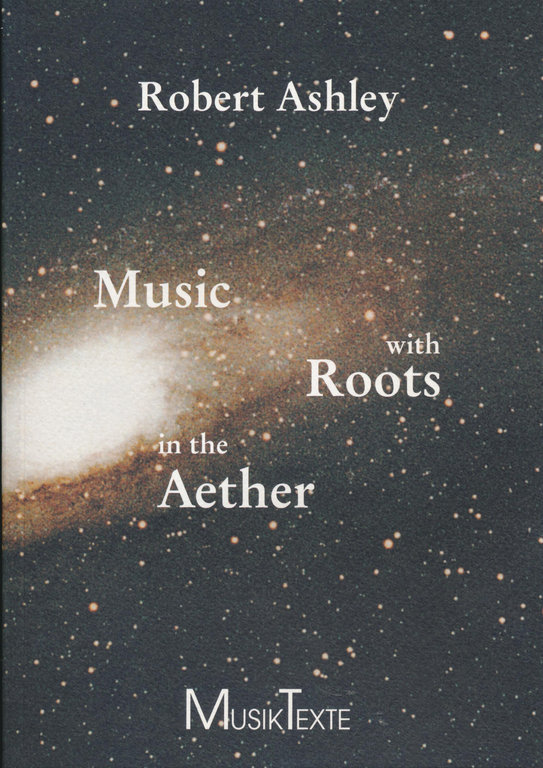
“Music with Roots in the Aether is a series of interviews with seven composers who seemed to me when I conceived the opera-for-television piece–and who still seem to me twenty-five years later–to be among the most important, influential and active members of the so-called avant-garde movement in American music, a movement that had its origins in the work of and in the stories about composers who started hearing things in a new way at least fifty years ago.” (from the Foreword)
With interviews with and essays about David Behrman, Philip Glass, Alvin Lucier, Gordon Mumma, Pauline Oliveros, Roger Reynolds, Terry Riley and Robert Ashley.
Publisher MusikTexte, Cologne, 2000
ISBN 3980315169, 9783980315166
244 pages
Opera reviews: Norbert Osterreich (Perspectives of New Music, 1977), Arthur J. Sabatini (MFJ, 2004).
Publisher
Distributor (Lovely Music), Video programme
WorldCat
PDF (76 MB, updated on 2025-10-19)
Videos, MP3s (1975-1976, on Ubuweb)
Program brochure (1979)
Margit Rosen, et al. (eds.): A Little-Known Story About a Movement, a Magazine, and The Computer’s Arrival in Art: New Tendencies and Bit International, 1961-1973 (2011)
Filed under book, catalogue | Tags: · 1960s, 1970s, art and science, art history, artistic research, computer art, computing, conceptual art, concrete art, constructivism, cybernetics, design, kinetic art, media art, new tendencies, op art, yugoslavia
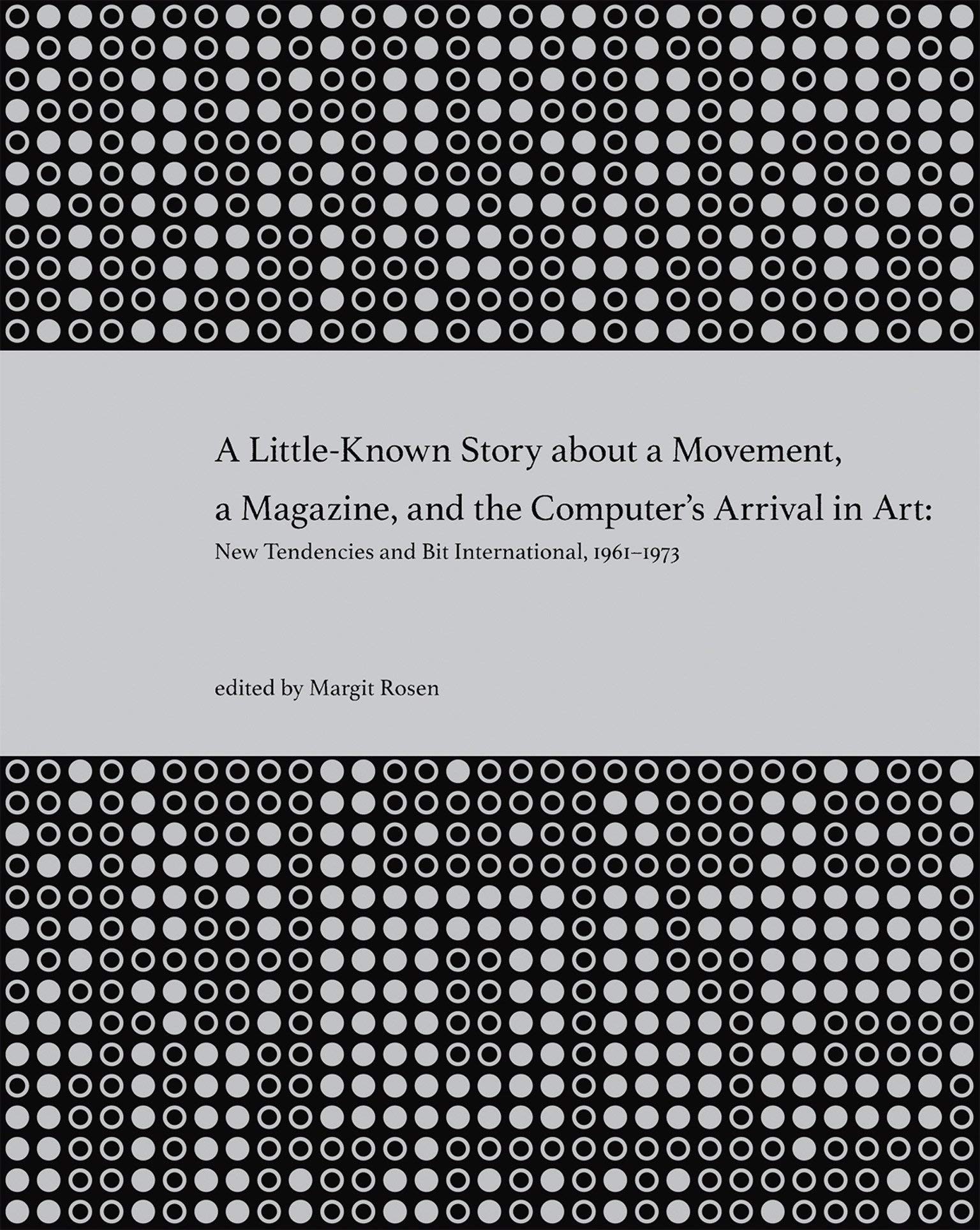
“When Zagreb was the epicenter of explorations into the aesthetic potential of the new “thinking machines.”
This book documents a short but intense artistic experiment that took place in Yugoslavia in the 1960s and 1970s but has been influential far beyond that time and place: the “little-known story” of the advent of computers in art. It was through the activities of the New Tendencies movement, begun in Zagreb in 1961, and its supporting institution the Galerija suvremene umjetnosti that the “thinking machine” was adopted as an artistic tool and medium. Pursuing the idea of “art as visual research,” the New Tendencies movement proceeded along a path that led from Concrete and Constructivist art, Op art, and Kinetic art to computer-generated graphics, film, and sculpture.
With their exhibitions and conferences and the 1968 launch of the multilingual, groundbreaking magazine Bit International, the New Tendencies transformed Zagreb—already one of the most vibrant artistic centers in Yugoslavia—into an international meeting place where artists, engineers, and scientists from both sides of the Iron Curtain gathered around the then-new technology. For a brief moment in time, Zagreb was the epicenter of explorations of the aesthetic, scientific, and political potential of the computer.
This volume documents that exhilarating period. It includes new essays by Jerko Denegri, Darko Fritz, Margit Rosen, and Peter Weibel; many texts that were first published in New Tendencies exhibition catalogs and Bit International magazine; and historic documents. More than 650 black-and-white and color illustrations testify to the astonishing diversity of the exhibited artworks and introduce the movement’s protagonists. Many of the historic photographs, translations, and documents are published here for the first time. Taken together, the images and texts offer the long overdue history of the New Tendencies experiment and its impact on the art of the twentieth century.”
Edited by Margit Rosen in collaboration with Peter Weibel, Darko Fritz, and Marija Gattin
Publisher ZKM Center for Art and Media, Karlsruhe, and MIT Press, Cambridge, MA, 2011
ISBN 9780262515818, 0262515814
576 pages
Reviews: Brian Reffin Smith (Leonardo, 2012), Joanna Inglot (Slavic Review, 2012), Greg Borman (ARLIS/NA, 2011).
Book website
Exhibition (ZKM, 2008)
Publisher
Publisher
WorldCat
PDF (102 MB)
See also New Tendencies and Bit International on Monoskop wiki.
Comment (1)George Antheil: Bad Boy of Music (1945–)
Filed under book | Tags: · avant-garde, biography, memoir, music, music history
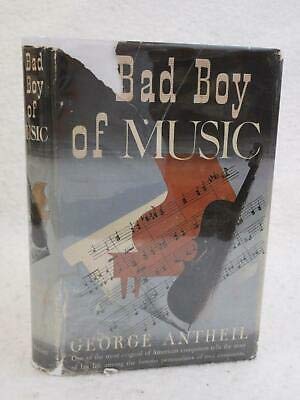
George Antheil (1900-1959) was a radical American composer active in the early part of 20th century. He was recognised by the Parisian avant-garde literary community as a musical spokesman for their ideas. In the late 1920s Antheil participated in the operatic renaissance in Germany, and, after his return to America in 1933, he attempted to synthesize an American musical idiom in his neoromantic film, symphonic, chamber, and operatic scores.
In his autobiography, Antheil gives a fascinating account of the creative activity in Berlin, Paris, Vienna, New York and Hollywood, discussing his encounters with Igor Stravinsky, Hedy Lamarr, James Joyce, Man Ray, Ezra Pound, Sylvia Beach, W.B. Yeats, Erik Satie, Pablo Picasso, Cecil B. DeMille, Fritz Lang, Salvador Dalí and others.
First published by Doubleday, Doran & Co., Garden City, NY, 1945
Published in the UK by Hurst & Blackett, London, 1947
Reprinted by National Book Association / Hutchinson & Co., London, 1949
295 pages
via Tom Whitwell
Reviews: Milfred Norton (Hollywood Quarterly, 1946), Linda Whitesitt (American Music, 1984).
Commentary: Guy Livingston (ABC Radio National, 2015).
PDF (12 MB)
Comment (0)