

ReD (Revue Devětsilu): modern culture monthly (1927-1931) [Czech]
Filed under magazine | Tags: · architecture, art, art theory, avant-garde, bauhaus, constructivism, czechoslovakia, dada, design, film, graphic design, literature, photography, poetry, psychoanalysis, radio, surrealism, theatre
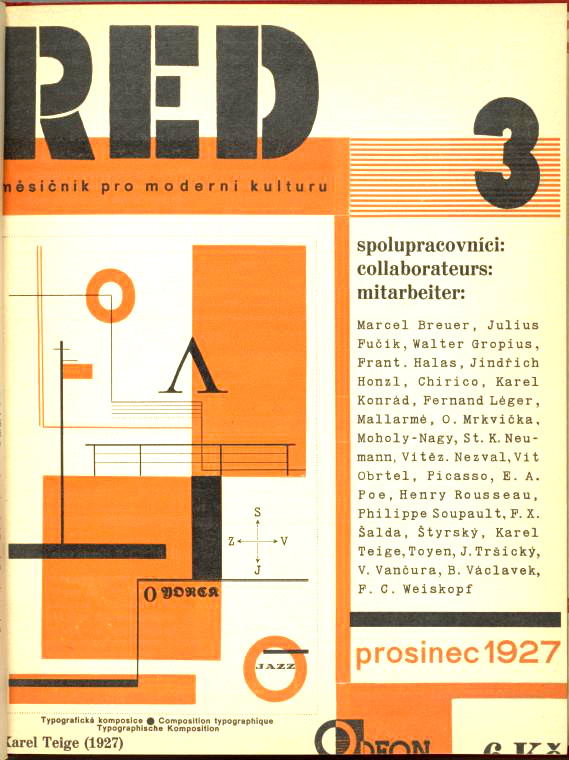
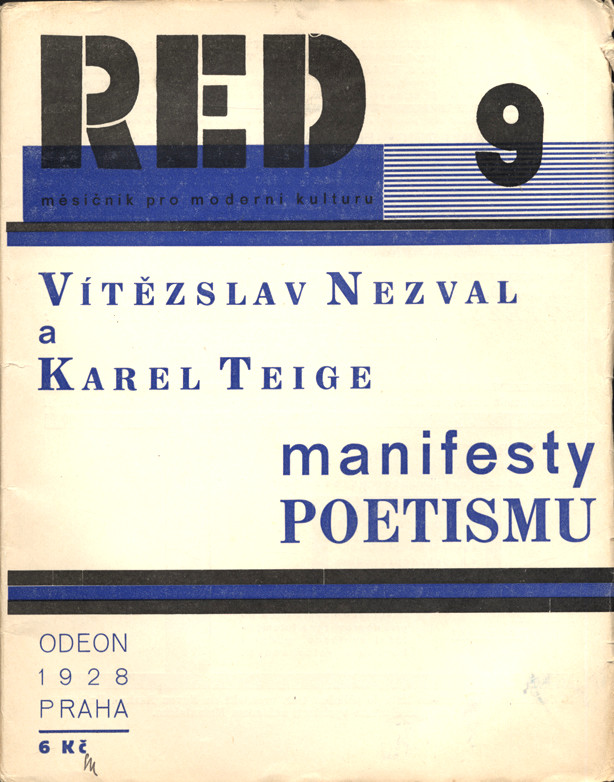
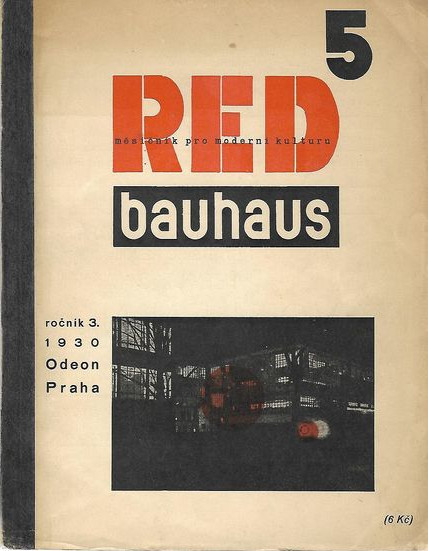
ReD (měsíčník pro moderní kulturu / Revue internationale illustrée de l’activité contemporaine / Internationale Monatsschrift für moderne Gestaltung) was an art magazine published by members of the Czech avant-garde art collective Devětsil.
Thirty numbers were published, with the special issues on the Russian avant-garde, Bauhaus, and photography/film/typography.
Several manifestos appeared in the journal: Toyen and Jindřich Štyrský’s Artificielisme (1:1, 1927), Karel Teige’s second Poetism manifesto [Manifest Poetismu] (1:9, 1928), and the Left Front [Levá fronta]’s founding manifesto (3:2, 1929).
Edited and designed by Karel Teige
Publisher Odeon – Jan Fromek, Prague
via NYPL Digital Library
Each volume in a single PDF (low resolution):
Volume I, 1927-1928 (10 issues, 360 pages)
Volume II, 1928-1929 (10 issues, 324 pages)
Volume III, 1929-1931 (10 issues, 315 pages)
Selected issues in separate PDFs:
The Russian Issue (1:2, Nov 1927)
Foto Film Typo Issue (2:8, Apr 1929)
The Bauhaus Issue (3:5, Feb 1930, partly in German)
JPG pages (search in page annotations):
View online
See also Devětsil: Revoluční sborník (1922), edited by Jaroslav Seifert and Karel Teige, in Czech.
Comment (1)You Killed Me First: The Cinema of Transgression (2012) [English/German]
Filed under catalogue | Tags: · 1980s, art, cinema, experimental film, film, horror, humour, sex, violence
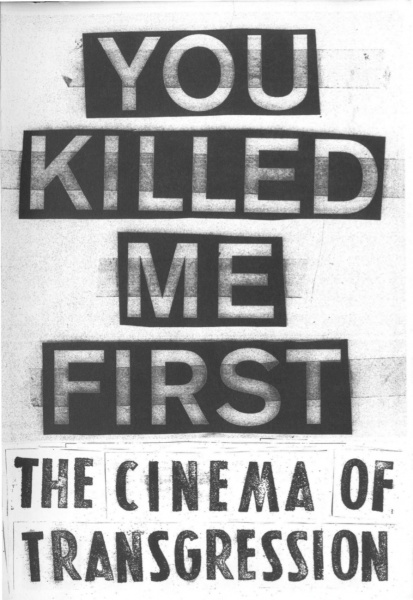
“Basically, in one sentence, give us the definition of the ‘Cinema of Transgression’.” Nick Zedd: “Fuck you.”
Nightmarish scenarios of violence, dramatic states of mind, and perverse sexual abysses – the films of the Cinema of Transgression that were consciously aimed at shock, provocation, and confrontation, bear witness to an extraordinary radicality. In the 1980s a group of filmmakers from the Lower East Side in New York went on a collision course with the conventions of American society. Transcending all moral or aesthetic boundaries, the low budget films reveal social hardship met with sociopolitical indifference. Sometimes shot with stolen camera equipment, the films contain strident analyses of life in the Lower East Side defined by criminality, brutality, drugs, AIDS, sex, and excess. The catalogue is published on the occasion of the worldwide first exhibition on the Cinema of Transgression, You Killed Me First at KW Institute of Contemporary Art in Berlin.
The catalogue includes contributions by Sylvère Lotringer, Carlo McCormick, Jonas Mekas, Susanne Pfeffer, Jack Sargeant, Nick Zedd and collages by Leonard Neumann LSD.
Edited by Susanne Pfeffer
Publisher KW Institute of Contemporary Art, Berlin, and Walther Koenig, Cologne, 2012
ISBN 3863351576
176 pages
Video from exhibition (3 min)
PDF (110 MB, no OCR, updated on 2016-12-23)
Comment (0)Jacques Rancière: Aisthesis: Scenes from the Aesthetic Regime of Art (2011/2013)
Filed under book | Tags: · aesthetics, art, art history, art theory, body, cinema, dance, film, life, literature, music, painting, pantomime, philosophy, photography, poetry, politics, representation, sculpture, theatre, theory
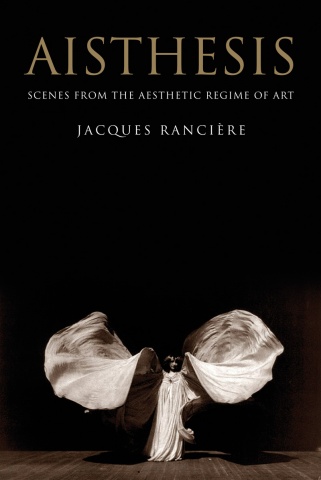
Rancière’s magnum opus on the aesthetic.
“Composed in a series of scenes, Aisthesis–Rancière’s definitive statement on the aesthetic–takes its reader from Dresden in 1764 to New York in 1941. Along the way, we view the Belvedere Torso with Winckelmann, accompany Hegel to the museum and Mallarmé to the Folies-Bergère, attend a lecture by Emerson, visit exhibitions in Paris and New York, factories in Berlin, and film sets in Moscow and Hollywood. Rancière uses these sites and events—some famous, others forgotten—to ask what becomes art and what comes of it. He shows how a regime of artistic perception and interpretation was constituted and transformed by erasing the specificities of the different arts, as well as the borders that separated them from ordinary experience. This incisive study provides a history of artistic modernity far removed from the conventional postures of modernism.”
First published as Aisthesis : Scènes du régime esthétique de l’art, Éditions Galilée, 2011
Translated by Zakir Paul
Publisher Verso Books, 2013
ISBN 1781680892, 9781781680896
304 pages
via falsedeity
Reviews: Hal Foster (London Review of Books), Joseph Tanke (Los Angeles Review of Books), Marc Farrant (The New Inquiry), Ali Alizadeh (Sydney Review of Books), Jean-Philippe Deranty (Parrhesia).
Roundtable discussion with Rancière at Columbia (video, 43 min)
Selected interviews and reviews (in French)