

Josef Hiršal, Bohumila Grögerová (eds.): Slovo, písmo, akce, hlas: K estetice kultury technického věku (1967) [Czech]
Filed under book | Tags: · aesthetics, art, art theory, avant-garde, chance, computer art, concrete poetry, experimental art, fluxus, happening, kinetic art, lettrism, literary theory, manifesto, music theory, poetry, technology, visual poetry

A unique anthology of essays, manifestos and artistic programs from the period 1950-1965 by Jasia Reichardt, George Brecht, George Maciunas, Ben Vautier, Eugen Gomringer, Décio Pignatari, Max Bense, Umberto Eco, and others.
“Tento sborník teoretických studií, esejů, článků a uměleckých manifestů napsaných v prvních patnácti letech druhé poloviny dvacátého století, chce být v prvé řade informací. Informací o estetice toho, co bývá globálně nazýváno experimentálním uměním, vznikajícím v technické civilizaci a realizujícím rozličné tendence a programy v různých částech světa. Chce osvětlit tento pojem a poukázat na rozdílnost jeho aplikací i výkladů. Navíc pak chce poskytnout v českém překladu přímo pramenné materiály o nových druzích poezie (o poezii umělé, konkrétní, auditivní, verbofonické, grafické), o umění lettristickém, permutacionálním, totálním, o splývaní dosud samostatných uměleckých disciplín a žánrů i o krystalizaci a výskytu nových, reprezentovaných především akcemi (happening aj.).
Ve sborníku je zařazeno vedle statí, studií a manifestů uměleckých skupin, teoretiků i samotných umělců i několik přehledů historických a vývojových, ukazujících souvislosti současného umění s etapami předchozími a podávajících další důkazy o jeho univerzalitě i diferenciaci. Materiály sborníku netvoří ani v náznaku kompaktní celek. Jsou spíše jednotlivými, někdy dokonce přímo si odporujícími hlasy vzrušeného rozhovoru, vytvářejí konglomerát různých tendencí, názorů a reakcí na skutečnost a stav civilizace druhé poloviny našeho století v rozdílných společenských podmínkách. Záměřem pořadatelů bylo přiblížit je našim zasvěcenějším i laickým čtenářům a poskytnout tak hlubší předpoklady k vnímání současných uměleckých artefaktů i k pochopení jejich metodologie.
Shrnutím nejvýraznějších, mnohdy však i nejproblematičtějších současných estetických tendencí představuje tento sborník materiál, který — právě snad pro svou názorovou diferenciaci, rozpornost a nesmiřitelnost — nemá dosud ve světě obdoby. Bylo by si proto jen přát, aby se názorům a informacím v něm obsaženým dostalo žádoucího doplnění ve zpřístupnění korespondujících konkrétních uměleckých výtvorů jak světové, tak i naší skromnější provecience, resp. v pokračujícím zpřístupňování, protože mnohé již u nás známe jsou. Padly by tak poslední falešné mýty a představy — a to jak ze strany snobů, tak diletantů — a byla by i v této oblasti dokořán otevřena cesta k přirozenému a nevyhnutelnému vývojovému výběru.” (from the Introduction)
With an Afterword by Jiří Levý
Publisher Československý spisovatel, Prague, 1967
Volume 1 of Monoskop Unlimited Edition series
256 pages
PDF (40 MB, no OCR)
Comment (0)Jacques Rancière: Aisthesis: Scenes from the Aesthetic Regime of Art (2011/2013)
Filed under book | Tags: · aesthetics, art, art history, art theory, body, cinema, dance, film, life, literature, music, painting, pantomime, philosophy, photography, poetry, politics, representation, sculpture, theatre, theory
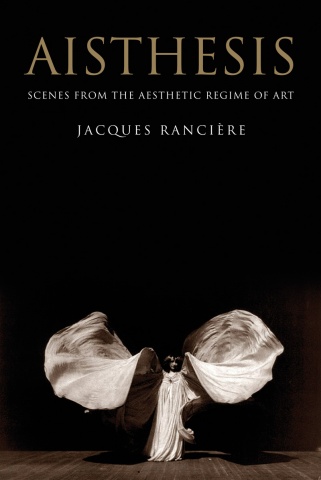
Rancière’s magnum opus on the aesthetic.
“Composed in a series of scenes, Aisthesis–Rancière’s definitive statement on the aesthetic–takes its reader from Dresden in 1764 to New York in 1941. Along the way, we view the Belvedere Torso with Winckelmann, accompany Hegel to the museum and Mallarmé to the Folies-Bergère, attend a lecture by Emerson, visit exhibitions in Paris and New York, factories in Berlin, and film sets in Moscow and Hollywood. Rancière uses these sites and events—some famous, others forgotten—to ask what becomes art and what comes of it. He shows how a regime of artistic perception and interpretation was constituted and transformed by erasing the specificities of the different arts, as well as the borders that separated them from ordinary experience. This incisive study provides a history of artistic modernity far removed from the conventional postures of modernism.”
First published as Aisthesis : Scènes du régime esthétique de l’art, Éditions Galilée, 2011
Translated by Zakir Paul
Publisher Verso Books, 2013
ISBN 1781680892, 9781781680896
304 pages
via falsedeity
Reviews: Hal Foster (London Review of Books), Joseph Tanke (Los Angeles Review of Books), Marc Farrant (The New Inquiry), Ali Alizadeh (Sydney Review of Books), Jean-Philippe Deranty (Parrhesia).
Roundtable discussion with Rancière at Columbia (video, 43 min)
Selected interviews and reviews (in French)
Thomas Harrison: 1910: The Emancipation of Dissonance (1996)
Filed under book | Tags: · 1910s, aesthetics, art, art history, avant-garde, expressionism, literature, music, music history, painting, philosophy, sociology

The year 1910 marks an astonishing, and largely unrecognized, juncture in Western history. In this perceptive interdisciplinary analysis, Thomas Harrison addresses the extraordinary intellectual achievement of the time. Focusing on the cultural climate of Middle Europe and paying particular attention to the life and work of Carlo Michelstaedter, he deftly portrays the reciprocal implications of different discourses—philosophy, literature, sociology, music, and painting. His beautifully balanced and deeply informed study provides a new, wider, and more ambitious definition of expressionism and shows the significance of this movement in shaping the artistic and intellectual mood of the age.
1910 probes the recurrent themes and obsessions in the work of intellectuals as diverse as Egon Schiele, Georg Trakl, Vasily Kandinsky, Georg Lukàcs, Georg Simmel, Dino Campana, and Arnold Schoenberg. Together with Michelstaedter, who committed suicide in 1910 at the age of 23, these thinkers shared the essential concerns of expressionism: a sense of irresolvable conflict in human existence, the philosophical status of death, and a quest for the nature of human subjectivity. Expressionism, Harrison argues provocatively, was a last, desperate attempt by the intelligentsia to defend some of the most venerable assumptions of European culture. This ideological desperation, he claims, was more than a spiritual prelude to World War I: it was an unheeded, prophetic critique.
Publisher University of California Press, 1996
ISBN 0520200438, 9780520200432
264 pages
Reviews (Martino Marazzi; Tyrus Miller; Daniela Bini; Christopher Hailey; Richard Mattin; Dennis Sexsmith)
Review (Laura A. McLary, Monatshefte)
Review (Thomas Kovach, Austrian History Yearbook)
Review (Marco Codebo, Carte Italiane)
Wikipedia
PDF (some images are missing)
View online (HTML, with images)