

MARCH, journal of art and strategy (2020–)
Filed under journal | Tags: · activism, art, black people, critique, politics, protest, publishing, sound

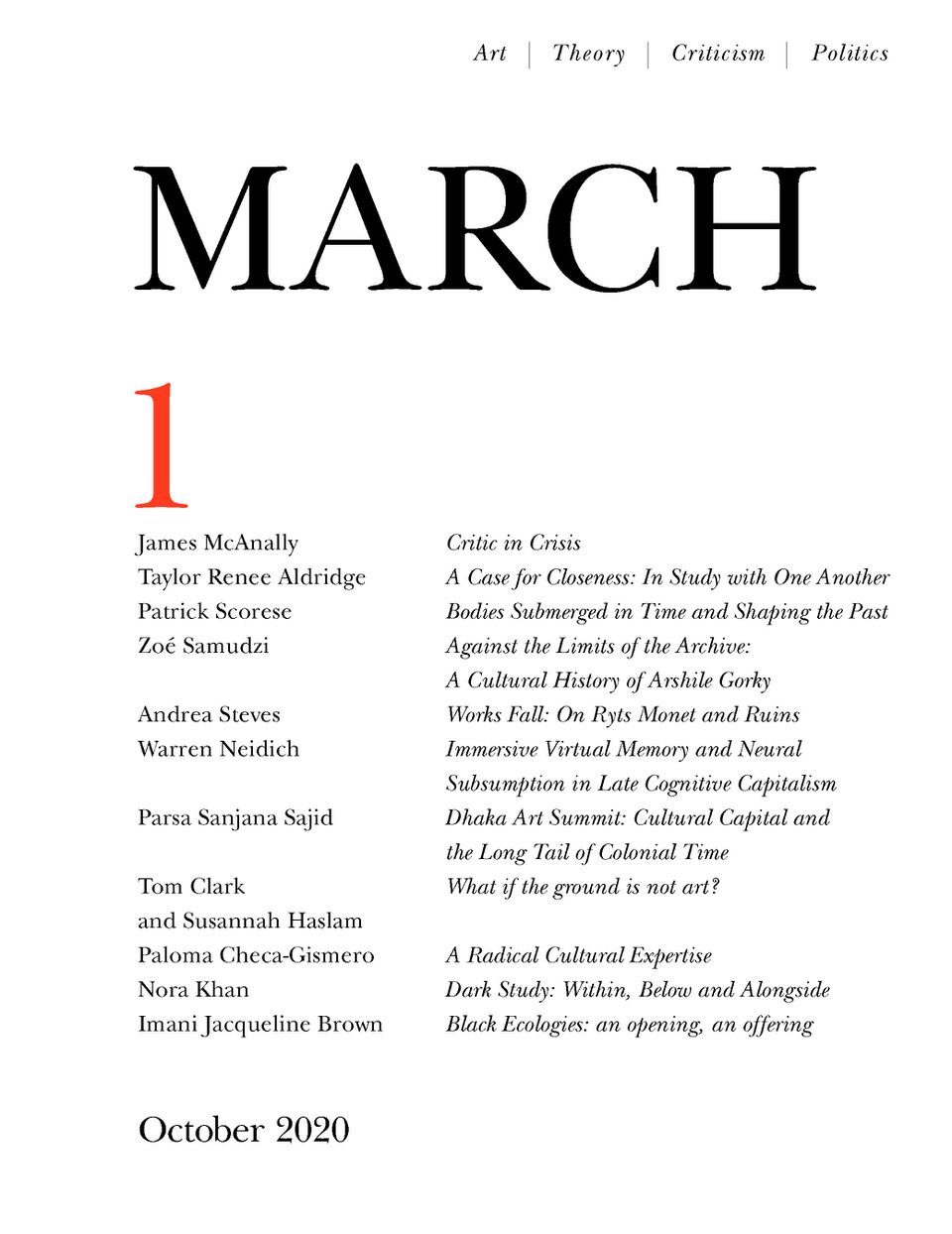
“MARCH embraces publishing as an act of protest to address the critical social and political issues of our time. MARCH emerges at a moment of deepening institutional crisis and is intent on advancing new forms of publication, critique, and public action. We are a partisan publication: we initiate, articulate, advance, and defend prefigurative ideas about what art is, could and should be. We believe in the latent potential critique carries to transform our art worlds, our institutions, our means of expression and experimentation, and ourselves. We are con-temporary, with and in our time—an archive of the present and proposition towards the future—where our ideas, actions and form embodies this insurrection.
MARCH features an annual print edition alongside an active online platform commissioning essays, interviews, and experimental critical writing with a global perspective. ”
Edited by Sarrita Hunn, James McAnally, et al.
Interview with editors: Mela Dávila Freire (A*Desk, 2021, EN/ES/CA).
Issues, features:
Dispatches (2020)
Issue 1 (2020-2021)
Issue 2: Black Ecologies (ed. Imani Jacqueline Brown, 2021-2022)
Publishing as Protocol (eds. with Constant and Vessel, 2021-2023)
Conversations on Sound and Power (ed. Sonic Insurgency Research Group, 2021-2022)
Multidirectional Memory (2022-)
Christina Dunbar-Hester: Hacking Diversity: The Politics of Inclusion in Open Technology Cultures (2020)
Filed under book | Tags: · care, community, computing, diversity, diy, ethnicity, feminism, floss, gender, hacker culture, hackerspace, hacking, identity, open source, openness, participation, politics, queer, race, technology, women
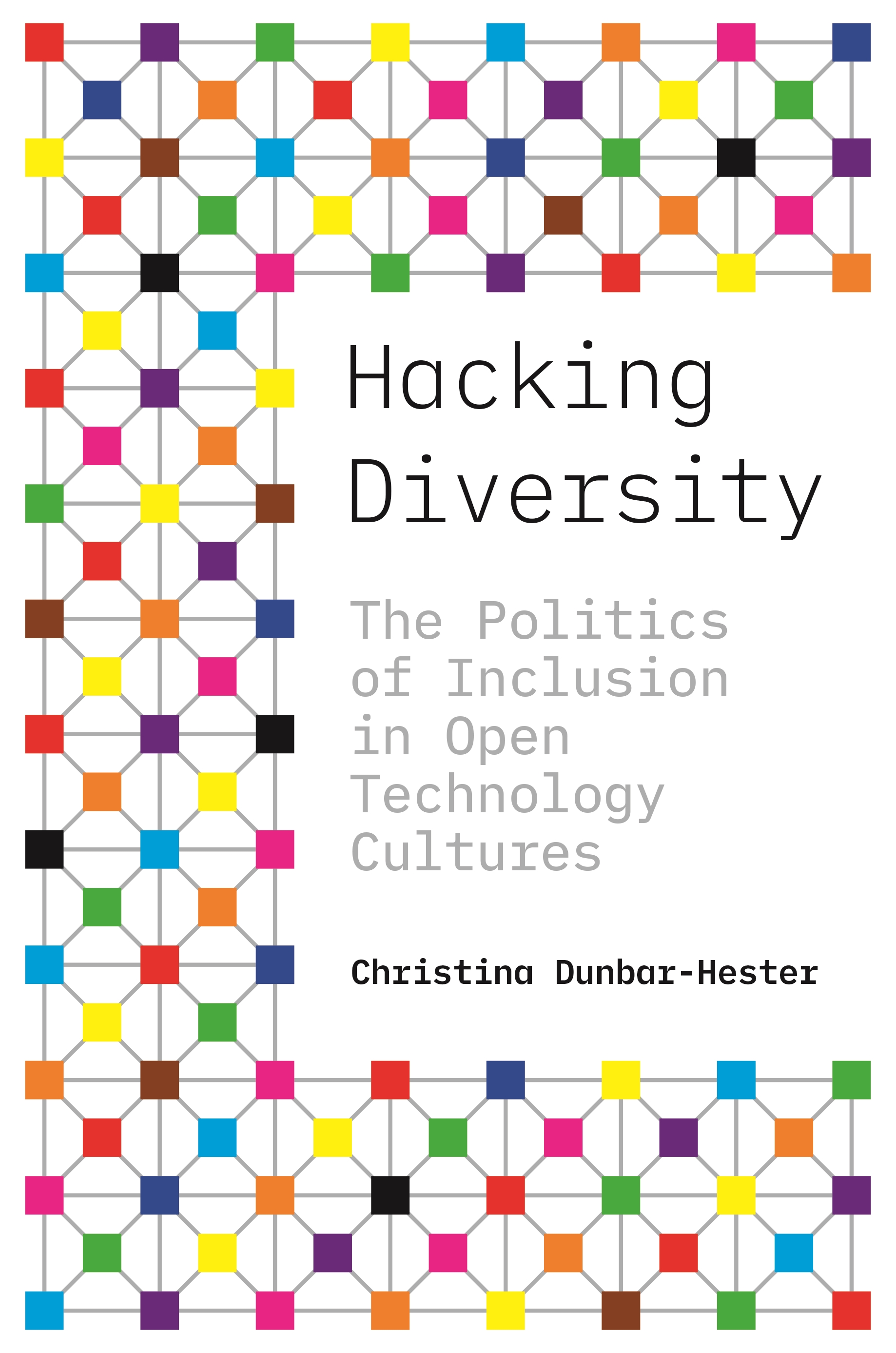
“A firsthand look at efforts to improve diversity in software and hackerspace communities.
Hacking, as a mode of technical and cultural production, is commonly celebrated for its extraordinary freedoms of creation and circulation. Yet surprisingly few women participate in it: rates of involvement by technologically skilled women are drastically lower in hacking communities than in industry and academia. Hacking Diversity investigates the activists engaged in free and open-source software to understand why, despite their efforts, they fail to achieve the diversity that their ideals support.
Christina Dunbar-Hester shows that within this well-meaning volunteer world, beyond the sway of human resource departments and equal opportunity legislation, members of underrepresented groups face unique challenges. She brings together more than five years of firsthand research: attending software conferences and training events, working on message boards and listservs, and frequenting North American hackerspaces. She explores who participates in voluntaristic technology cultures, to what ends, and with what consequences. Digging deep into the fundamental assumptions underpinning STEM-oriented societies, Dunbar-Hester demonstrates that while the preferred solutions of tech enthusiasts—their “hacks” of projects and cultures—can ameliorate some of the “bugs” within their own communities, these methods come up short for issues of unequal social and economic power. Distributing “diversity” in technical production is not equal to generating justice.
Hacking Diversity reframes questions of diversity advocacy to consider what interventions might appropriately broaden inclusion and participation in the hacking world and beyond.”
Publisher Princeton University Press, 2020
Princeton Studies in Culture and Technology series
ISBN 9780691182070, 0691182078
xi+271 pages
Reviews: Jenna P. Carpenter (Tech & Society, 2021), Rebecca Ortenberg (Lady Science, 2020), Samantha Shorey (International Journal of Communication, 2020).
EPUB (updated on 2022-8-29)
PDF (added on 2022-12-12)
David Graeber, David Wengrow: The Dawn of Everything: A New History of Humanity (2021)
Filed under book | Tags: · agriculture, bureaucracy, city, critique, history, human, indigenous peoples, politics, production, progress, property, sovereignty
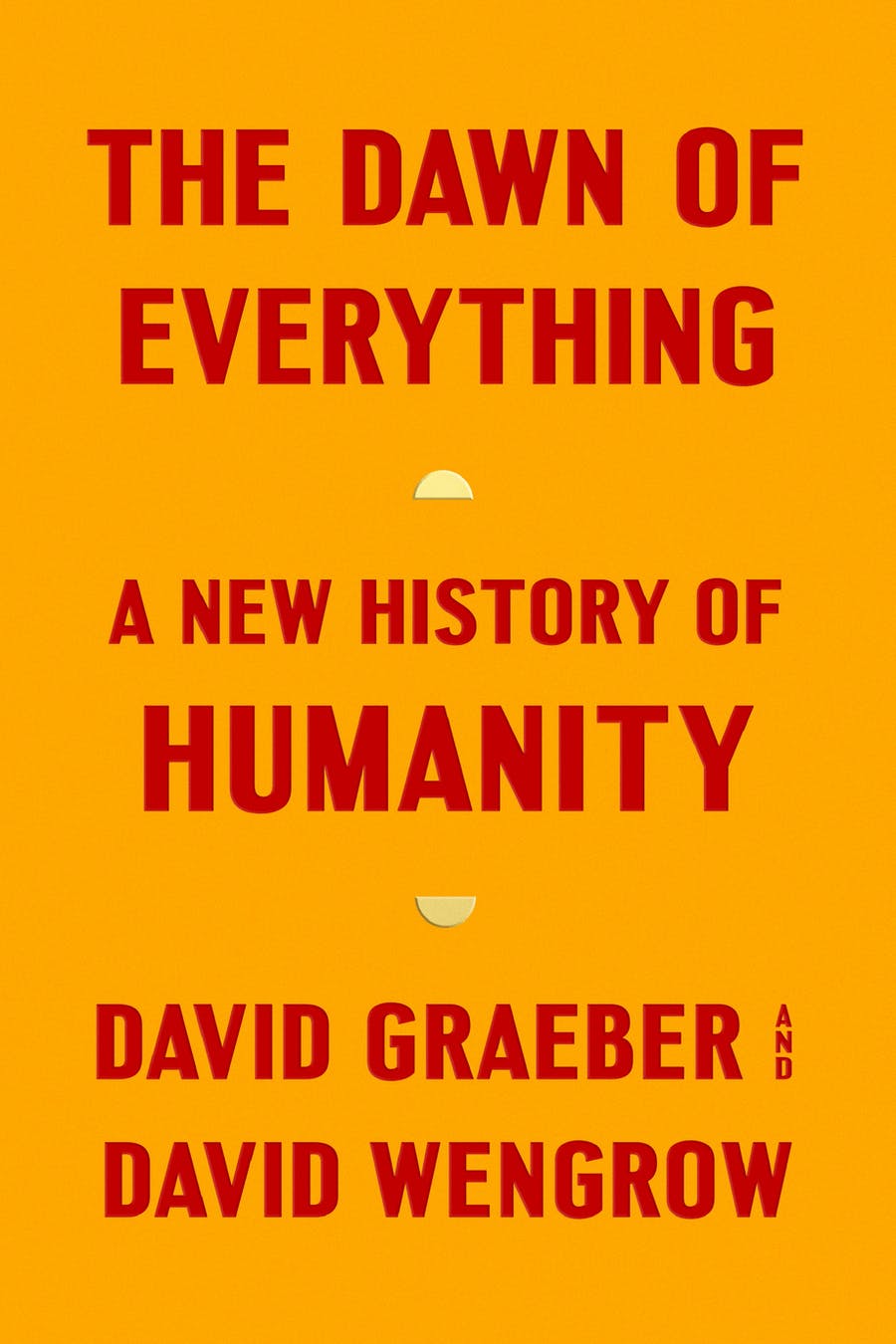
“For generations, our remote ancestors have been cast as primitive and childlike–either free and equal innocents, or thuggish and warlike. Civilization, we are told, could be achieved only by sacrificing those original freedoms or, alternatively, by taming our baser instincts. David Graeber and David Wengrow show how such theories first emerged in the eighteenth century as a conservative reaction to powerful critiques of European society posed by Indigenous observers and intellectuals. Revisiting this encounter has startling implications for how we make sense of human history today, including the origins of farming, property, cities, democracy, slavery, and civilization itself.
Drawing on research in archaeology and anthropology, the authors show how history becomes a far more interesting place once we learn to throw off our conceptual shackles and perceive what’s really there. If humans did not spend 95 percent of their evolutionary past in tiny bands of hunter-gatherers, what were they doing all that time? If agriculture, and cities, did not mean a plunge into hierarchy and domination, then what kinds of social and economic organization did they lead to? The answers are often unexpected, and suggest that the course of human history may be less set in stone, and more full of playful, hopeful possibilities, than we tend to assume.”
Publisher Farrar, Straus and Giroux, November 2021
ISBN 9780374157357, 0374157359
xii+692 pages
Reviews: William Deresiewicz (The Atlantic, 2021), Giulio Ongaro (Jacobin/Tribune, 2021), Jennifer Schuessler (The New York Times, 2021), Kwame Anthony Appiah (The New York Review, 2021), David Priestland (The Guardian, 2021), Emily Kern (Boston Review, 2021), Steve Rushton (Bella Caledonia, 2021), George Scialabba (New Republic, 2021), Chris Knight, Nancy Lindisfarne and Jonathan Neale (Monthly Review, 2021), Tunku Varadarajan (Wall Street Journal, 2021), Erle C. Ellis (Science, 2021), Peter Isackson (Fair Observer, 2021), Noah Berlatsky (NBC News, 2021), Annalee Newitz (Washington Post, 2021), Matthew Porges (LA Review of Books, 2022), Richard Handler (TLS, 2022), anon. (Astral Codex Ten, 2022), Milena Bartlová (A2larm, 2022, CZ), Joe Gill (Middle East Eye, 2023), Jan Bělíček, Eva Klíčová (Alarm, podcast, 2024, CZ), more.
Book website
Publisher
WorldCat