

Jakob von Uexküll: A Foray Into the Worlds of Animals and Humans: A Picture Book of Invisible Worlds (1934–) [DE, EN, FR]
Filed under book | Tags: · animal, biology, environment, meaning, nature, perception, philosophy, plants, psychology, semiotics, subjectivity, time, umwelt

““Is the tick a machine or a machine operator? Is it a mere object or a subject?” With these questions, the pioneering biophilosopher Jakob von Uexküll embarks on a remarkable exploration of the unique social and physical environments that individual animal species, as well as individuals within species, build and inhabit. This concept of the umwelt has become enormously important within posthumanist philosophy, influencing such figures as Heidegger, Merleau-Ponty, Deleuze and Guattari, and, most recently, Giorgio Agamben, who has called Uexküll “a high point of modern antihumanism.”
A key document in the genealogy of posthumanist thought, A Foray into the Worlds of Animals and Humans advances Uexküll’s revolutionary belief that nonhuman perceptions must be accounted for in any biology worth its name; it also contains his arguments against natural selection as an adequate explanation for the present orientation of a species’ morphology and behavior. A Theory of Meaning extends his thinking on the umwelt, while also identifying an overarching and perceptible unity in nature. Those coming to Uexküll’s work for the first time will find that his concept of the umwelt holds new possibilities for the terms of animality, life, and the framework of biopolitics.”
German edition
With illustrations by George Kriszat
Publisher J. Springer, Berlin, 1934, 102 pages
New edition, with the essay “Bedeutungslehre”, with a Foreword by Adolf Portmann, Rowohlt, Hamburg, 1956, 182 pages
English edition
Translated by Claire H. Schiller
In Instinctive Behavior: The Development of a Modern Concept, pp 5-80
Publisher International Universities Press, New York, 1957
Reprinted in Semiotica 89(4), 1992, pp 319-391
New English edition, with the essay “A Theory of Meaning”
Translated by Joseph D. O’Neil
Introduction by Dorion Sagan
Afterword by Geoffrey Winthrop-Young
Publisher University of Minnesota Press, 2010
Posthumanities series, 12
ISBN 9780816658992
272 pages
Reviews and commentaries: Levi R. Bryant (2010), Robert Geroux (Humanimalia, 2012), Franklin Ginn (Science as Culture, 2013).
Streifzüge durch die Umwelten von Tieren und Menschen (German, 1934)
Streifzüge durch die Umwelten von Tieren und Menschen. Bedeutungslehre (German, 1934/1956)
A Stroll Through the Worlds of Animals and Men (English, trans. Claire H. Schiller, 1957)
A Stroll Through the Worlds of Animals and Men (English, trans. Claire H. Schiller, 1957/1992)
Mondes animaux et monde humain suivi de La théorie de la signification (French, trans. Philippe Muller, 1965)
A Foray Into the Worlds of Animals and Humans, with a Theory of Meaning (English, trans. Joseph D. O’Neil, 2010)
See also chapters 10-11 of Agamben’s The Open: Man and Animal: Umwelt; Tick (2002/2004)
Comment (0)Vladimir Vernadsky: The Biosphere (1926–) [RU, ES, EN]
Filed under book | Tags: · animal, atmosphere, biochemistry, biology, biosphere, chemistry, climate, earth, energy, environment, geochemistry, geology, land, life, light, ocean, plants, science, space, sun, time, water, weather
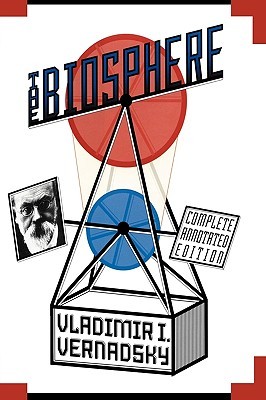
“First published in 1926 but long neglected in the West, Vladimir I. Vernadsky’s The Biosphere revolutionized our view of Earth. Vernadsky teaches us that life has been the transforming geological force on our planet. He illuminates the difference between an inanimate, mineralogical view of Earth’s history, and an endlessly dynamic picture of Earth as the domain and product of living matter to a degree still poorly understood.
The 1998 edition, which is the first English translation of the entire text, features contributions by Mark A. S. McMenamin, Professor of Geology at Mount Holyoke College, who has written extensive annotations to explain the structure of Vernadsky’s arguments and their modern relevance, and Jacques Grinevald, an authority on the idea of the biosphere, who penned an introduction that places the book in historical context.”
English edition
Foreword by Lynn Margulis, Mauro Ceruti, Stjepko Golubic, Ricardo Guerrero, Nubuo Ikeda, Natsuki Ikezawa, Wolfgang E. Krumbein, Andrei Lapo, Antonio Lazcano, David Suzuki, Crispin Tickell, Malcolm Walter, Peter Westbroek
Introduction by Jacques Grinevald
Translated by David B. Langmuir
Revised and Annotated by Mark A.S. McMenamin
Publisher Copernicus Books, 1998
A Peter N. Nevraumont book
ISBN 9781461272649
192 pages
Commentary on the concept (Alexej M. Ghilarov, The Quarterly Review of Biology, 1995)
Commentary on the translations (Mercè Piqueras, International Microbiology, 1998)
Publisher (EN)
Biosfera i noosfera (Russian, 1926/1989)
La Biosfera (Spanish, trans. María Victoria López Paño and Luis Gutiérrez Andrés, 1997)
The Biosphere (English, trans. David B. Langmuir, 1998)
R. Murray Schafer: The Soundscape: Our Sonic Environment and the Tuning of the World (1977–) [EN, PT]
Filed under book | Tags: · acoustics, environment, sound, sound design, theory
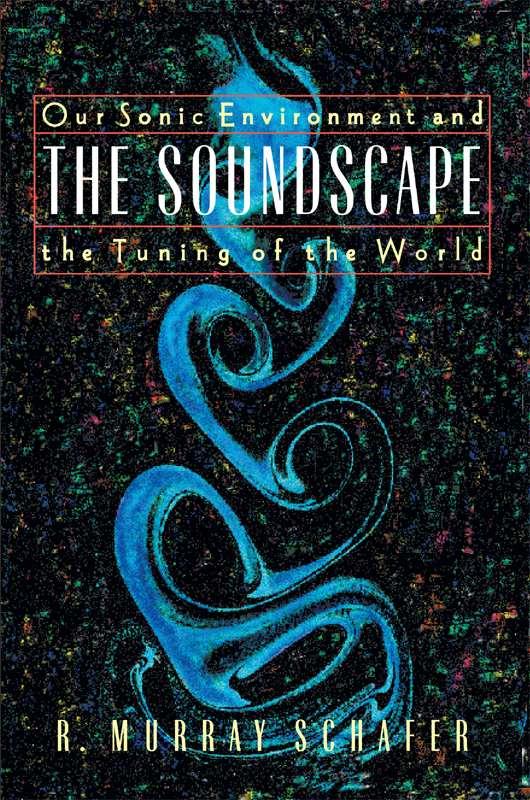
“The soundscape–a term coined by the author–is our sonic environment, the ever-present array of noises with which we all live. Beginning with the primordial sounds of nature, we have experienced an ever-increasing complexity of our sonic surroundings. As civilization develops, new noises rise up around us: from the creaking wheel, the clang of the blacksmith’s hammer, and the distant chugging of steam trains to the “sound imperialism” of airports, city streets, and factories. The author contends that we now suffer from an overabundance of acoustic information and a proportionate diminishing of our ability to hear the nuances and subtleties of sound. Our task, he maintains, is to listen, analyze, and make distinctions.
As a society we have become more aware of the toxic wastes that can enter our bodies through the air we breathe and the water we drink. In fact, the pollution of our sonic environment is no less real. Schafer emphasizes the importance of discerning the sounds that enrich and feed us and using them to create healthier environments. To this end, he explains how to classify sounds, appreciating their beauty or ugliness, and provides exercises and “soundwalks” to help us become more discriminating and sensitive to the sounds around us. This book is a pioneering exploration of our acoustic environment, past and present, and an attempt to imagine what it might become in the future.”
First published as The Tuning of the World, Knopf, New York, 1977.
This edition
Publisher Destiny Books, Rochester, VT, 1994
ISBN 9781594776687, 0892814551
xii+301 pages
The Soundscape (English, 1977/1994, updated on 2019-10-29)
A afinação do mundo (Brazilian Portuguese, trans. Marisa Trench Fonterrada, 1997, added on 2014-12-19)